
Getting kids involved in simple pool chores is a great way to teach responsibility while keeping your swimming area clean and safe. Tasks like skimming the surface, brushing the walls and floor, vacuuming, and maintaining chemical levels help kids understand pool safety and care. These activities foster good habits and give them a sense of pride in their work. Keep exploring to discover more easy and safe chores for your kids to help with.
Key Takeaways
- Assign age-appropriate tasks like skimming leaves or brushing walls to build responsibility safely.
- Teach kids to test and monitor chemical levels to promote understanding and accountability.
- Supervise vacuuming to ensure proper use and safety during pool maintenance.
- Demonstrate simple tasks to instill good habits and pride in maintaining the pool.
- Emphasize the importance of regular chores for pool safety and overall cleanliness.

Getting kids involved in pool chores not only keeps your swimming area clean but also teaches them responsibility. When you assign simple tasks related to pool maintenance, you’re helping them develop important skills like understanding pool safety and improving their swimming abilities. Kids tend to take pride in their work when they see the direct results, which encourages a sense of ownership and accountability. Plus, involving them early creates good habits that can last a lifetime.
One of the easiest chores is helping with skimming the pool surface. Show your children how to use a leaf skimmer or net to remove debris, bugs, and floating leaves. This task is straightforward but teaches them about keeping the pool clear of obstructions that could affect water quality or safety. As they become more comfortable, you can guide them on recognizing when the pool needs skimming, which helps them understand the importance of regular maintenance for pool safety.
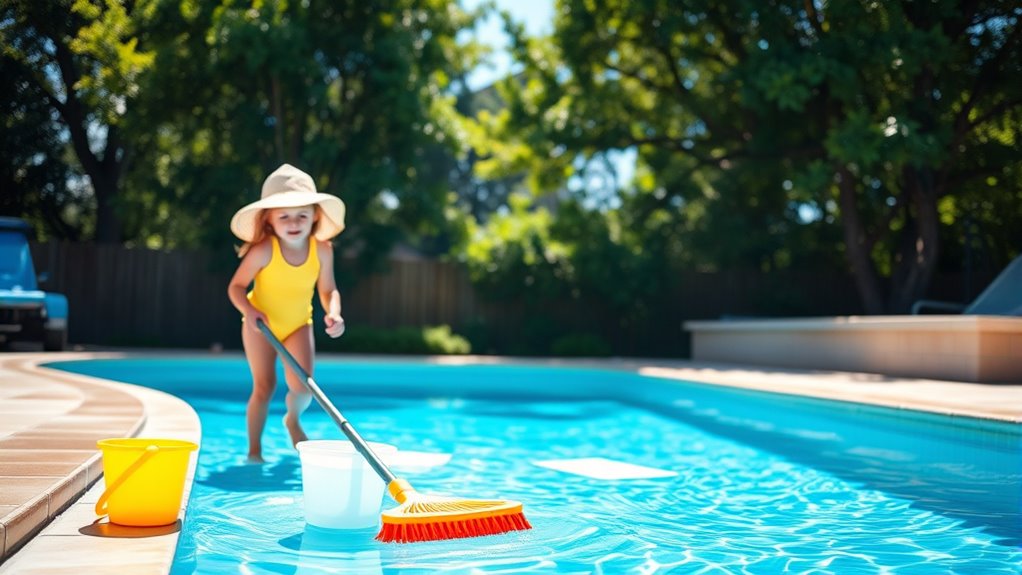
Another simple chore is brushing the pool walls and floor. Equip your kids with a pool brush and demonstrate proper technique. Regular brushing prevents algae buildup and keeps the water clean, directly supporting a safe swimming environment. While doing this, you can talk about why clean water is vital for health and safety, reinforcing the importance of hygiene and pool safety rules. As they get used to this task, they’ll learn to spot potential issues early, like algae or dirt, which can impact swimming skills and safety.
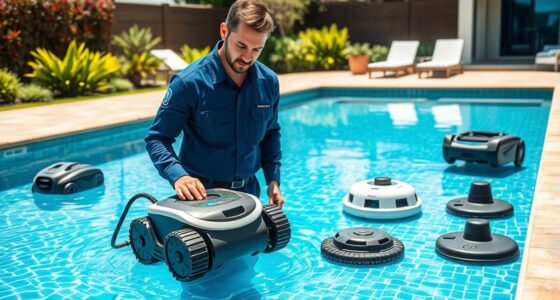
Vacuuming the pool is a bit more involved but still manageable for children with supervision. You can start with manual pool vacuums, showing them how to connect the hose and move it across the pool floor. This chore not only keeps the water clearer but also helps your kids understand the mechanics of pool cleaning. It’s a practical way to teach patience, precision, and the importance of keeping the pool surface safe for swimming. Plus, vacuuming regularly improves water quality, making it safer and more inviting for everyone.
Vacuuming the pool teaches patience and improves water quality for safer swimming.
Finally, involving kids in checking and maintaining the pool’s chemical levels is valuable. Teach them how to use test kits to measure pH and chlorine levels, discussing how these chemicals keep the water safe and prevent issues like algae growth or bacteria. Understanding how to balance pool chemicals enhances their knowledge of pool safety and helps them appreciate the science behind maintaining a healthy swimming environment. Additionally, knowing about electric power generation with bike generators can inspire them to think about alternative energy sources and sustainability, broadening their understanding beyond just pool care. This task encourages responsibility, as they learn that proper chemical levels are essential for safe swimming and protecting their swimming skills.

HydraJoy Pool Net, Professional Swimming Pool & Hot Tub Skimmer Net Accessories, Pool Leaf Rake Cleaning Tool with Pole, Fine Nylon Mesh Bag, Easy to Clean Bugs,Leaves,Debris(Blue)
- Enhanced Durable Frame: Reinforced structure for longevity
- High-Quality Nylon Mesh: Resists deformation, captures fine debris
- Premium 550-Micron Mesh: Traps small particles like pollen and bugs
As an affiliate, we earn on qualifying purchases.
As an affiliate, we earn on qualifying purchases.
Frequently Asked Questions
At What Age Can Kids Start Helping With Pool Chores?
You might wonder at what age kids can start helping with pool chores. Generally, age appropriateness depends on their skill development and maturity. Typically, children around 8 to 10 years old can handle simple tasks like wiping down pool furniture or helping with basic cleaning under supervision. Always assess their individual abilities and guarantee tasks are safe to promote responsibility and build confidence while keeping safety a priority.
What Safety Precautions Should Kids Follow During Pool Chores?
When kids help with pool chores, you should emphasize pool safety and always provide adult supervision. Teach them to avoid running around the pool area, never play near drains, and handle equipment carefully. Make sure they understand how to stay within safe zones and never go into the pool alone. By setting clear safety rules and supervising closely, you guarantee they learn responsibility while staying safe during their chores.
How Do I Teach Kids to Clean the Pool Safely?
Did you know that kids who help with chores like pool cleaning develop better responsibility skills? To teach kids to clean the pool safely, start with clear safety tips, such as wearing gloves and eye protection. Show them how to use pool skimmers and vacuums properly, emphasizing never to enter the water alone. Supervise closely, and always explain the importance of safety during each task to make certain they stay safe and confident.
What Tools Are Best for Kids to Use for Pool Chores?
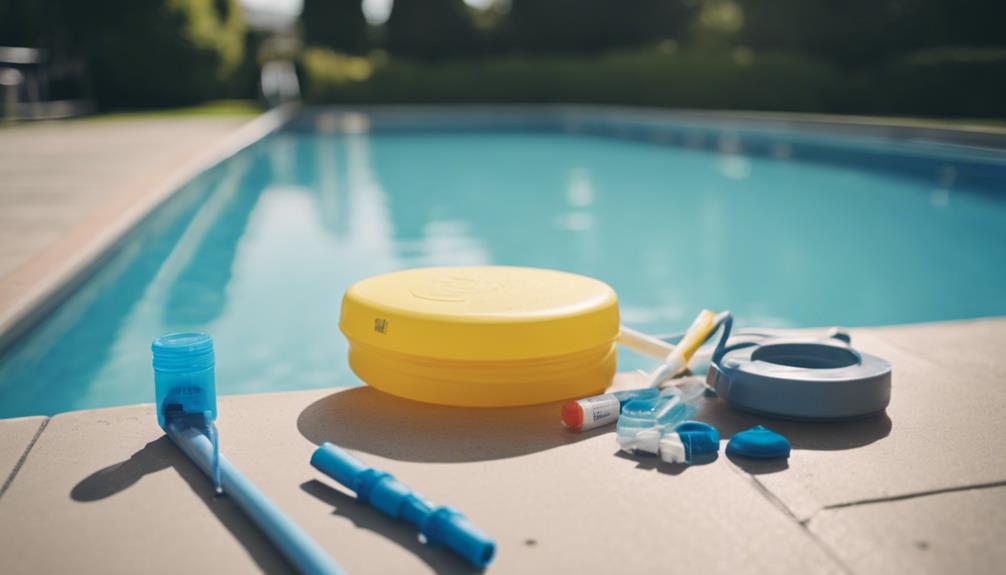
When choosing tools for kids’ pool chores, opt for lightweight, easy-to-handle options. A kid-friendly pool skimmer makes removing leaves simple and safe, while a small pool brush helps scrub the walls without much effort. These tools are designed to be manageable and safe for children, encouraging responsibility. Make sure they understand proper use and supervise their activity to guarantee safety while they learn to help maintain the pool.
How Can I Make Pool Chores Fun and Engaging for Kids?
You wanna make pool chores fun and engaging? Try turning them into lively pool chore games, where kids can compete or collaborate on creative pool tasks. Use playful prizes and themed challenges to spark their enthusiasm. Incorporate silly songs or splashy races to keep energy high. By blending playful patterns with practical tasks, you transform chores into cheerful challenges, helping kids learn responsibility while having a blast in the water.
Conclusion
Now that you’ve learned some simple pool chores for kids, imagine how these small tasks could transform your child’s sense of responsibility. But there’s more to discover—unexpected lessons and surprises await as they take charge of this aquatic world. Are they ready to handle the fun and responsibility? Keep watching, because the next step might just change how you see pool time forever. Get ready for a surprising journey you won’t want to miss.