
To fix cloudy water quickly, start by testing and balancing your chemicals, especially pH and chlorine levels. Shock the pool to eliminate organic contaminants and add a clarifier to clump tiny particles. Keep your filter running nonstop, skim debris regularly, and check circulation to guarantee proper water flow. Using enzymes can also break down organic matter. Follow these steps and you’ll discover more proven tricks to keep your pool crystal clear.

Get pool and patio gear delivered free — and shop member deals
- Fast, free delivery on millions of items
- Access to Prime Big Deal Days deals on October 6–7
- Prime Video, Amazon Music and more included
Key Takeaways
- Regularly test and balance pH, alkalinity, and chlorine levels to prevent chemical imbalances causing cloudiness.
- Maintain continuous filtration, clean filters, and remove debris daily to improve water clarity.
- Shock the pool properly during evening hours and use clarifiers to break down and remove cloud particles.
- Use enzyme treatments to reduce organic debris and support natural water clarification.
- Ensure proper circulation by running the pump 8-12 hours daily and checking for blocked jets or valves.
As an affiliate, we earn on qualifying purchases.
Test and Balance Your Pool Chemicals
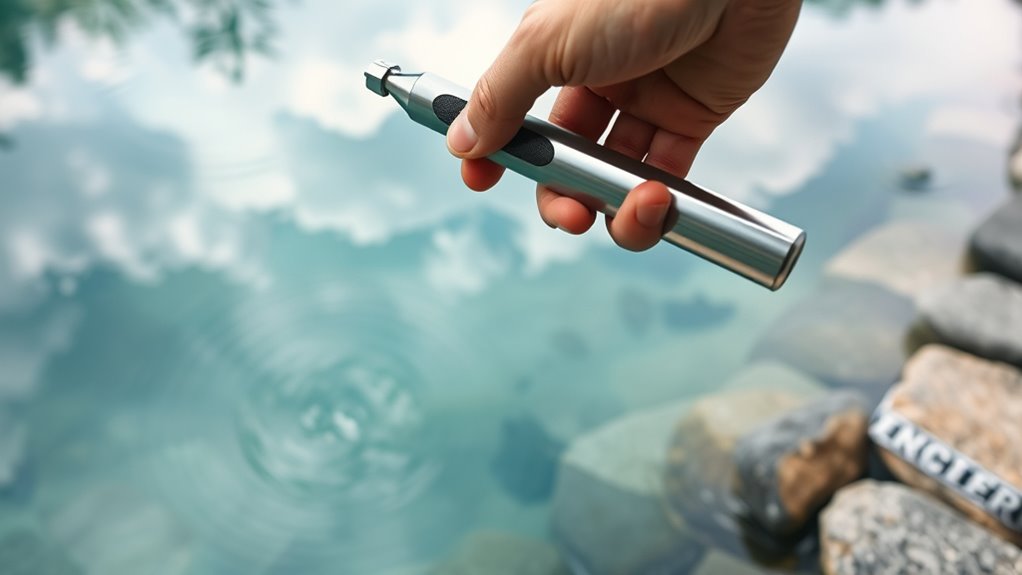
To guarantee your pool water stays clear and healthy, you need to regularly test and balance your chemicals. Start by checking your water’s pH level, aiming for a range between 7.2 and 7.6. Use a reliable test kit or strips to get accurate readings. If the pH is off, add the appropriate pH increaser or decreaser to bring it back into balance. Next, test the chlorine level, keeping it between 1 and 3 ppm to effectively disinfect without causing irritation. If chlorine is too low, add more sanitizer; if it’s too high, wait for it to naturally dissipate. Regular testing and balancing prevent algae growth, cloudiness, and other issues, ensuring your pool stays inviting and safe for swimming.
Shock the Pool to Kill Organic Contaminants
To effectively shock your pool, you need to use the proper shock levels to target organic contaminants. Make sure you dissolve the shock thoroughly before adding it, and do so during the evening to maximize its effectiveness. Following these steps helps clear up cloudy water quickly and safely.
Use Proper Shock Levels
Properly shocking your pool involves using the right amount of chlorine to eliminate organic contaminants effectively. Too little won’t sanitize properly, while too much can damage your pool and irritate your skin. To get it right, follow the recommended shock level based on your pool’s size and condition. Here’s a quick guide:
| Pool Size | Shock Level (Chlorine ppm) | Duration |
|---|---|---|
| 10,000 gallons | 10-15 ppm | 24 hours or more |
| 20,000 gallons | 10-15 ppm | 24 hours or more |
| Above 20,000 | Adjust proportionally | Follow instructions |
Always test your water after shocking to ensure proper chlorine levels. Proper shock levels effectively kill organic contaminants and prevent cloudiness. Incorporating sanitation practices like proper shocking routines helps maintain clear, healthy water.
Dissolve Shock Thoroughly
Ensuring your shock dissolves completely is essential for effectively killing organic contaminants and preventing cloudy water. If the shock isn’t fully dissolved, it can settle at the bottom, leading to uneven disinfection and persistent cloudiness. To dissolve shock thoroughly, use warm water in a clean bucket and add the shock slowly, stirring constantly. Avoid pouring the shock directly into the pool, which can cause uneven distribution and localized damage. Make sure you wear gloves and eye protection, as shock chemicals are harsh. Wait until the shock is fully dissolved before pouring it into the pool, ensuring even dispersal. Proper dissolution maximizes the effectiveness of your shock treatment and keeps your water clear and healthy. Incorporating proper storage practices can also prevent accidental chemical reactions and ensure safety during your pool maintenance.
Shock During Evenings
Shocking your pool in the evening can enhance the effectiveness of organic contaminant removal. At night, cooler temperatures and lower sunlight levels help the chlorine work longer without rapid evaporation. This allows the shock treatment to break down oils, sweat, and other organic matter more thoroughly. Make sure your filter runs continuously during and after shocking to remove debris efficiently. Test your water afterward to ensure chlorine levels stay within safe ranges for your pool. Shocking in the evening also gives you the advantage of monitoring water clarity overnight. By morning, you’ll notice a clearer, more inviting pool. Just remember to avoid swimming until chlorine levels return to normal, and always follow the manufacturer’s instructions for the shock product you’re using. Proper filtration during and after shocking is essential to maintain water quality and clarity.
Use a Clarifier to Clump Tiny Particles
When water becomes cloudy due to tiny particles floating throughout, adding a clarifier can help clear it up quickly. Clarifiers work by causing these small particles to clump together into larger groups, making them easier for your filter to remove. You simply add the recommended amount of clarifier directly to your pool or spa water, then run the pump to circulate it thoroughly. The particles will start to clump together within a few hours, settling at the bottom or floating to the surface. Once these larger clumps form, you can vacuum or skim them out. Using a clarifier is an effective and fast way to restore clarity without heavy chemical treatments, especially when your water looks hazy due to suspended particles. Proper filtration technology enhances the effectiveness of clarifiers, ensuring quicker and clearer results.
Adjust Ph and Alkalinity Levels
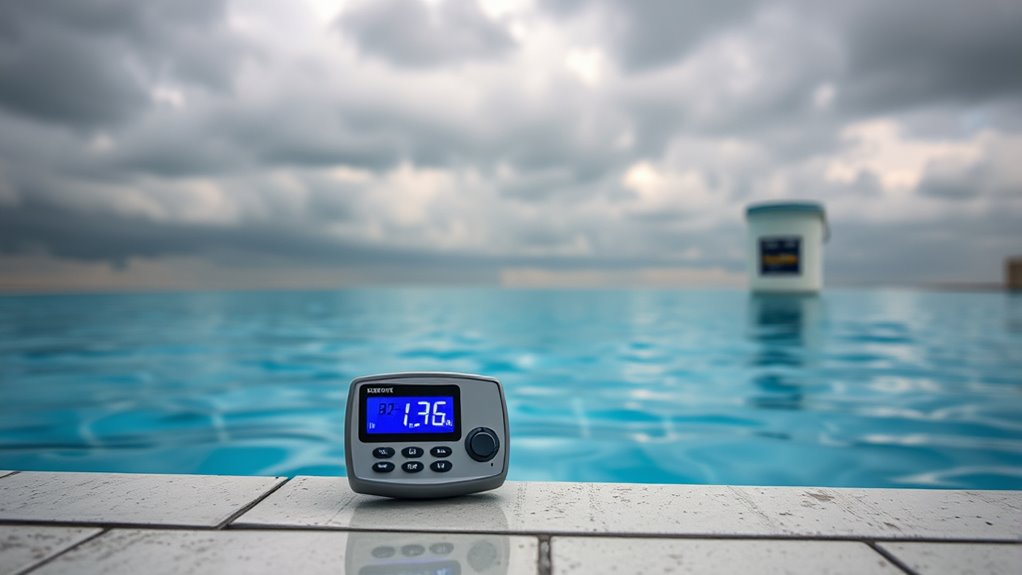
Correcting the pH and alkalinity levels in your pool or spa is essential for maintaining clear, balanced water. If pH is too low, your water becomes acidic, leading to corrosion and irritation. If it’s too high, the water can become cloudy and scale forms. Test your water regularly with a reliable kit, then adjust accordingly. To raise pH, add a pH increaser like soda ash; to lower it, use a pH reducer such as muriatic acid or sodium bisulfate. For alkalinity, use baking soda to increase or acid to decrease. Properly balanced pH and alkalinity help prevent cloudiness caused by chemical imbalances, ensuring your water stays clear and inviting. Regular testing and adjustments are key to keeping your pool or spa water pristine. Additionally, understanding the contrast ratio of your equipment can help you select the best projector for your home cinema setup.
Run the Pool Filter Continuously

Running the pool filter continuously helps maintain clear water by consistently removing debris, dirt, and algae before they can cause cloudiness. When you keep the filter running nonstop, it constantly circulates water through the system, trapping particles that could cloud your pool. This steady flow prevents buildup of contaminants and guarantees the chemicals you’ve added work effectively. It also accelerates the filtration process, making your water crystal clear faster. Make sure your pump operates at the correct speed and that the filter isn’t clogged, as these factors impact efficiency. Running the filter nonstop isn’t a long-term solution but is excellent for short periods when you’re trying to clear up cloudy water quickly. Just monitor the system to prevent overheating or unnecessary wear. Understanding filtration efficiency can help you optimize your system’s performance during this process.
Clean or Backwash the Filter Thoroughly
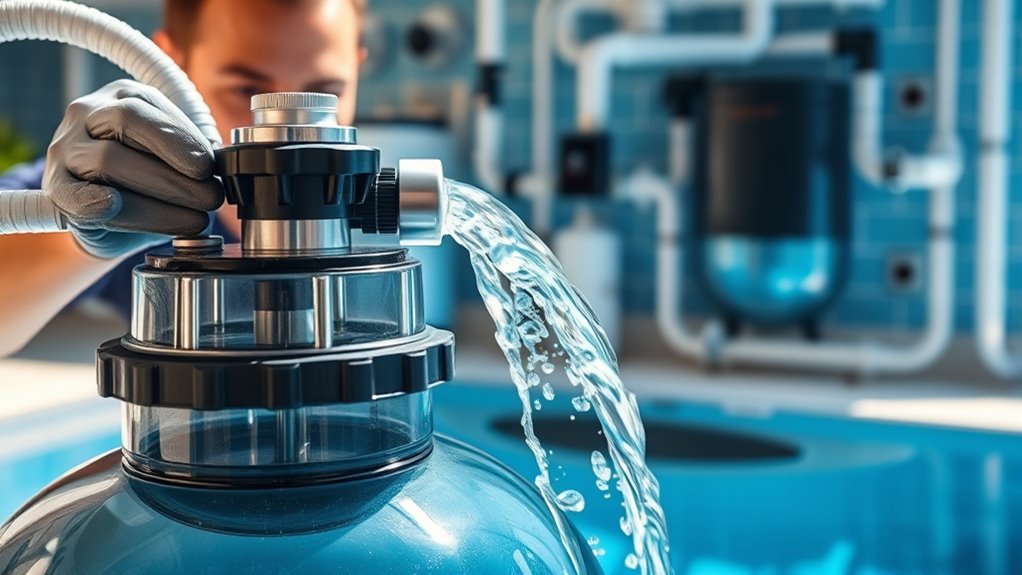
Regularly cleaning or backwashing your filter is essential to keep it functioning efficiently and prevent water from becoming cloudy. Over time, debris, dirt, and oils clog the filter media, reducing its effectiveness. To clean it properly, turn off the pump and remove the filter cartridge or open the valve for backwashing, depending on your system. For cartridge filters, rinse thoroughly with a hose to remove dirt. For sand or DE filters, backwash until the water runs clear. Be sure to follow your filter manufacturer’s instructions for cleaning frequency and procedures. A clean filter ensures proper water flow and filtration, which helps clear up cloudy water quickly. Regular maintenance like this prevents buildup and keeps your pool water crystal clear.
Skim and Remove Debris Regularly
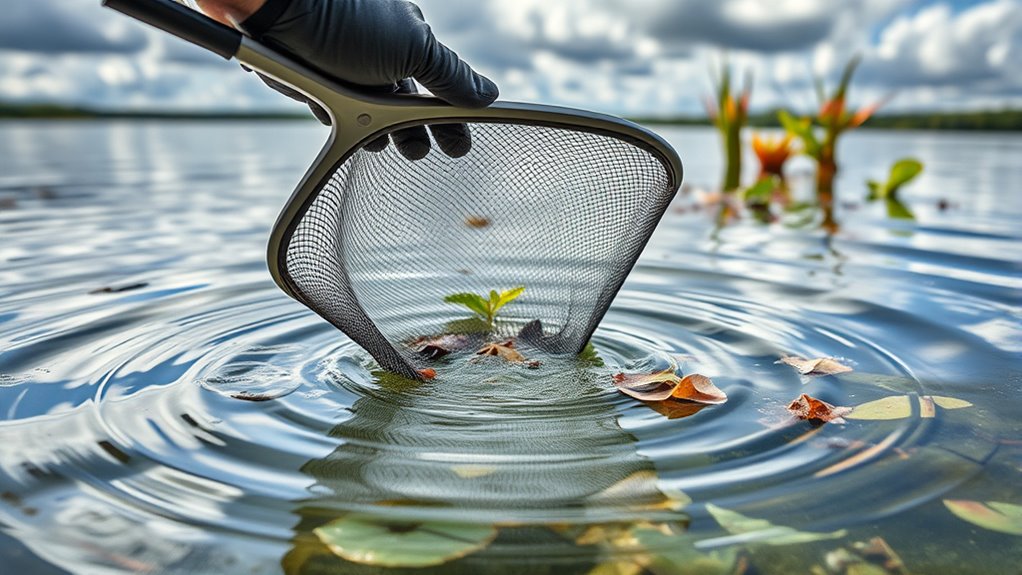
To keep your pool water clear, you need to skim and remove debris regularly. Using effective tools like a leaf net or skimmer can make this task easier and more efficient. Establishing a consistent routine and following simple maintenance tips will help prevent debris buildup and keep your water sparkling. Additionally, staying informed about common issues like debris buildup can help you address problems promptly before they affect water quality.
Consistent Skimming Routine
Keeping your pool water clear starts with a consistent skimming routine. Regularly removing floating debris prevents buildup that can cloud the water and interfere with filtration. Establish a daily or every-other-day schedule to skim the surface, especially during high-traffic periods or windy days. Use a net with a fine mesh to catch leaves, bugs, and dirt before they sink. Consistency minimizes the chances of debris sinking to the bottom, reducing algae growth and water cloudiness. Monitoring the water quality regularly can help identify issues early and maintain clarity.
- Check the pool’s surface multiple times daily during peak use
- Focus on high-traffic or windy days for extra skimming
- Use a skimmer with a telescopic pole for easy reach and control
- Incorporate a quick visual inspection to spot larger debris early
Effective Debris Removal Tools
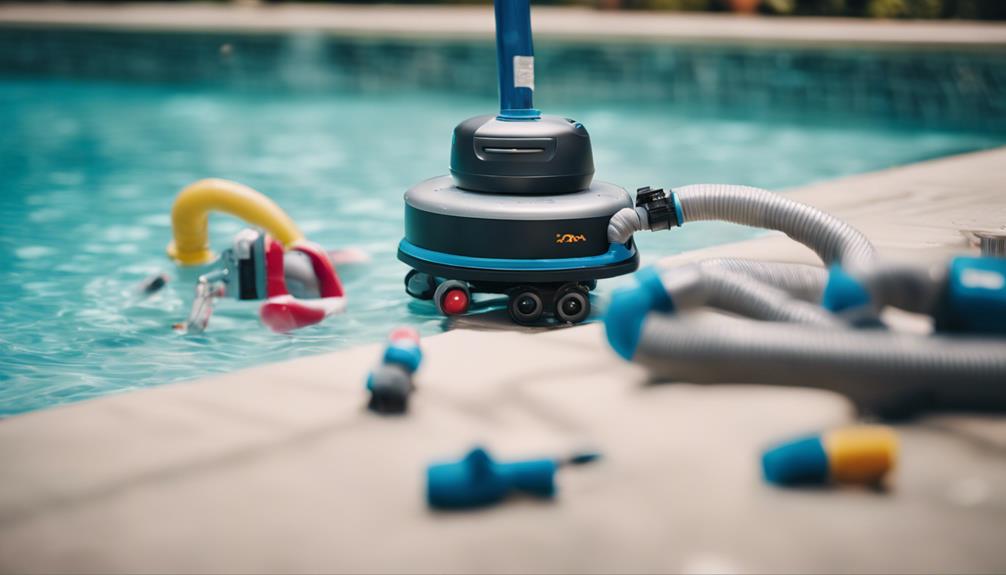
Using the right debris removal tools makes keeping your pool water clear much easier. A sturdy skimmer net with a fine mesh catches leaves, bugs, and dirt before they sink and cause cloudiness. Use a telescopic pole to reach all areas of your pool comfortably. For debris that’s settled at the bottom, a pool vacuum is indispensable—manual or automatic, it helps remove silt and organic matter that can cloud the water. Regularly cleaning your skimmer basket and vacuum filters guarantees peak performance. Invest in high-quality tools designed for your pool size and shape. When used consistently, these tools prevent debris buildup, reducing the chances of cloudy water and keeping your pool sparkling clean. Proper debris removal is a simple yet effective step toward clear, inviting water, and selecting the appropriate cleaning equipment ensures optimal results.
Preventative Maintenance Tips
Regularly skimming your pool’s surface is one of the simplest ways to prevent debris from sinking and causing cloudiness. Removing leaves, insects, and other floating matter keeps your water clear and reduces strain on your filtration system. Make it a habit to skim at least once daily, especially during windy days or heavy use. Additionally, check your skimmer basket frequently and empty it to ensure proper water flow. Using a pool cover when not in use can also block debris from entering. Regular maintenance prevents buildup that can lead to cloudy water, saving you time and effort in the long run. Incorporating consistent attention to your pool’s condition can further improve water clarity.
- Clean the skimmer basket weekly
- Trim surrounding trees to minimize falling leaves
- Use a leaf net during peak seasons
- Inspect and clean your pool’s filter regularly
Check and Fix Circulation Issues
If your pool water remains cloudy despite proper filtration, the circulation system might be the culprit. First, check if the pump is running long enough each day—aim for 8-12 hours. Ensure the pump is functioning correctly and there are no leaks or cracks. Next, examine the skimmer and return jets for blockages or debris that could restrict flow. Clean or backwash the filter if needed; a dirty filter can hinder water movement. Verify that the valves are fully open and directing water properly through the system. Also, make sure the pump’s pressure gauge is within the recommended range. Fixing circulation issues guarantees water moves evenly, prevents stagnation, and helps other treatments work more effectively. Proper flow is key to clear, sparkling water.
Use Enzyme Treatments to Break Down Organic Matter
Enzyme treatments specifically target organic debris that causes cloudiness in your water. By breaking down this matter, they help clear up the water naturally. Using enzymes is an effective way to improve water clarity without harsh chemicals.
Enzymes Target Organic Debris
When organic debris accumulates in your water, enzymes can effectively break down these stubborn materials, improving clarity and water quality. These natural catalysts speed up the decomposition process, turning organic matter into simpler compounds that are easier for your filtration system to handle. Using enzyme treatments targets stubborn debris like leaves, algae, and waste, preventing buildup and cloudiness. Regular application keeps your water clear and reduces the need for harsh chemicals. Enzymes work best when consistently maintained, ensuring ongoing breakdown of organic contaminants.
- Breaks down proteins, fats, and carbohydrates
- Reduces organic sludge and scum
- Supports biological filtration systems
- Minimizes foul odors caused by organic waste
Natural Water Clarification
To naturally clarify your water, applying enzyme treatments offers an effective solution for breaking down organic matter. These enzymes target waste like leaves, oils, and other debris, making water clearer without harsh chemicals. Simply add the enzyme product as directed, and it will accelerate natural decomposition. This process reduces cloudiness and odors while promoting healthier water. Enzyme treatments work best when used regularly, helping prevent buildup over time. To illustrate, here’s a quick comparison:
| Benefit | How It Works |
|---|---|
| Breaks down organic waste | Enzymes digest organic debris in water |
| Improves clarity | Less cloudiness, clearer water |
| Eco-friendly | Uses natural enzymes, no harsh chemicals |
| Easy application | Just add enzyme formula, no complex steps |
This simple method keeps your water clean and healthy naturally.
Prevent Future Cloudiness With Regular Maintenance
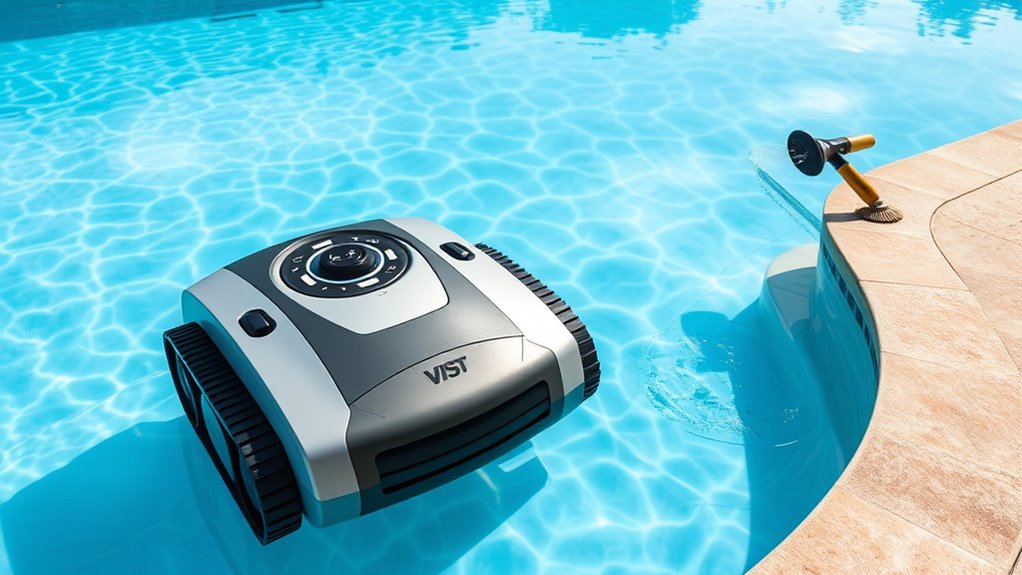
Regular maintenance is essential to prevent future cloudiness in your water. By staying proactive, you can catch issues early and keep your water clear. Regularly check your filtration system, clean or replace filters as needed, and inspect for buildup or blockages. Test your water quality periodically to identify changes in mineral levels or contaminants. Keep your system’s components in good condition to avoid breakdowns that cause cloudiness.
- Clean filters and cartridges every 1-3 months
- Inspect pipes and fittings for leaks or buildup
- Test water hardness and pH regularly
- Schedule professional inspections annually
Consistent upkeep ensures your water remains clear and safe, saving you time and money on emergency fixes. Maintaining your system prevents cloudiness before it starts, providing peace of mind and clean water day after day.
Frequently Asked Questions
Can Cloudy Water Be Caused by Algae Growth?
Yes, cloudy water can be caused by algae growth. When algae proliferate in your pool, they release tiny particles that make the water appear murky or cloudy. Warm temperatures, sunlight, and high nutrient levels promote algae growth, especially if your pool isn’t properly sanitized. To fix this, you should shock the pool, brush the walls, and run the filter continuously until the water clears up. Regular maintenance helps prevent algae from returning.
How Often Should I Test My Pool Water?
You should test your pool water at least twice a week, especially during peak swimming season. Ironically, many neglect regular testing, only realizing issues once the water turns cloudy or green. By staying proactive and checking levels frequently, you prevent algae growth and maintain crystal-clear water. Consistent testing helps you catch problems early, saving you time, money, and the frustration of dealing with a murky mess.
What Are the Signs of a Filter That Needs Replacement?
You’ll know your filter needs replacing when the water remains cloudy despite cleaning, or if you notice a strong odor or increased pressure gauge readings. If backwashing doesn’t improve water clarity or you see debris bypassing the filter, it’s time for a new one. Also, if the filter material looks damaged or worn out, don’t hesitate to replace it to keep your pool clean and healthy.
Is It Safe to Swim Immediately After Shocking the Pool?
Swimming right after shocking your pool is like jumping into a stormy sea—it’s not safe. You should wait until the chlorine levels drop to recommended safety ranges, usually 24 hours, and the water clears. Test the water with a reliable kit to confirm chemical levels are balanced. Only then can you enjoy your pool without risking skin irritation, eye discomfort, or other health issues.
How Do Weather Conditions Influence Cloudiness in Pools?
Weather conditions considerably influence pool cloudiness. When it’s hot and sunny, your pool may become cloudy faster due to increased evaporation, algae growth, and debris accumulation. Wind can blow dirt and leaves into your water, making it murkier. Rain adds runoff and contaminants, disturbing water clarity. Humid weather promotes algae growth, further clouding the water. To keep your pool clear, adjust your maintenance routine based on these weather patterns.
Conclusion
By tackling cloudy water head-on, you’re clearing the skies in your pool’s horizon. Think of these solutions as your toolkit to restore crystal clarity—each one a step toward sparkling, inviting water. With regular maintenance and prompt action, you’ll keep your pool looking like a mirror rather than a foggy mirror fog. Plunge into these fixes confidently, and watch your pool transform from murky to magnificent—like a lighthouse guiding your way to perfect swimming days.
Fall Picks
fall essentials
As an affiliate, we earn on qualifying purchases.