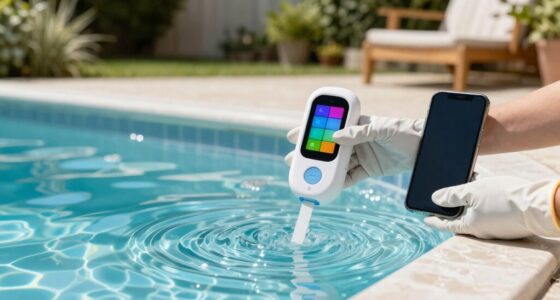

To identify and remove pool stains, first observe their color and location. Rust stains are usually reddish-brown, while mineral deposits might look white or greenish, and organic stains often appear dark or black. Once identified, use appropriate treatments: chelating agents for rust, sequestrants for minerals, and chlorine shock for organic stains. Consistent water testing and proper chemical balance help prevent future stains, so continue exploring effective techniques to keep your pool pristine.

Get pool and patio gear delivered free with Prime
- Fast, free delivery on millions of items
- Prime Video, Amazon Music and more included
- Member-only deals all year
Key Takeaways
- Observe stain color and location to differentiate rust, algae, mineral deposits, or organic matter.
- Test water chemistry regularly to identify high metal levels or mineral imbalances causing stains.
- Use specific stain removers, such as chelating agents for rust or sequestrants for minerals, based on stain type.
- Address stains promptly with chemical treatments like chlorine shock or targeted cleaners to prevent setting.
- Follow manufacturer instructions carefully to avoid damaging pool surfaces during stain removal.
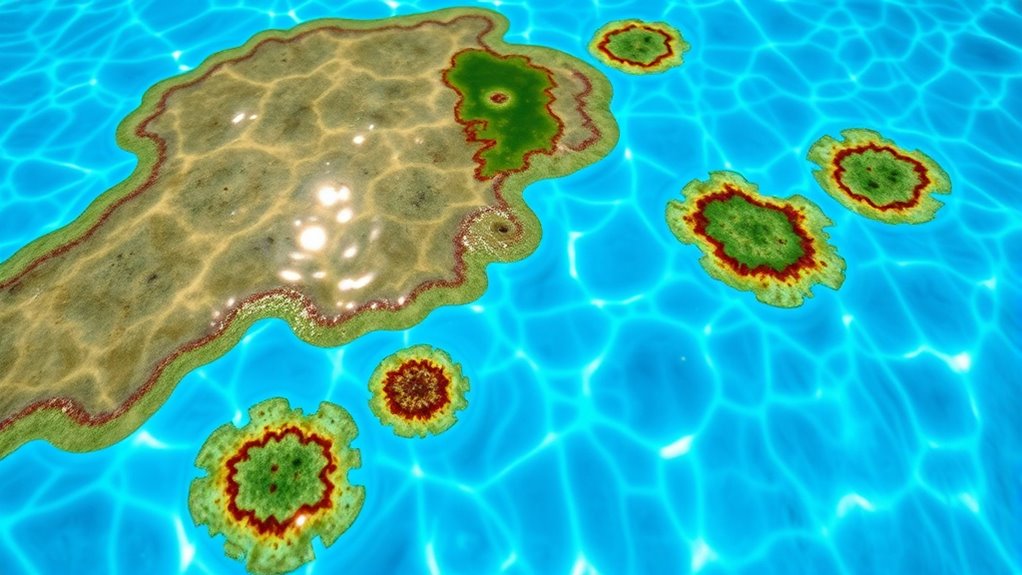
A stained pool can ruin the appearance of your backyard oasis and signal underlying water chemistry issues. To keep your pool looking pristine, you need to understand how to identify and remove stains effectively. The first step is water testing. Regularly testing your pool’s water helps you monitor pH levels, alkalinity, and sanitizer levels. Proper water chemistry is essential because imbalances can lead to staining or make existing stains worse. For example, high metal content from source water or corroded equipment can cause rust-colored stains, while high calcium hardness might result in cloudy or white deposits. Conducting routine water tests allows you to catch these issues early and take corrective measures, preventing stains from setting in and saving you time and money on more extensive cleaning later. Incorporating advanced automation technologies can assist in maintaining optimal water chemistry consistently, reducing the risk of stains caused by human error.
Preventing stains starts with good stain prevention practices. Keep your water balanced by testing regularly and adjusting chemicals accordingly. Use a quality water testing kit or have your water professionally analyzed if you’re unsure. Maintaining proper water chemistry inhibits the formation of stains and keeps your pool water clear, inviting, and safe. Additionally, brushing the pool walls and floor regularly helps prevent the buildup of algae, minerals, or dirt that can contribute to staining over time. Installing a good filtration system is also essential, as it ensures contaminants are removed before they settle and cause lasting damage. Covering your pool when not in use can prevent debris and organic matter from entering the water, further reducing stain risk.
If you notice any discoloration or staining, it’s imperative to act quickly. Start by identifying the type of stain—rust, algae, mineral deposits, or organic matter—and then choose the appropriate removal method. For instance, rust stains often respond well to a stain remover containing a chelating agent, while mineral stains may require a specific sequestrant. Sometimes, shocking the pool with chlorine or using a stain removal chemical can help lift stubborn stains. Be cautious to follow manufacturer instructions closely to avoid damaging your pool surfaces or upsetting water chemistry. Remember, stain prevention is always better than trying to remove difficult stains later, so stay consistent with your water testing and chemical adjustments.
pool stain remover chelating agents
As an affiliate, we earn on qualifying purchases.
As an affiliate, we earn on qualifying purchases.
Frequently Asked Questions
Can Stains in Pools Be Harmful to Swimmers?
Stains in pools can sometimes be harmful to swimmers, especially if they signal underlying issues like algae or bacteria growth. These stains may indicate poor pool safety or ineffective stain prevention measures. It’s important to regularly test and maintain water quality, promptly address stains, and clean filters. Doing so helps keep your pool safe, prevents health risks, and guarantees a clean, enjoyable swimming environment.
How Often Should I Check for Pool Stains?
You should check for pool stains weekly, especially if you notice any discoloration. Different stain types, like organic, metal, or algae stains, can develop quickly if left unchecked. Regular inspection frequency helps catch problems early before they become stubborn or damaging. Keep a close eye, especially after heavy use or storms, to maintain a clean, inviting pool. Don’t wait—early detection makes stain removal easier and keeps your pool sparkling.
Are There Eco-Friendly Stain Removal Options?
Yes, there are eco-friendly stain removal options you can try. Natural solutions like baking soda, vinegar, or lemon juice work effectively and are safe for your pool and the environment. Additionally, look for biodegradable products specifically designed for pool maintenance. These options help you keep your pool clean without harsh chemicals, reducing environmental impact while maintaining a sparkling, stain-free surface.
Do Stains Affect the Chemical Balance of My Pool?
Think of your pool like a delicate dance; stains can throw off the rhythm. Different stain types, like algae or mineral deposits, can indeed affect your pool’s chemical balance, making pool maintenance trickier. They may cause pH swings or cloudy water, demanding extra chemicals. Regularly removing stains helps keep your pool’s chemistry in harmony, ensuring safe, clear water and reducing the need for harsh chemicals.
Can Stains Indicate Underlying Pool Equipment Issues?
Yes, stains can indicate underlying pool equipment malfunctions. By analyzing stain patterns, you might notice irregularities that suggest problems like filtration issues or corrosion. For example, green stains near the jets could signal corrosion, while uneven discoloration may point to circulation problems. Conduct stain pattern analysis regularly to detect early signs of equipment issues, helping you address them before they worsen and ensuring your pool stays in top condition.
Conclusion
By understanding the subtle clues stains leave behind, you might find that identifying and removing them isn’t just about cleaning — it’s about uncovering hidden stories in your pool’s history. Sometimes, the unexpected coincidence of mineral deposits or organic residues reveals more than you realized. When you approach stain removal with curiosity and patience, you not only restore your pool’s clarity but also connect with a deeper understanding of its unique character.
Fall Picks
fall essentials
As an affiliate, we earn on qualifying purchases.