
To create shade in windy backyards, combine natural options like fast-growing, wind-resistant trees with durable shade sails anchored securely using high-quality hardware. Position sails at angles that allow wind to pass through and reinforce edges with weights or tie-downs to prevent flapping. Using sturdy structures for anchoring and selecting weather-resistant fabrics guarantees long-lasting coverage. By integrating these strategies, you’ll enjoy reliable shade and protection, and exploring more solutions can make your outdoor space even more comfortable.

Get pool and patio gear delivered free — and shop member deals
- Fast, free delivery on millions of items
- Access to Prime Big Deal Days deals on October 6–7
- Prime Video, Amazon Music and more included
Key Takeaways
- Plant fast-growing, wind-resistant trees to provide natural, long-term shade and act as windbreaks.
- Use durable shade sails with secure anchoring to offer quick shade solutions resistant to gusts.
- Anchor sails to sturdy structures and reinforce edges with weights to prevent flapping in windy conditions.
- Position shade sails at angles that allow wind to pass through, reducing strain and potential damage.
- Combine trees and shade sails for a flexible, resilient outdoor shading system that withstands windy environments.
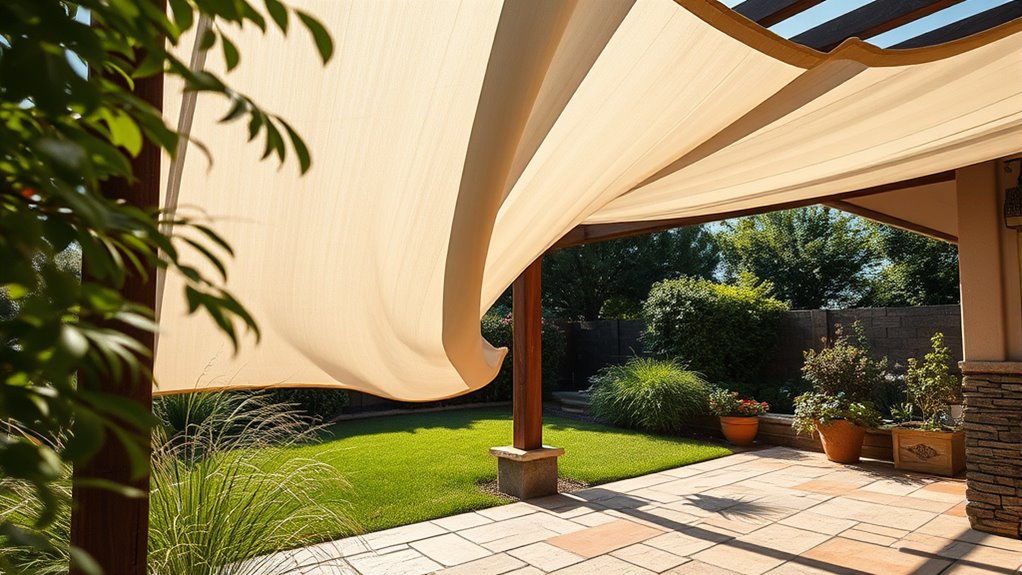
Are you struggling to keep your backyard shaded on windy days? If so, you’re not alone. Windy conditions make it tough to enjoy outdoor spaces, especially when traditional shade solutions falter. Tall trees can be a natural solution, but they take time to grow and require ongoing maintenance. Meanwhile, shade sails are a popular choice because they’re versatile and stylish, but they can be challenging to secure firmly when gusts pick up. The key to creating effective shade in windy backyards lies in combining these options thoughtfully and using strategies that withstand the forces of nature.
Combining trees and shade sails creates a resilient, stylish solution for windy backyard shading.
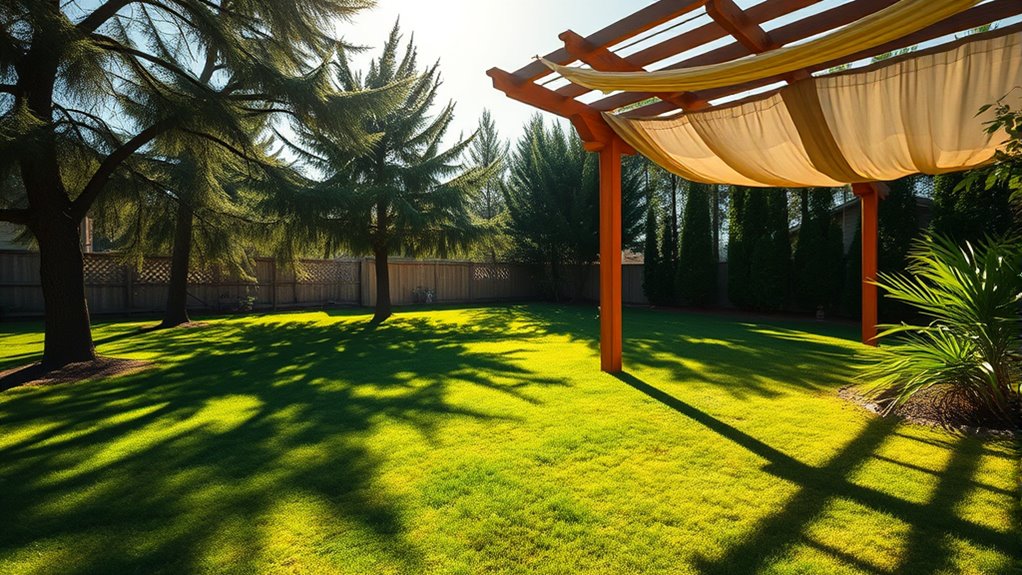
Tall trees offer excellent, long-term shade and add beauty to your landscape. They serve as natural windbreaks, reducing wind speed and making your yard more comfortable. However, planting mature trees isn’t an immediate fix; it takes years for them to grow tall enough to provide significant shade. If you want instant relief, shade sails are a practical alternative. These fabric canopies are easy to install and come in various shapes and sizes, allowing you to customize your outdoor space. When properly anchored, shade sails can offer quick and effective shade, especially over patios or seating areas. But wind poses a challenge—if not secured well, they can flap, tear, or even blow away.
To maximize the stability of shade sails in windy conditions, you need to pay attention to installation. Use high-quality, durable hardware like heavy-duty eye bolts, turnbuckles, and tensioning devices. Attach the sails to sturdy anchor points—preferably fixed structures like posts or walls—rather than weak or loose fixtures. Reinforcing the edges with additional tie-downs or weights can prevent flapping and increase resilience during gusts. Additionally, positioning the sails at an angle that allows wind to pass through can reduce wind pressure, making them less likely to tear or become dislodged. Incorporating shade sail materials that are designed for weather resistance enhances durability in windy environments.
Incorporating tall trees and shade sails together offers a balanced, adaptable approach. The trees provide ongoing shade and act as natural windbreaks, reducing the intensity of gusts that reach your shade sails. Meanwhile, shade sails fill in gaps with immediate coverage and can be repositioned or replaced as needed. For the best results, consider planting fast-growing, wind-resistant trees and selecting shade sails made from high-quality, weather-resistant fabrics. Regular maintenance, such as tightening sails and trimming nearby trees, further ensures your backyard stays shaded and comfortable, even on the windiest days. By combining natural and artificial solutions thoughtfully, you’ll create a resilient outdoor space you can enjoy year-round.
As an affiliate, we earn on qualifying purchases.
Frequently Asked Questions
What Are the Best Plants for Windy, Shaded Areas?
For windy, shaded areas, you should choose wind-resistant shrubs like holly or rhododendron, which withstand gusts and provide coverage. Pair them with shade-tolerant groundcovers such as ferns or moss to fill in the space without getting overwhelmed by the wind. These plants thrive together, creating a lush, protected environment. Make sure to plant them close to windbreaks or structures for extra stability and protection.
How Can I Prevent Shade Structures From Blowing Away?
To prevent shade structures from blowing away, you should use strong anchoring techniques like stakes, weights, or concrete footings. Choose wind-resistant fabrics that can withstand gusts without tearing. Secure the structure tightly, ensuring all attachments are firm. Consider adding guy lines or tie-downs for extra stability. Regularly check and tighten connections, especially after storms, to keep your shade in place and safe during windy conditions.
Are There Any Low-Maintenance Options for Creating Shade?
Yes, you can find cost-effective solutions and DIY shade options that are low-maintenance. Consider installing a retractable awning, which requires minimal upkeep and offers flexible shade. Alternatively, use shade sails made from durable, weather-resistant fabric and anchor them securely to prevent wind damage. Planting fast-growing trees also provides natural shade with little ongoing effort. These options are budget-friendly, easy to maintain, and perfect for creating shade in windy backyards.
How Do I Deal With Heavy Wind Damage to Existing Trees?
To deal with heavy wind damage to your trees, start by evaluating their root stability and look for signs of looseness or damage. You should consider reinforcing their root systems and avoiding further stress. Installing a windbreak can also protect your trees from future damage. Proper pruning helps reduce wind resistance, and consulting an arborist ensures your trees recover safely and stay resilient against strong winds.
What Materials Are Most Durable in Windy Conditions?
You should choose wind-resistant fabrics like heavy-duty canvas or acrylic for durability. Pair these with sturdy support structures made of reinforced metal or treated wood designed to withstand strong gusts. These materials guarantee your shade stays intact and provides reliable protection. Always anchor support structures securely into the ground, and consider adding windbreaks nearby to reduce wind impact, making your backyard shade more resilient in windy conditions.
Conclusion
Creating shade in windy backyards might seem challenging, but with the right strategies, you can enjoy a cool, comfortable space year-round. Did you know that adding wind-resistant trees or sturdy pergolas can reduce outdoor temperatures by up to 20%? By choosing the right structures and plants, you create a cozy retreat that withstands strong breezes. So, don’t let wind stop you—transform your backyard into a shaded oasis you’ll love spending time in, no matter the weather.
Fall Picks
fall essentials
As an affiliate, we earn on qualifying purchases.