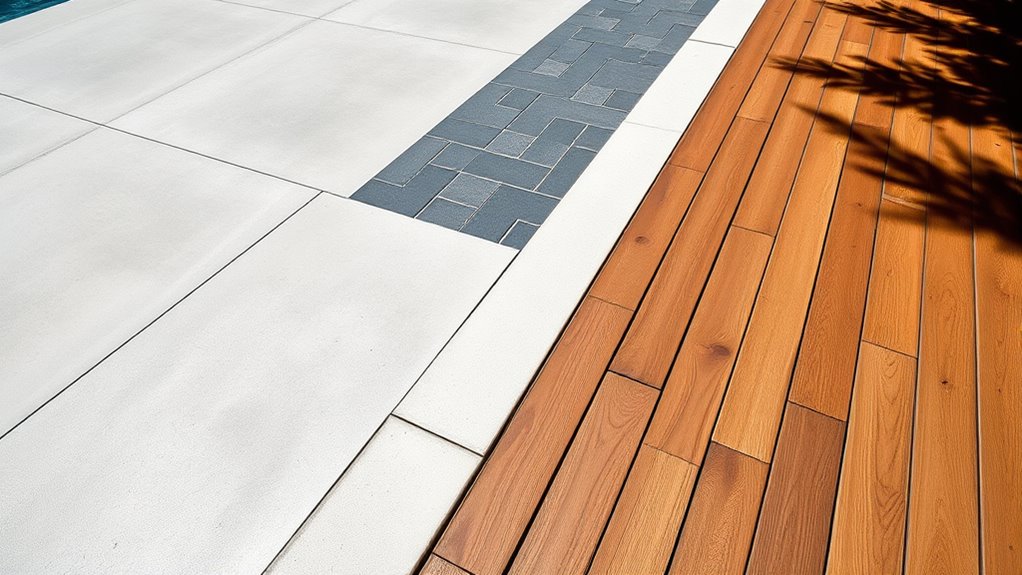

When choosing your pool deck materials, consider concrete for its durability and customization options, pavers for a natural look that’s easy to repair, or wood for a warm, inviting feel. Each offers slip resistance with proper treatment and requires different maintenance levels. Concrete needs periodic sealing, pavers need weed control, and wood requires sealing and regular upkeep. Exploring these options further can help you make the best choice for safety, style, and longevity.
Key Takeaways
- Concrete offers durability, customization, and low initial cost but requires sealing and regular maintenance to prevent cracking.
- Pavers provide a natural look, easy repairs, and good slip resistance when properly installed and maintained.
- Wood creates a warm, inviting atmosphere but needs frequent sealing, cleaning, and protection against moisture and insects.
- All materials should incorporate slip-resistant surfaces and proper installation to ensure safety around the pool area.
- Consider safety, aesthetics, maintenance, and budget when choosing between concrete, pavers, and wood for a pool deck.
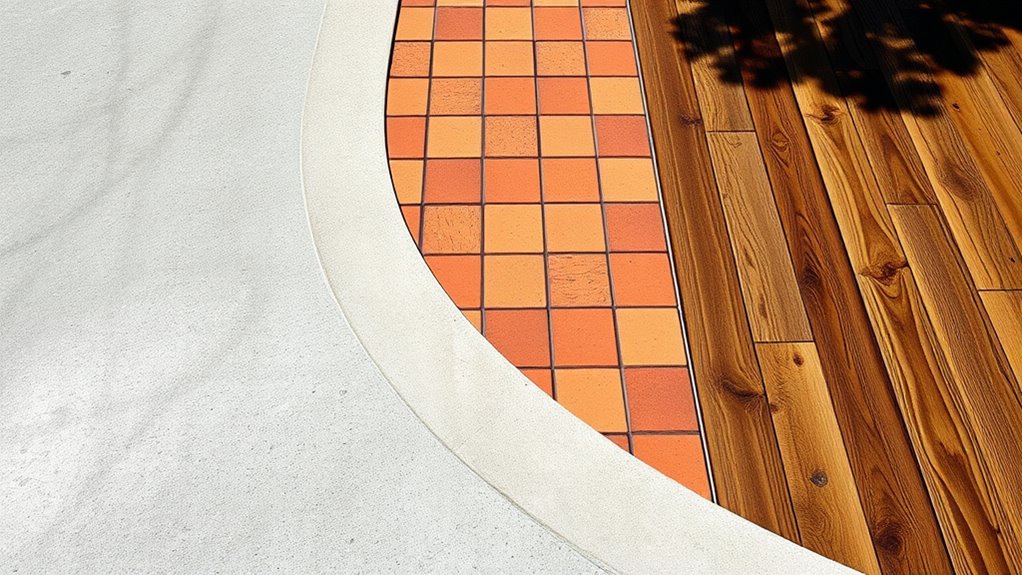
Are you choosing the right material for your pool deck? Selecting the proper surface isn’t just about aesthetics; it’s also about guaranteeing pool safety and making maintenance easier. Different materials offer unique benefits and challenges, so understanding how each one performs can help you make an informed decision.
Concrete is a popular choice for pool decks because of its durability and versatility. It provides a stable, non-slip surface when textured properly, which is essential for preventing accidents around the water. To enhance pool safety, you should consider finishing concrete with a slip-resistant coating or adding textured patterns. Maintenance tips for concrete include sealing it periodically to prevent stains and cracks, especially in areas with harsh weather conditions. Regular cleaning with a pressure washer helps keep the surface free of algae and debris, reducing slip hazards and maintaining its appearance. Concrete is also relatively low-cost and customizable, allowing you to choose finishes and colors that match your landscape. However, keep in mind that concrete can crack over time if not properly maintained, so inspecting and sealing it regularly is vital.
Pavers offer another excellent option, blending style with practicality. Made from natural stone, brick, or concrete, pavers are easy to replace if damaged and tend to provide a more natural look. They’re also slip-resistant when properly installed and maintained, making them a safe choice for families. Maintenance tips for pavers include sweeping away debris regularly and occasionally washing them with a mild detergent. Because pavers are individual units, weeds or grass can sometimes grow between them, so applying a joint stabilizer or weed killer periodically helps keep the area tidy. Pavers are less prone to cracking than concrete and tend to shift less, which can extend their lifespan. Their modular nature makes repairs straightforward, but you should guarantee proper installation from the start to prevent uneven surfaces, which can pose tripping hazards.
Wood adds a warm, inviting feel to your pool area, but it requires more upkeep. Wood decks can be slip-resistant when treated with anti-slip coatings, which enhances pool safety, especially when wet. Maintenance tips include regular sealing to protect against moisture, rot, and insect damage, along with cleaning to prevent mold and mildew buildup. Wood can be more comfortable underfoot and offers a natural aesthetic, but it’s susceptible to weathering and requires frequent inspections to spot loose boards or splinters. This surface may need sanding and refinishing over time to maintain its appearance and safety. Despite the extra effort, a well-maintained wooden deck can last for many years, adding a cozy vibe to your poolside space.
Choosing the right material depends on your priorities for safety, maintenance, and style. Each option—concrete, pavers, or wood—has its unique strengths, so weigh those against your lifestyle and budget to create a beautiful, safe, and easy-to-maintain pool deck.

KILZ Decorative Slip-Resistant Concrete Coating, Gray, 1 Gallon
- Durable Stone-Like Finish: Creates long-lasting textured surface
- Indoor & Outdoor Use: Suitable for various horizontal surfaces
- Crack Filling & Resistance: Fills cracks and resists hot tire pick-up
As an affiliate, we earn on qualifying purchases.
As an affiliate, we earn on qualifying purchases.
Frequently Asked Questions
Which Pool Deck Material Is Most Slip-Resistant?
You should choose textured concrete or rubber pavers for the most slip-resistant pool deck. These materials offer superior slip resistance, especially when wet, enhancing safety features around your pool. Wood decks can be slippery if not treated properly, so consider adding anti-slip coatings or mats. Prioritizing slip resistance helps prevent accidents, ensuring you and your guests enjoy the pool area safely and confidently.
How Do I Maintain and Clean Different Deck Materials?
Your pool deck is your sanctuary, so keeping it pristine feels like battling an epic quest. To maintain and clean different deck materials, start with regular sweeping to remove debris. For concrete and pavers, apply a deck sealing product annually to prevent stains and damage. For wood, use gentle cleaners and stain removal techniques as needed. Always follow manufacturer instructions to preserve your deck’s beauty and durability, turning routine maintenance into a breeze.
Are There Eco-Friendly Options for Pool Decks?
Yes, you can choose eco-conscious options for your pool deck. Opt for sustainable materials like recycled composite decking, permeable pavers, or sustainably sourced wood. These choices help reduce environmental impact, conserve water, and minimize chemical use. By selecting sustainable materials, you not only create a beautiful outdoor space but also support eco-friendly practices. Your pool deck becomes a greener, more sustainable extension of your home, promoting eco-conscious living.
What Is the Average Lifespan of Each Material?
You’ll find that concrete typically lasts around 25-30 years, offering solid durability and long-term material longevity. Pavers tend to be more durable, often exceeding 30 years, thanks to their strength and ease of repair. Wood decks usually have a shorter lifespan of about 10-15 years unless properly maintained; their material durability depends heavily on exposure and upkeep. Choosing the right material balances your desired pool deck durability and longevity expectations.
Can Multiple Materials Be Combined in One Pool Deck?
Think of your pool deck as a canvas, ready for a masterpiece of mixed materials. Yes, you can blend concrete, pavers, and wood, creating a harmonious mosaic. Just consider the material cost and installation complexity; combining them might increase both. You’ll need careful planning and skilled hands to guarantee the seamless integration, but the result can be a stunning, personalized oasis that reflects your unique style and functional needs.
Conclusion
Choosing the right pool deck material is like picking the perfect outfit—it sets the tone and style. Whether you prefer the durability of concrete, the elegance of pavers, or the natural feel of wood, each option offers unique benefits. Consider your budget, maintenance, and aesthetic goals. With the right choice, your pool area becomes a welcoming oasis you’ll enjoy daily, just like a well-tailored suit that makes you feel confident and relaxed.