
The Langelier Saturation Index (LSI) helps you determine if your pool water is balanced, corrosive, or scaling. By measuring pH, alkalinity, calcium hardness, temperature, and TDS, you can calculate the LSI to see if your water is within the ideal range of -0.3 to +0.3. Keeping your LSI in this range prevents damage and keeps your pool safe and clear. If you keep going, you’ll discover how to adjust your water chemistry effectively.

Get pool and patio gear delivered free — and shop member deals
- Fast, free delivery on millions of items
- Access to Prime Big Deal Days deals on October 6–7
- Prime Video, Amazon Music and more included
Key Takeaways
- The LSI indicates whether pool water is balanced, corrosive, or scaling by analyzing pH, alkalinity, calcium hardness, temperature, and TDS.
- A balanced LSI ranges between -0.3 and +0.3, helping prevent damage and maintain water clarity.
- Regular testing and inputting readings into an LSI calculator guide necessary chemical adjustments.
- Adjusting pH, alkalinity, or calcium hardness optimally maintains water stability and protects equipment.
- Mastering LSI management ensures safer, clearer pools and reduces chemical costs and equipment repairs.
Have you ever wondered how to improve your pool’s filtration system? While filtration is essential, understanding your pool’s water chemistry is equally important for maintaining a safe and clear swimming environment. One key tool in this process is the Langelier Saturation Index (LSI), which helps you determine whether your water is balanced, corrosive, or scaling. Knowing how to interpret and manage the LSI can considerably enhance your pool maintenance routine, preventing damage and ensuring ideal water quality.
The LSI is a calculated number based on several water chemistry parameters: pH, total alkalinity, calcium hardness, temperature, and total dissolved solids (TDS). When these factors are in harmony, the water is considered balanced, meaning it’s neither overly corrosive nor prone to scaling. If your water is too corrosive, it can damage pool surfaces, equipment, and plumbing. On the other hand, if it’s scaling, mineral deposits can form on your pool’s surfaces and equipment, leading to costly repairs. By regularly monitoring the LSI, you gain a clear picture of your pool’s chemical stability and can make precise adjustments to keep everything in balance.
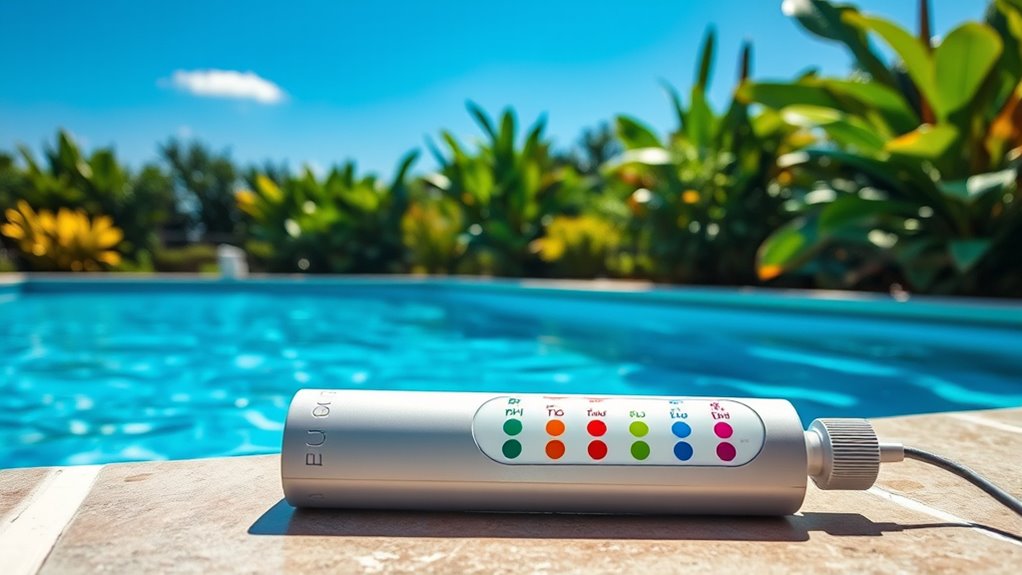
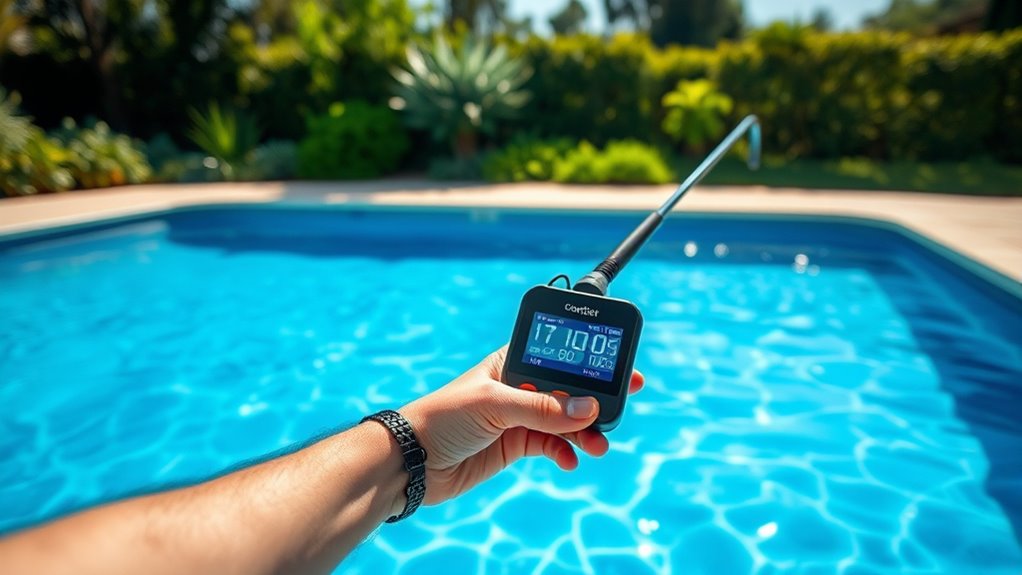
To effectively use the LSI in your pool maintenance, start by testing your water regularly with reliable test kits. Once you have your readings, plug them into an LSI calculator or reference charts to determine the current index value. A balanced LSI typically falls between -0.3 and +0.3. If your index indicates the water is too corrosive (below -0.3), you’ll need to raise the pH, alkalinity, or calcium hardness levels, or adjust your water temperature if possible. Conversely, if the water is scaling (above +0.3), you might need to lower those parameters to prevent mineral buildup.
Adjusting your water chemistry based on the LSI isn’t a one-time fix; it requires ongoing attention and fine-tuning. Proper pool maintenance involves not just adding chemicals randomly but understanding how each adjustment influences the overall water chemistry. For example, adding sodium bicarbonate can raise alkalinity, which in turn affects the LSI, while calcium chloride can increase calcium hardness. Keeping these levels aligned helps you maintain water that’s safe, comfortable, and equipment-friendly. Ultimately, mastering the LSI provides you with a proactive way to manage your pool’s water chemistry, reduce chemical consumption, and extend the longevity of your pool equipment, making your swimming experience both enjoyable and worry-free.
Additionally, understanding water chemistry parameters is crucial for effectively managing the LSI and ensuring your pool remains in optimal condition.
As an affiliate, we earn on qualifying purchases.
Frequently Asked Questions
How Often Should I Test My Pool’s LSI?
You should test your pool’s LSI at least once a week to maintain proper water testing and chemical balance. Regular testing helps you catch imbalances early, preventing issues like corrosion or scale buildup. If your pool gets heavy use or experiences weather changes, consider testing more often. Keeping an eye on your LSI guarantees your water stays balanced, safe, and comfortable for swimmers.
Can LSI Be Used for All Types of Pools?
Yes, LSI can be used for all types of pools to help maintain proper pH adjustment and calcium balance. It provides an essential measure of your pool’s water stability, ensuring it’s neither corrosive nor scale-forming. Regular testing and adjusting your pool’s chemistry based on LSI readings helps protect your equipment and keeps the water crystal clear. Just remember, different pools may require tailored adjustments for peak results.
What Are the Signs of an Incorrect LSI Level?
If your LSI is off, you might notice cloudiness, scaling, or corrosion signs. Studies show that pH imbalance affects over 60% of pool issues. When LSI is too low, your water becomes corrosive, risking equipment damage. Conversely, a high LSI causes scale buildup. Keep an eye on pH levels and water clarity to catch these signs early, ensuring your pool stays balanced and safe.
How Does LSI Affect Pool Equipment Longevity?
If your LSI isn’t balanced, it can harm your pool equipment longevity by causing corrosion or scaling. Properly managing LSI helps prevent corrosion, which damages pumps, filters, and heaters, reducing maintenance needs. When you keep the LSI in the ideal range, you protect your equipment from unnecessary wear and tear, ultimately saving money and extending its lifespan. Regular testing and adjustments are key to maintaining equipment and ensuring peak pool performance.
Are There Seasonal Variations in Optimal LSI Levels?
Yes, seasonal fluctuations can impact ideal LSI levels. During colder months, you’ll need to make temperature adjustments to maintain proper LSI, as lower temperatures can cause the water to become undersaturated, leading to corrosion. In warmer seasons, higher temperatures may require you to adjust pH or alkalinity. Regularly monitoring these seasonal changes helps you keep the LSI balanced, protecting your pool and equipment year-round.
Conclusion
Now that you understand the LSI, you’re better equipped to keep your pool balanced and sparkling. Remember, a little effort goes a long way—don’t let your pool materials be a square peg in a round hole. By regularly checking and adjusting your water’s pH and alkalinity, you’ll prevent costly issues down the road. Keep these tips in mind, and you’ll have a crystal-clear pool that’s the envy of the neighborhood!
Halloween Picks
halloween
As an affiliate, we earn on qualifying purchases.