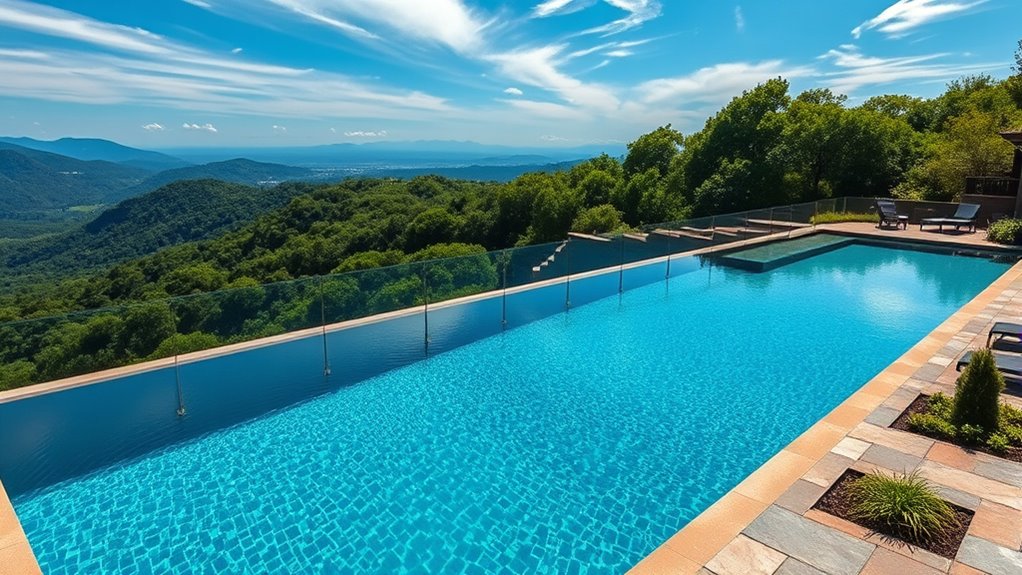

When permitting a hillside infinity pool, you need to prioritize safety features like fencing and alarms while ensuring compliance with local building codes and zoning laws. It’s important to submit detailed plans that include structural, safety, and environmental assessments. Early communication with authorities helps avoid delays, and you’ll want to address concerns related to soil stability, erosion, and drainage. If you look further, you’ll find key steps to navigate the complex approval process and meet all requirements successfully.
Key Takeaways
- Conduct thorough geotechnical and environmental assessments to ensure slope stability and ecosystem protection.
- Submit detailed plans including safety features, erosion control, and drainage measures for permit approval.
- Ensure compliance with local zoning laws, building codes, and hillside-specific regulations early in planning.
- Incorporate safety features like fencing and alarms to meet safety standards and prevent accidents.
- Engage with regulatory authorities early to address permits, inspections, and documentation requirements proactively.
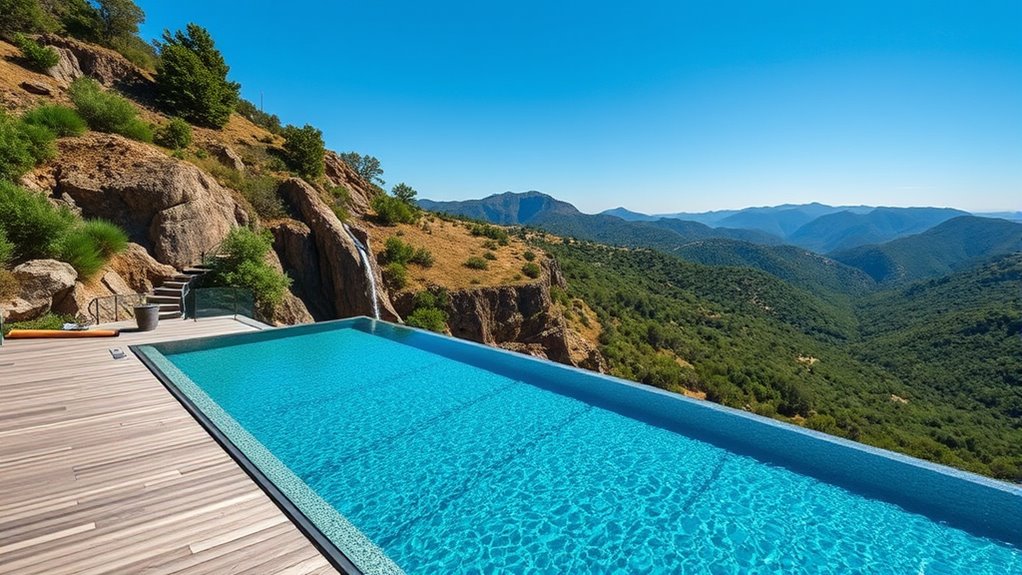
Building a hillside infinity pool can transform your property into a stunning retreat, but before diving in, you need to understand the permitting process involved. One of the first considerations is guaranteeing your project prioritizes pool safety. Infinity pools, especially on hillside terrains, require careful planning to prevent accidents, such as slipping or falling, particularly near the edges. Local regulations often mandate safety features like fencing, alarms, or covers, and you’ll need to demonstrate these measures meet safety standards. Ignoring pool safety guidelines can lead to costly delays or even legal issues if accidents occur. Make sure to consult with local authorities or pool safety experts early in the process to understand specific requirements. This not only helps protect future users but also ensures your project complies with safety laws, avoiding potential fines or reconstruction costs.
Equally important is evaluating the environmental impact of your hillside infinity pool. Building on a slope often involves altering the natural landscape, which can disrupt local ecosystems and water flow. Permitting agencies will likely assess how your construction affects drainage, soil stability, and surrounding vegetation. You may be required to submit erosion control plans or implement measures to minimize soil runoff during and after construction. Additionally, consider the source and sustainability of your pool’s water supply. Using environmentally friendly filtration systems and energy-efficient pumps can reduce your ecological footprint and make your project more appealing to regulators. Incorporating sustainable practices can also enhance your project’s approval prospects and demonstrate your commitment to responsible development. Environmental impact assessments are increasingly a prerequisite for approval, especially if your hillside is within a protected area or near sensitive habitats. Being proactive about these concerns can streamline your permit approval process and reflect your commitment to responsible development.
Navigating the permitting process involves more than just understanding safety and environmental factors. You’ll need to submit detailed plans, including structural engineering reports, drainage solutions, and safety features, to local planning departments. These documents demonstrate your project’s compliance with building codes and zoning laws. In hillside locations, you might also need geotechnical assessments to evaluate soil stability and prevent future issues like landslides or erosion. Securing the necessary permits can be a complex, time-consuming process, but it’s essential for avoiding legal complications or costly modifications later on. Remember, staying transparent with regulators and providing comprehensive documentation will help facilitate a smoother approval process. By thoroughly addressing pool safety and environmental impact considerations from the outset, you can enjoy your hillside infinity pool for years to come, confident that it’s built responsibly and within legal boundaries.

Pool Fence DIY by Life Saver Fencing Section Kit, 4 x 12-Feet, Black
- Removable Mesh Pool Fence: For pool safety and protection
- US CPSC Height Compliance: 4 feet tall for safety standards
- Pre-assembled Sections: Includes 4' x 12' sections
As an affiliate, we earn on qualifying purchases.
As an affiliate, we earn on qualifying purchases.
Frequently Asked Questions
Are Special Permits Needed for Pools Over a Certain Size?
Yes, you need special permits if your hillside infinity pool exceeds the local permit thresholds for size. Typically, larger pools require additional approval due to safety, zoning, and environmental concerns. You should check with your local building department to determine the specific pool size that triggers permit requirements. Ensuring you meet these thresholds helps you stay compliant and avoid fines or delays during construction.
How Long Does the Permitting Process Typically Take?
The permitting process can feel like an eternity, often taking anywhere from 4 to 12 weeks, depending on your pool design and local regulations. You’ll want to prepare thoroughly, as delays can increase construction costs and extend your wait. Make sure all documentation is complete and accurate to speed things up. Being proactive and understanding your area’s rules can help avoid surprises, making your hillside infinity pool dream a reality sooner.
Do Hillside Pools Require Additional Safety Measures?
Yes, hillside pools often require extra safety measures like pool fencing to guarantee accidents, especially since they’re on slopes. You might also need barriers around water features to assure safety. Local codes usually mandate specific fencing height and gate locks. Be sure to check with your permitting agency, as they may have additional safety requirements tailored for hillside locations to protect residents and visitors alike.
Are There Specific Landscaping Restrictions for Hillside Pools?
Yes, there are often landscaping restrictions for hillside pools. You need to take into account landscape aesthetics to ensure your design blends with the natural surroundings, and avoid disrupting the environment. Local regulations may limit tree removal or grading activities to reduce environmental impact. Check with your permitting authority to understand specific restrictions, so you can plan your landscaping accordingly without risking violations or harming the hillside’s natural beauty.
Can Permits Be Expedited for Emergency Installations?
Sometimes, what seems like a coincidence can reveal urgent needs. When you face an emergency installation, you can request emergency approvals or permit fast tracking, which accelerates the usual process. Authorities understand that urgent situations require quick action, so they often prioritize these applications. Reach out to your local permitting office promptly, explain the situation clearly, and request expedited review to make sure your hillside infinity pool gets approved without unnecessary delays.
Conclusion
Managing permitting for hillside infinity pools can feel like walking a tightrope, but with careful planning, you’ll find the process manageable. Keep all your ducks in a row, stay informed about local regulations, and work closely with your authorities. Remember, Rome wasn’t built in a day, so patience is key. By staying proactive and diligent, you’ll soon be relaxing in your stunning infinity pool, turning a mountain of paperwork into a mountain of memories.