To keep your pool water clean, focus on proper pump efficiency by ensuring it’s the right size and well-maintained. Aim for complete water turnover every eight hours to prevent stagnation. Make sure your return jets are positioned for even flow distribution, which helps with chemical mixing. Additionally, regularly clean your skimmer and filters to avoid clogs. Implementing smart technology can boost your circulation management. Keep exploring to discover even more effective habits for crystal-clear water!
Key Takeaways
- Ensure your pump is properly sized to maximize efficiency and maintain clean water without unnecessary energy costs.
- Aim for complete water turnover every eight hours to prevent stagnation and dirt buildup.
- Maintain clean skimmers and filters to enhance water flow and reduce strain on the pump.
- Adjust return jet angles for optimal circulation and effective chemical distribution throughout the pool.
- Utilize smart monitoring technology to detect issues early and optimize overall pool management.
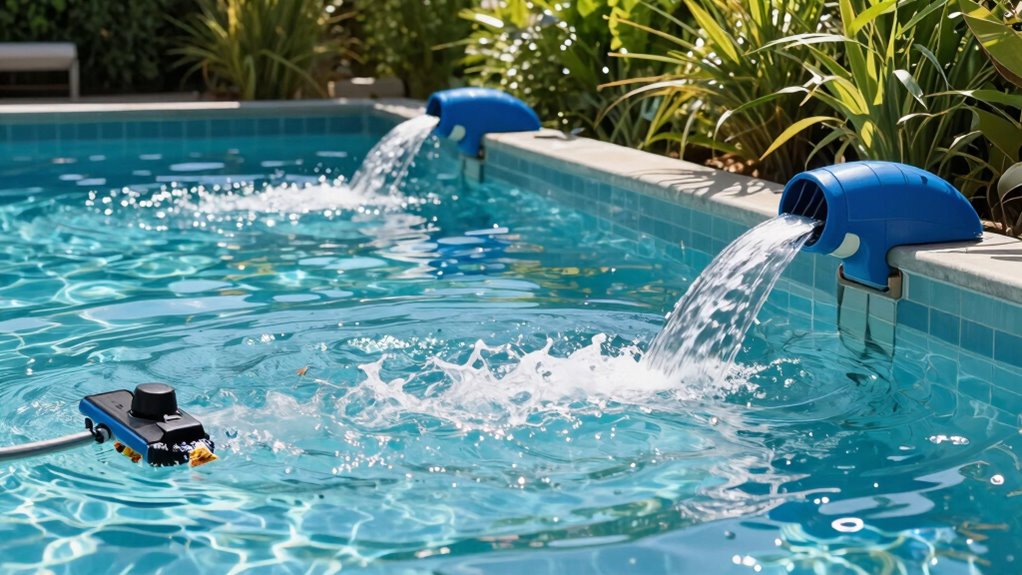
When it comes to maintaining a clean and inviting pool, understanding circulation habits is crucial. You might not realize it, but the way water flows through your pool directly impacts its cleanliness. Proper circulation helps distribute chemicals evenly and keeps debris from settling. That’s why focusing on pump efficiency and water turnover is vital to a sparkling pool. Incorporating connected equipment and monitoring technology can also help optimize these processes for better results.
First off, let’s talk about pump efficiency. Your pool pump is the heart of the circulation system, and if it’s not running effectively, you’re wasting energy and potentially compromising water quality. You should regularly check your pump’s performance. If it’s struggling or making unusual noises, it might be time for a repair or replacement. Look for a pump that matches your pool size and type; an oversized pump can lead to unnecessary energy costs, while an undersized one won’t keep the water clean efficiently. Proper pump sizing is essential for maintaining optimal circulation and energy use. Ensuring your pump is correctly sized can also extend its lifespan and reduce maintenance costs over time.
Water turnover is another critical factor. This term refers to how long it takes for your pump to circulate all the water in the pool. Ideally, you want to achieve a complete turnover at least once every eight hours. To guarantee this, calculate your pool’s volume and match it to your pump’s flow rate. If your pump can’t keep up, you’ll notice stagnant areas and dirt accumulation. It’s essential to adjust your pump settings or consider upgrading to a model that can handle your pool’s demands. Regularly monitoring flow rates can help you detect issues early and ensure your system is running efficiently. Additionally, maintaining proper water flow is vital for preventing dead spots and ensuring even distribution of chemicals and temperature. Proper flow distribution can significantly improve overall water quality and reduce cleaning frequency.
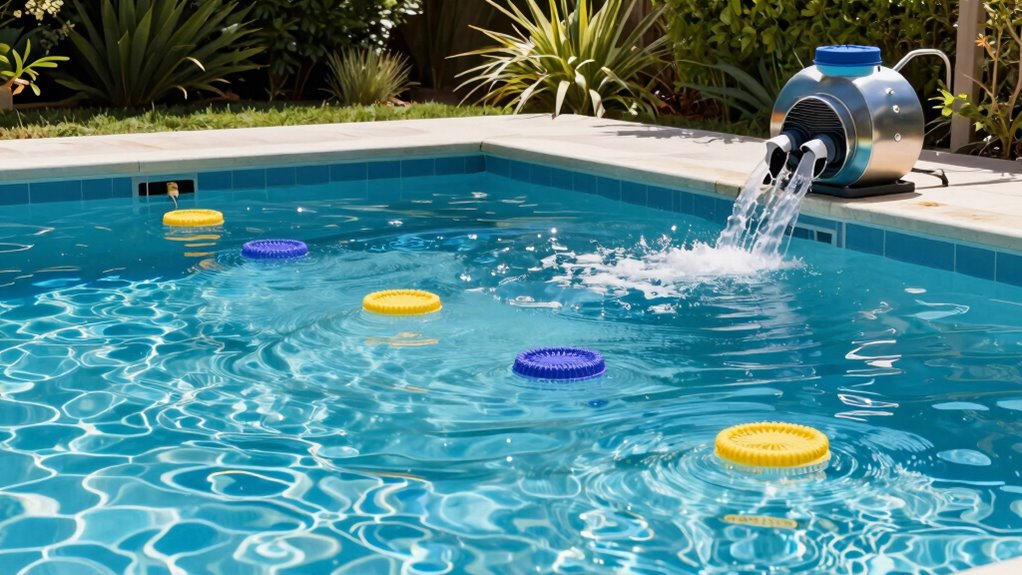
You also need to pay attention to the placement of your return jets. Positioning them correctly can enhance circulation, directing water toward the skimmer and preventing dead spots where debris can settle. Experiment with angles and flow rates to find the best setup for your pool. It may take a little tinkering, but it’s worth it for the clarity of your water. Proper jet placement can significantly improve water movement and reduce the need for frequent cleaning. Additionally, considering the use of automatic water levelers can help maintain optimal water levels and support consistent circulation.
Regular maintenance can’t be overlooked either. Keeping your skimmer and filters clean ensures that your pump works at peak efficiency. Clogged filters can lead to decreased water turnover and increased strain on your pump. Make it a habit to check these components weekly, especially during peak swimming season. Implementing smart monitoring systems can also help you stay ahead of potential issues before they affect water quality.
As an affiliate, we earn on qualifying purchases.
Frequently Asked Questions
How Often Should I Run My Pool Pump?
You should run your pool pump for at least 8 to 12 hours a day, especially during peak swimming season. This guarantees maximum pump efficiency and helps maintain clean water. Regularly check your pump’s performance and clean the filters to enhance its efficiency. Following these maintenance tips not only keeps your pool crystal clear but also prolongs the life of your pump. Stay consistent, and you’ll enjoy a sparkling pool all summer long!
What Is the Ideal Pool Water Temperature?
The ideal pool water temperature usually falls between 78°F and 82°F. This range keeps the water comfortable for swimming without feeling too cold or too warm. If you’re hosting a pool party or have kids splashing around, you might want to bump it up a bit. Just remember, maintaining this ideal temperature helps enhance your swimming experience and encourages you to enjoy your pool more often.
Can I Use Solar Covers for Better Circulation?
Yes, you can use solar covers for better circulation. While their primary benefit is heat retention, they can also improve circulation efficiency by preventing debris from entering the pool and reducing evaporation. When you remove the cover during the day, the water circulates more freely, allowing your filtration system to work effectively. Plus, less debris means cleaner water, which complements your overall pool maintenance routine. You’ll enjoy a more enjoyable swimming experience!
How Do Leaves Affect Pool Water Cleanliness?
Leaves are nature’s confetti, but they can wreak havoc on your pool’s cleanliness. When leaf debris accumulates, it not only clogs filters but also disrupts water chemistry. As they decay, they release organic matter, which can lead to algae growth and cloudy water. To keep your pool sparkling, regularly skim the surface and maintain proper circulation. You’ll enjoy clearer water and a healthier swimming environment, making each dip invigorating and inviting.
What Are the Best Times to Circulate Pool Water?
The best times to circulate pool water are in the morning and evening. Morning circulation helps remove debris that settled overnight and guarantees your pool’s chemicals distribute evenly. Evening circulation cools down the water and allows for better filtration after a day of swimming. By circulating during these times, you’ll keep your water cleaner and more inviting, making your pool a rejuvenating oasis whenever you’re ready to plunge in.
Conclusion
By embracing these pool circulation habits, you’re not just maintaining clean water; you’re crafting a crystal-clear oasis that invites laughter and relaxation. Think of your pool as a shimmering jewel, sparkling in the sun, reflecting the joy of summer. Each ripple enhances the beauty, and with your diligent care, it’ll remain a rejuvenating escape. So plunge in, keep that water flowing, and let your pool be the heart of your backyard paradise.