
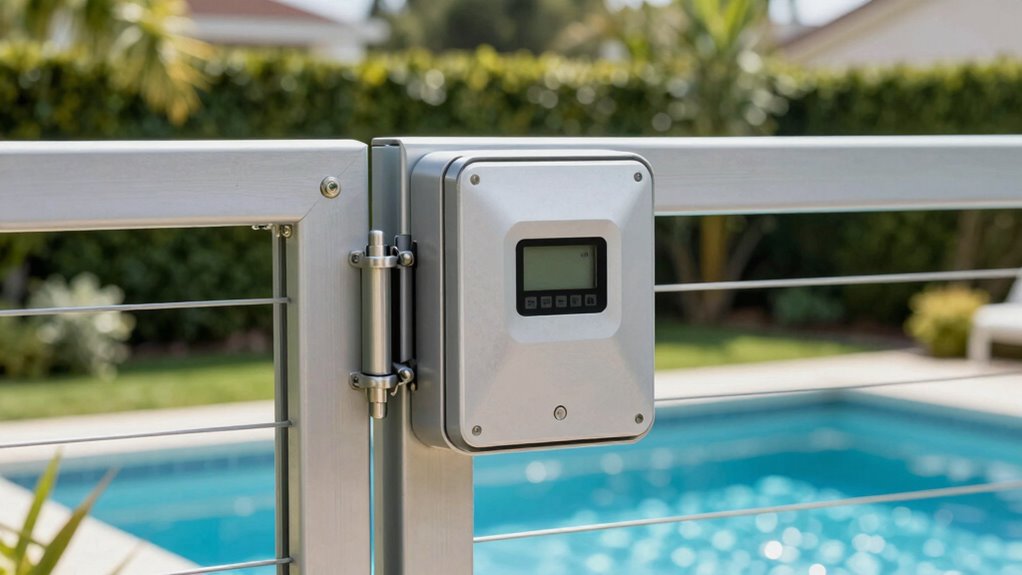

Pool gate alarms and door alarms both enhance safety but serve different purposes. Pool gate alarms are installed outside on gates, alerting you when someone tries to enter the pool area, mainly for outdoor safety. Door alarms are mounted on doors, monitoring indoor-to-outdoor access points, acting as an extra security barrier. Understanding these differences helps you choose the right devices—continue exploring to discover how they work together for complete protection.
Key Takeaways
- Pool gate alarms are mounted on outdoor gates to prevent unauthorized access to pool areas.
- Door alarms monitor indoor-to-outdoor entry points, providing alerts for restricted or water-adjacent zones.
- Pool gate alarms are weather-resistant and designed for outdoor conditions, unlike typically indoor-focused door alarms.
- Both alarms serve as safety barriers but target different access points to enhance overall safety.
- Combining both types offers comprehensive coverage for outdoor and indoor safety around water zones.
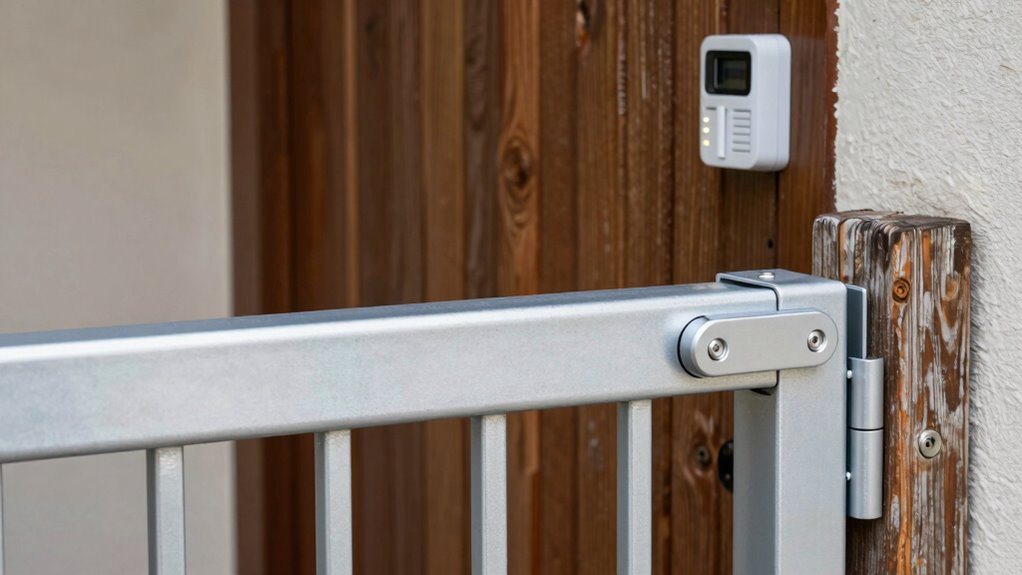
When it comes to keeping your loved ones safe around water, installing pool gate alarms and door alarms is one of the most effective measures you can take. These alarms are designed to alert you immediately when someone tries to access the pool area or enters your home unexpectedly. Child safety is the primary concern here, especially if you have young children or pets who might wander into dangerous zones without warning. Proper alarm installation acts as a crucial layer of protection, giving you peace of mind and helping prevent tragic accidents. Understanding the ethics in safety measures can also guide responsible decision-making for your family’s well-being.
Pool gate alarms are typically mounted on gates that lead directly to the pool area. When the gate is opened, the alarm sounds, alerting you instantly. This type of alarm is specifically built for outdoor use and is highly sensitive to movement or gate opening. It’s an essential safety feature because it targets the most common entry point for children and pets. By installing these alarms, you can ensure that any unauthorized or accidental entry is immediately noticed, giving you time to respond and prevent potential drowning incidents. Additionally, many models offer customizable sensitivity settings to minimize false alarms caused by wind or pets. Selecting the right alarm technology can further enhance the effectiveness of your safety system.
Pool gate alarms alert immediately when gates open, preventing unauthorized access and enhancing safety around the pool area.
Door alarms, on the other hand, are installed on entry doors inside your home. These alarms are crucial for monitoring access points that lead into areas where children or pets might be left unsupervised. For example, installing door alarms on the doors that lead from the house to the pool deck creates an extra safety barrier. When someone opens these doors, the alarm triggers, alerting you to the movement. This is especially helpful if you’re in a different room or not paying close attention, since it provides an instant warning that someone may be heading toward the water or entering a restricted area. Properly maintaining and testing these alarms regularly ensures they function correctly when needed, which is vital for safety. Incorporating safety standards in your alarm setup can further ensure reliable protection. Being aware of drift in alarm sensitivity can help you fine-tune your system to avoid unnecessary alerts.
Both types of alarms serve different but complementary purposes. Pool gate alarms focus on the outdoor entry points, while door alarms help control indoor access. Together, they form a comprehensive safety system that significantly reduces risks. Plus, alarm installation is generally straightforward, and many models come with features like loud alerts, battery backups, and wireless connectivity, making them easy to maintain and customize. Understanding how these alarms operate and their technology features can help you select the best options for your specific safety needs.

Hendun Pool Gate Alarm Outdoor with Remote, 140Db Waterproof Ip67, 2 Pack
- Loud 140dB Alarm: Super loud sound alerts for safety
- Waterproof IP67: Suitable for outdoor use in various weather conditions
- Easy Installation: Multiple mounting options including tape, tie, screw
As an affiliate, we earn on qualifying purchases.
As an affiliate, we earn on qualifying purchases.
Frequently Asked Questions
Are Pool Gate Alarms Legally Required in All States?
No, pool gate alarms aren’t legally required in all states. However, many areas emphasize child safety, encouraging or mandating device installation to prevent accidents. You should check your local regulations because requirements vary. Installing pool gate alarms is a proactive way to keep children safe around water, even if not legally mandated. Stay informed about your state’s rules to guarantee you’re doing everything possible to protect your loved ones.
Can Door Alarms Be Integrated With Smart Home Systems?
Yes, you can integrate door alarms with smart home systems. This integration allows you to customize alarms, set alerts, and control security remotely. You might need compatible smart hubs or devices, but many modern door alarms are designed for seamless smart home integration. This setup enhances your home security by providing real-time notifications and easy management, making it simple to monitor door activity from your smartphone or other smart devices.
How Do Alarm Sensors Differentiate Between Humans and Pets?
Alarm sensors use pet detection features to differentiate between humans and pets by analyzing movement patterns and size. They often rely on sensor calibration to fine-tune sensitivity levels, helping to reduce false alarms caused by small animals. When properly calibrated, these sensors ignore pets while alerting you to human activity. Regularly adjusting the calibration guarantees the system accurately detects humans without triggering false alarms from pets, keeping your home secure and hassle-free.
What Maintenance Is Needed for Long-Term Alarm Functionality?
To keep your alarm system humming smoothly, you’ll want to focus on regular sensor calibration and monitoring battery longevity. Periodically calibrate sensors to guarantee accurate detection, and replace batteries before they run out to avoid gaps in security. Checking connections and cleaning sensors also helps maintain performance. By giving your system some consistent attention, you’ll enjoy reliable protection and peace of mind for years to come.
Do Alarms Notify Emergency Services Automatically?
Most alarms don’t automatically notify emergency services unless connected to a professional monitoring system. If false alarms happen frequently, they can desensitize you and delay responses. Sensor sensitivity plays a big role here; if it’s too high, false alarms increase, but if it’s too low, real emergencies might go unnoticed. You should check your alarm’s features and consider professional monitoring to guarantee timely alerts during emergencies.
Conclusion
While both pool gate alarms and door alarms aim to keep you safe, they serve different purposes—one protects your pool area, the other your home. Some might think installing both is redundant, but combining them offers thorough security, especially if you have kids or pets. Don’t compromise on safety; using both alarms provides peace of mind knowing you’re covered from multiple angles. Ultimately, investing in both ensures your loved ones stay safe and your property remains secure.