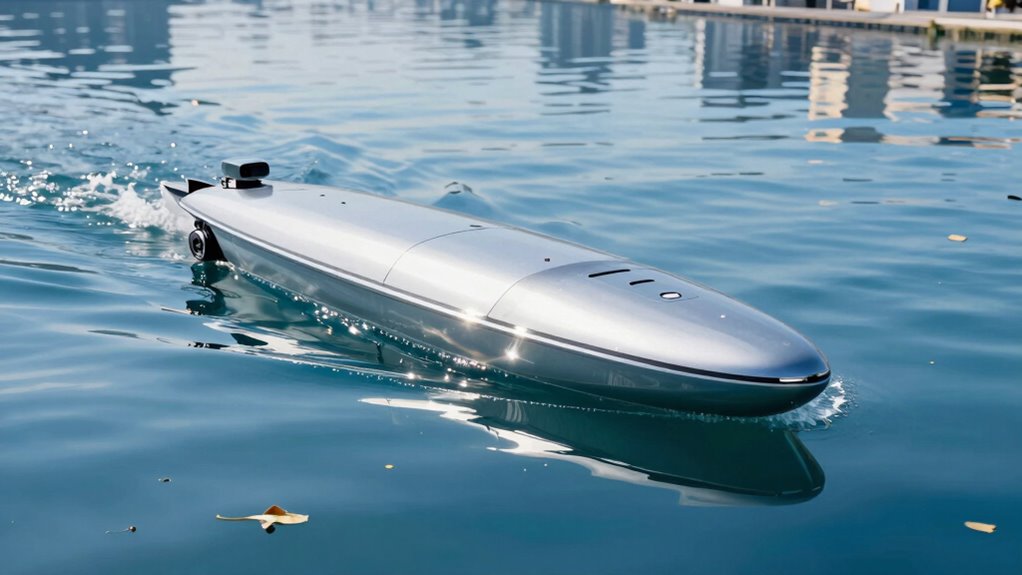

Surface skimmer robots are gaining attention because they offer an efficient and safer way to remove marine pollutants like oil, plastic, and chemicals. They can be deployed quickly after pollution events and operate continuously, reducing the need for human exposure in hazardous areas. Equipped with advanced sensors and autonomous systems, they improve cleanup accuracy and environmental monitoring. If you want to discover how these innovations are transforming marine pollution control, keep exploring further.

Get pool and patio gear delivered free — and shop member deals
- Fast, free delivery on millions of items
- Access to Prime Big Deal Days deals on October 6–7
- Prime Video, Amazon Music and more included
Key Takeaways
- They efficiently remove floating pollutants like oil and plastic, enhancing cleanup speed and effectiveness.
- Their autonomous and rapid deployment capabilities enable quick responses to pollution incidents.
- Advanced sensors and real-time data improve targeting accuracy and environmental monitoring.
- They operate safely in hazardous conditions, reducing human risk during cleanup efforts.
- Technological innovations boost operational efficiency, making them a sustainable solution for marine pollution control.
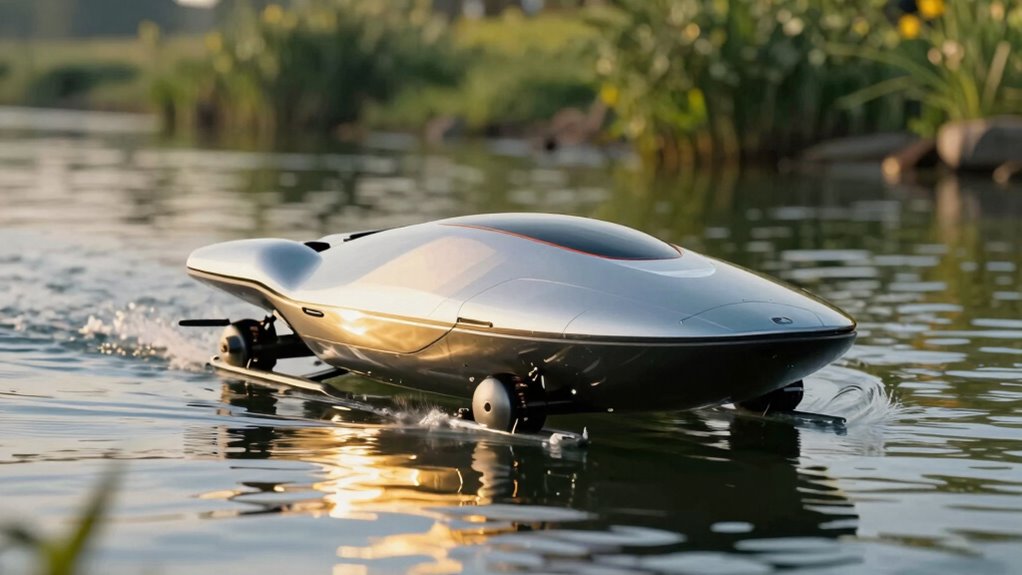
As environmental concerns grow, surface skimmer robots are quickly catching attention for their ability to efficiently remove pollutants from water surfaces. Marine pollution, a mounting global issue, threatens ecosystems, human health, and economies. Traditional cleanup methods often fall short—they’re labor-intensive, costly, and sometimes ineffective, especially over large or hard-to-reach areas. That’s where robotic technology steps in. These autonomous devices are designed to target and extract floating contaminants like oil spills, plastic debris, and chemical pollutants, all while operating with minimal human intervention.
What makes surface skimmer robots stand out is their precision and efficiency. They can be deployed rapidly after a pollution event, often within hours, to contain and remove surface contaminants before they spread further. Equipped with advanced sensors and real-time data processing, these robots can identify the most polluted zones and adapt their operations accordingly. This targeted approach means they use less energy and resources than conventional cleanup methods, making the process more sustainable and cost-effective. Additionally, their ability to operate continuously without fatigue allows for extended cleanup efforts, which are often needed in large-scale marine pollution scenarios.
Robotic technology in surface skimmer systems also offers significant safety advantages. Oil spills and chemical leaks pose dangers to cleanup crews, exposing them to toxic substances. By deploying autonomous robots, you reduce human risk, as these machines can work in hazardous environments without direct exposure. Their durability and resilience mean they can operate in tough conditions—rough seas, high winds, and varying temperatures—further enhancing their effectiveness.
Another key reason these robots are gaining attention is their potential for integration into broader marine monitoring systems. They can collect valuable data on pollution levels, water quality, and environmental conditions, providing real-time insights that inform emergency responses and long-term pollution management strategies. This capability enhances your ability to respond swiftly and plan more effective cleanup operations, ultimately leading to healthier oceans. Furthermore, advancements in sensor technology allow these robots to improve their detection capabilities, making them even more precise in identifying and targeting pollutants. This integration of emerging technologies demonstrates how innovation continues to propel marine pollution solutions forward. Additionally, the development of autonomous navigation systems ensures these robots can operate efficiently over large areas with minimal human guidance. Incorporating machine learning algorithms can further optimize their performance by enabling adaptive decision-making based on collected data.
In essence, the combination of addressing marine pollution and leveraging cutting-edge robotic technology makes surface skimmer robots highly appealing. They offer a smarter, more efficient way to combat water surface contaminants, protecting marine life and ecosystems. As innovations continue, these robots are poised to become a crucial tool in global efforts to maintain cleaner, safer oceans. Their growing presence signals a promising shift toward more sustainable and technologically advanced solutions for marine pollution challenges.
surface skimmer robot for oil spill cleanup
As an affiliate, we earn on qualifying purchases.
As an affiliate, we earn on qualifying purchases.
Frequently Asked Questions
How Long Do Surface Skimmer Robots Typically Operate on a Single Charge?
Surface skimmer robots typically operate for about 1 to 2 hours on a single charge. The battery life depends on the model and usage, so heavier dirt or longer cleaning sessions may reduce this time. Charging time varies, usually taking 2 to 4 hours to fully recharge the battery. To maximize their efficiency, it’s best to plan cleaning sessions around these battery and charging specifications.
Are Surface Skimmer Robots Suitable for All Types of Water Bodies?
Surface skimmer robots aren’t suitable for all water bodies. They perform best in calm, clean environments like pools or lakes, but can struggle in areas with high water temperature or significant marine biodiversity, where delicate ecosystems might be affected. You should consider these factors before deploying them, as their operation could disturb marine life or be less effective in turbulent or warm waters. Always assess the environment first.
What Maintenance Is Required for Surface Skimmer Robots?
You need to regularly check the battery lifespan and recharge or replace batteries as needed to keep your surface skimmer robot running efficiently. Also, make certain debris clearance by emptying collection bins or filters frequently, especially after heavy use. Cleaning the robot’s brushes and sensors helps maintain peak performance. By staying on top of these maintenance tasks, you’ll prolong your robot’s lifespan and keep your water surface clean.
Can Surface Skimmer Robots Be Used in Saltwater Environments?
Imagine a sleek robot gliding smoothly across shimmering saltwater, resilient against the harsh marine environment. Yes, surface skimmer robots are designed with corrosion resistance and marine adaptability, making them perfect for saltwater use. They withstand the salty, corrosive conditions, ensuring long-lasting performance. You can rely on these robots to efficiently clean and monitor in saltwater environments without worrying about damage from corrosion or salt buildup.
How Effective Are These Robots at Removing Oil Spills?
Surface skimmer robots are quite effective at removing oil spills because they excel in oil absorption, quickly collecting surface contaminants. Their durability allows them to operate in harsh conditions, including rough waters and extended use, ensuring consistent cleanup efforts. You’ll find that these robots adapt well to different spill sizes and environments, making them a reliable tool for environmental protection. Their efficiency helps minimize the impact of oil spills on marine ecosystems.
Conclusion
As you watch surface skimmer robots become more popular, it’s clear they’re making waves like a breeze through a calm lake. Their ability to efficiently clean and monitor water surfaces means you’re witnessing a transformative shift in environmental tech. Just as a skilled swimmer cuts through water with ease, these robots navigate their tasks seamlessly. Embracing this innovation, you’re stepping into a future where clean water and smarter solutions are within reach, effortlessly reshaping environmental care.
Fall Picks
fall essentials
As an affiliate, we earn on qualifying purchases.