
TL;DR

Get pool and patio gear delivered free — and shop member deals
- Fast, free delivery on millions of items
- Access to Prime Big Deal Days deals on October 6–7
- Prime Video, Amazon Music and more included
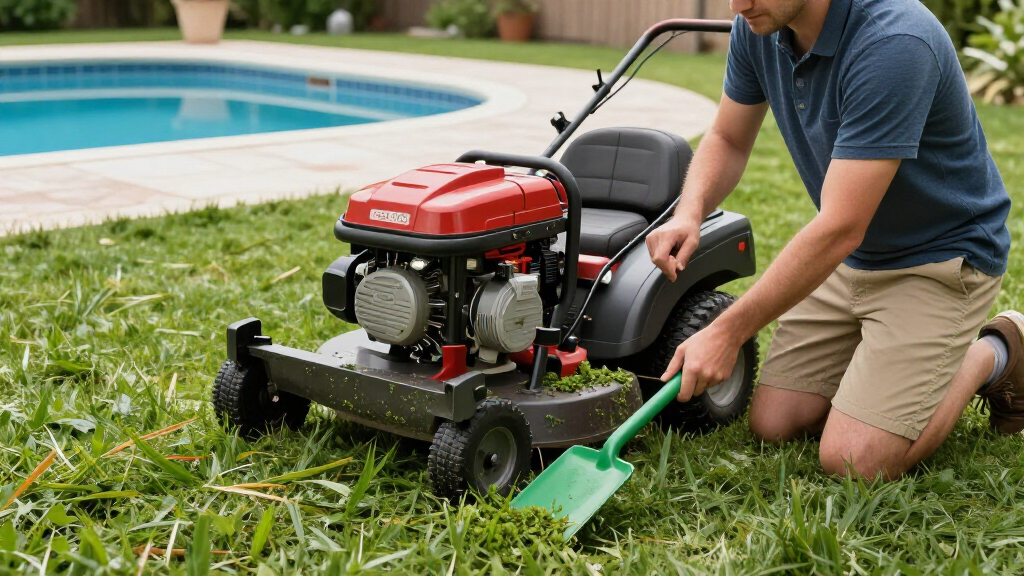
A Hunker report recommends cleaning grass from the mower deck after each use rather than relying on WD-40 or cooking spray to prevent clumps. Mowing dry grass, avoiding overly tall growth and keeping blades sharp can also reduce buildup. Follow the mower maker’s safety instructions before cleaning beneath the deck.
A Hunker lawn-care report recommends cleaning grass from the mower deck after each use, rather than relying on WD-40 or cooking spray to stop clumping. The report’s author, drawing on past work maintaining gas rotary mowers, says mowing dry grass, keeping the lawn from getting too tall and maintaining sharp blades can also reduce buildup that may interfere with cutting.
The author says grass residue can collect on the underside of the deck, around the blade and in narrow spaces near the blade spindle. A lubricant may make dried or sticky residue easier to remove, but the report says grass juices can coat the sprayed surface during mowing. In the author’s experience, regular cleaning was usually sufficient, while spraying was an optional aid rather than a replacement for removing buildup.
For the cleaning method described, the author used a putty knife to scrape away lodged clippings, then a scrub brush to remove the remaining green film. The report also describes occasionally rinsing the mower after heavier use and says some newer models have deck-cleaning ports designed to connect to a garden hose. Those features and appropriate cleaning procedures vary by mower, so users should consult the manual for their model.
The report advises taking precautions before tilting a gas mower, because fuel can spill or flow into parts of the engine where it should not go. Its author says they usually ran the mower until it ran out of gas or, when needed, used a hand pump to empty the tank before cleaning. This is the author’s account, not a universal procedure: the manufacturer’s instructions take priority, and the mower should be switched off and made safe from accidental starting before work beneath the deck.
Cleaner Decks, More Consistent Cuts
Grass packed beneath a mower can make routine maintenance harder and, according to the report, may affect mower performance. Removing clippings after use gives owners a chance to spot and clear residue before it accumulates around the blade or in crevices. It also means a spray product is not being treated as a fix for buildup that still needs physical removal.
The other recommendations address conditions that contribute to clumping. Wet grass tends to be harder to handle under the deck, while overly tall grass and dull blades can make cutting less clean. Taken together, the advice offers a maintenance routine that may reduce mess without depending on an added lubricant. The report does not quantify how much these steps improve cutting or extend equipment life.
As an affiliate, we earn on qualifying purchases.
The Report’s Maintenance Advice
The Hunker article is based partly on its author’s experience maintaining two gas rotary mowers while working in a landscaping business in the 1980s and 1990s. The author describes routine engine care, including oil and fuel checks and blade sharpening, alongside cleaning grass from the deck. The supplied material does not provide a publication date or identify a controlled test comparing cleaning methods.
Its central distinction is between preventing residue from accumulating and making residue easier to remove. The author says PAM or another lubricant, including WD-40, can help with removal, but that the coating of grass juices reduces the lasting effect. The practical recommendations are to clean after mowing, cut when grass is dry, avoid letting it grow too high and keep the blade sharp.
“The technique I found most effective was simply to clean off the grass cuttings after every use.”
— Hunker report author
Limits of the Mower Advice
The supplied report is a personal account, not a comparative test. It does not establish whether WD-40, cooking spray or other products perform differently across mower types, grass varieties or weather conditions. It also does not quantify the amount of buildup prevented by cleaning after each use or by mowing dry grass with a sharp blade.
Cleaning directions can differ between models, especially for electric, battery-powered and gas mowers. The report does not provide a single procedure that applies to all equipment. Users should check the owner’s manual for safe handling, approved cleaning methods and whether a hose connection is intended for their model.
Check Your Mower’s Manual
The report offers no scheduled follow-up or new product test. For owners applying its advice, the next step is to check the mower manual, then remove clippings using the method the manufacturer permits. After mowing, inspect the deck and blade area for buildup; before cleaning, shut the mower down and follow the manual’s instructions for preventing accidental starting and managing fuel or battery power.
Owners can also adjust mowing habits by waiting for the grass to dry, avoiding cuts after it has become excessively tall and checking blade sharpness as part of routine maintenance. These steps reflect the report’s recommendations, but the best schedule and procedure depend on the mower and lawn.
Key Questions
Does the report say WD-40 cannot help?
No. The author says WD-40 or cooking spray may make residue easier to remove, but describes regular deck cleaning as sufficient in their experience. The report does not compare products in a controlled test.
What is the main way to limit grass buildup?
The report’s main recommendation is to clean clippings from the mower after each use, including residue around the blade and in crevices. Use the cleaning procedure specified in the mower’s manual.
What mowing habits can reduce clumping?
The author recommends mowing when grass is dry, not letting it grow too tall and keeping the mower blade sharp. The report does not quantify the effect of each measure.
Can I tip my mower over to clean it?
Do not assume one position is safe for every mower. The report warns that fuel can flow or spill when a gas mower is tilted, and procedures differ by model. Check the owner’s manual and follow its instructions before cleaning beneath the deck.
Source: rss
Halloween Picks
halloween
As an affiliate, we earn on qualifying purchases.