
TL;DR

Get pool and patio gear delivered free — and shop member deals
- Fast, free delivery on millions of items
- Access to Prime Big Deal Days deals on October 6–7
- Prime Video, Amazon Music and more included
A 2 October 2026 Amateur Gardening report by Chris Collins outlines how gardeners can propagate herbs such as thyme, sage and rosemary from semi-ripe cuttings. It recommends healthy shoots, well-drained compost and warmth, while noting that some soft herbs can also root in water.
Amateur Gardening published advice on 2 October 2026 for propagating herbs from cuttings, a method that can produce extra plants without buying seeds or plants. Gardening writer Chris Collins recommends taking semi-ripe cuttings from herbs such as thyme, sage and rosemary before mid-autumn, then rooting them in a warm, humid setting.
Collins describes semi-ripe cuttings as shoots formed from the current season’s growth with a portion of older growth at the base, known as a heel. He advises choosing healthy shoots and avoiding damaged, unhealthy, unusually vigorous or atypical growth. Shoots with a more horizontal habit and short gaps between leaves are his preferred choices.
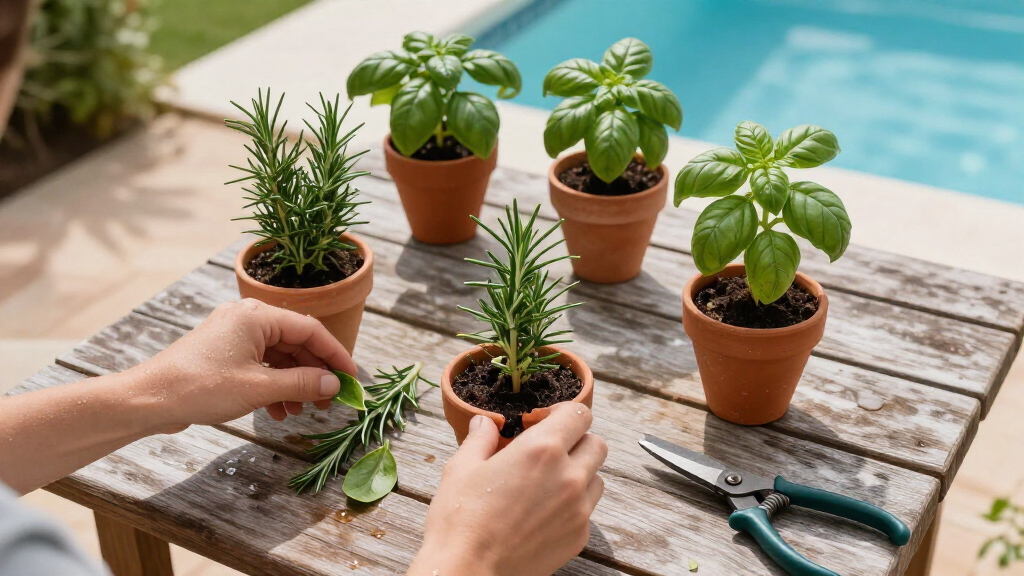
Cut each shoot to about 10 to 15 centimetres (4 to 6 inches), making the cut just below a leaf node, then remove roughly one-third to one-half of its foliage. Place the cuttings in containers of peat-free cutting compost. Collins says he uses a mix of half peat-free potting compost and half silver sand; water the mix thoroughly and let excess water drain away.
The report recommends placing pots in a greenhouse or propagator for some warmth. A clear plastic bag secured over a pot can act as a small humidity cover, held off the leaves with sticks. Collins advises putting covered cuttings in a warm, bright spot away from direct sunlight and opening the bag occasionally to release excess moisture.
A Low-Cost Way to Add Herbs
Taking cuttings gives gardeners a way to make additional plants from herbs they already grow, rather than purchasing each new plant. That can be useful for people who want more herbs for garden beds, containers or cooking, although the source does not quantify potential savings or provide a success rate.
The advice also highlights that propagation depends on conditions, not just the cut itself. Drainage and careful watering matter because Collins says overly wet compost can rot cuttings. Using an improvised bag cover in place of a propagator may make the method accessible to gardeners without specialist equipment, but it still requires monitoring moisture and ventilation.
As an affiliate, we earn on qualifying purchases.
The Seasonal Cutting Window
Collins says the suitable material for semi-ripe cuttings is available on herb plants until mid-autumn. The report is therefore seasonal advice rather than an announcement of a new gardening product or formal change in guidance. Its recommended plants—thyme, sage and rosemary—are the examples given for this type of cutting.
The article also distinguishes these woody herbs from softer kitchen herbs. Collins says leftover sprigs of basil, coriander and parsley can be placed in water; roots may form in a week or two, after which the sprigs can be potted into peat-free compost. He adds that, with regular water changes, they can be kept growing in water for many weeks. These are the report’s instructions, not a guarantee that every cutting will root.
“These kinds of cuttings are called ‘semi-ripe’ as they are taken from this year’s growth with a portion of the previous season’s growth at the base.”
— Chris Collins, Amateur Gardening
Rooting Success Is Not Guaranteed
The report does not give a success rate, rooting timetable for woody cuttings or comparison of the different compost and covering methods. It also does not specify exact temperatures or how long thyme, sage or rosemary cuttings should remain under cover. The one-to-two-week estimate applies to roots forming on the listed soft herbs in water, not to every herb or method.
Conditions can vary by plant and growing environment. Collins identifies overwatering and poor drainage as possible causes of rot, but the article does not claim that following the steps will guarantee that cuttings take. Gardeners may need to check the compost and adjust watering and ventilation as the cuttings develop.
Monitor Cuttings as Roots Form
For gardeners following the report, the next steps are to prepare suitable cuttings, keep the medium moist but not waterlogged and check covered pots periodically for excess moisture. The source does not provide a fixed date for potting on woody cuttings, so it does not establish when they should be moved into separate containers or planted outdoors.
For water-rooted basil, coriander or parsley, Collins advises waiting for roots to form—typically one or two weeks according to his answer—before potting them into peat-free compost. The publication points readers to Amateur Gardening for further gardening advice; no additional timetable or follow-up results are given in the supplied report.
Key Questions
Which herbs does the report recommend for semi-ripe cuttings?
Chris Collins names thyme, sage and rosemary as suitable examples. He says the material for this method is available until mid-autumn.
How long should a semi-ripe cutting be?
The report recommends cutting shoots to about 10 to 15 centimetres (4 to 6 inches), with the cut made just below a leaf node. Remove around one-third to one-half of the foliage before planting.
Can cuttings be rooted without a propagator?
Yes. Collins suggests covering the pot with a clear plastic bag secured with an elastic band, using sticks to keep the bag from touching the cutting. Place it somewhere warm and bright but out of direct sunlight, and open it occasionally to release excess moisture.
Why might herb cuttings rot?
Collins says poor drainage or overwatering can cause cuttings to rot. Keep the growing medium moist rather than waterlogged, and allow excess water to drain after watering.
Which kitchen herbs can be rooted in water?
The report names leftover sprigs of basil, coriander and parsley. Collins says roots may appear in a week or two; the sprigs can then be potted into peat-free compost, or kept growing in water for many weeks if the water is changed regularly.
Source: rss
Halloween Picks
halloween
As an affiliate, we earn on qualifying purchases.