
TL;DR
Gardening Know How recommends Virginia sweetspire (Itea virginica) as a native alternative to burning bush, which is invasive in many parts of the United States. Sweetspire offers fall foliage, fragrant early-summer flowers and habitat for wildlife, though its color varies by plant and growing conditions.
Gardening Know How recommends Virginia sweetspire (Itea virginica) instead of burning bush for gardeners seeking autumn color, citing the latter shrub’s invasive spread in many parts of the United States. The native alternative can provide red, orange, purple or maroon fall foliage, fragrant white flowers in early summer and habitat for wildlife, though its color varies with the plant and growing conditions.

Get pool and patio gear delivered free with Prime
- Fast, free delivery on millions of items
- Prime Video, Amazon Music and more included
- Member-only deals all year
Burning bush (Euonymus alatus), native to Asia, is widely planted for its vivid crimson autumn leaves. The Gardening Know How report says birds can spread its seeds beyond gardens, allowing the shrub to establish in natural areas and compete with native vegetation. It adds that some states restrict or ban burning bush in landscaping; the report does not list those states or detail their rules.
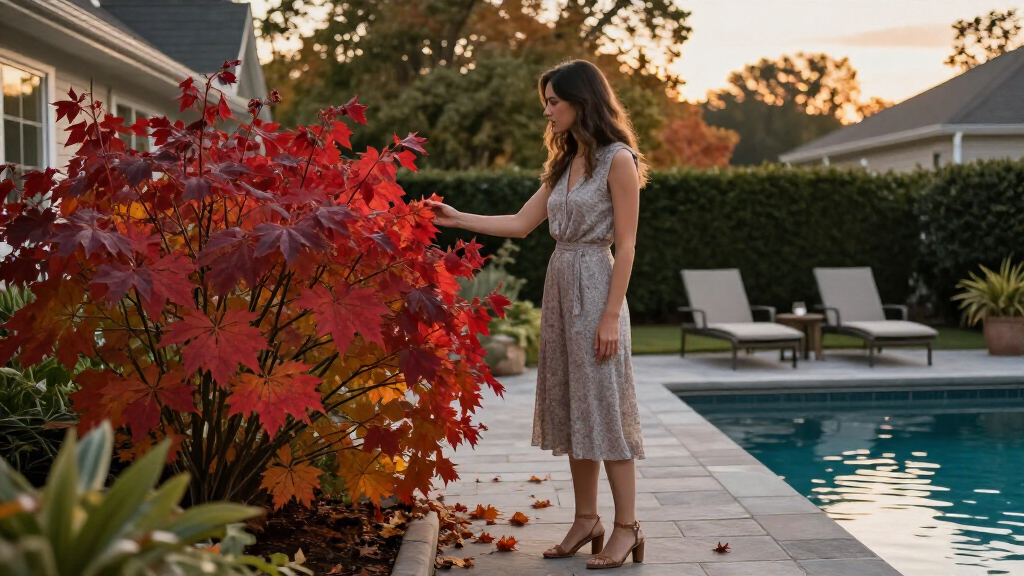
Virginia sweetspire is native to the eastern United States and has glossy green leaves that may turn several colors in fall. The report also describes fragrant white flower spikes in early summer. It says the shrub can offer cover and nesting habitat for birds and support bees, butterflies and hummingbirds.
Fall color is not guaranteed to look the same on every plant. The report says climate, growing conditions and the individual shrub affect the display’s intensity and duration. It highlights ‘Henry’s Garnet’ for gardeners prioritizing fall color, while noting that other Virginia sweetspire cultivars are available, including smaller options for limited space.
A Lower-Risk Choice for Fall Color
The recommendation speaks to a practical choice facing gardeners: whether to plant a shrub prized for its autumn display when it can also spread into natural areas. Choosing a native alternative may help avoid adding to that risk while still providing seasonal color. The report’s wildlife claims also point to benefits beyond appearance, including potential food and shelter resources for local species.
Virginia sweetspire is not presented as an identical substitute. Its foliage color can differ, and the report does not promise a particular result in every garden. Its appeal is instead a combination of fall leaves, summer blooms and wildlife value. Gardeners considering either plant should check local rules and conditions before buying.
Products Worth Considering

EGO Power+ 21 Cordless Electric Lawn Mower Kit, Self-Propelled (LM2135SP)

EAGLE PEAK 12 x 8 ft Walk-In Pop-Up Greenhouse with Support Pole

Orbit B-hyve 12-Zone Indoor/Outdoor Wi-Fi Sprinkler Controller
As an affiliate, we earn on qualifying purchases.
Why Burning Bush Raises Concerns
Burning bush became popular in part because its leaves can turn a striking crimson in fall. According to Gardening Know How, however, its Asian origin and bird-dispersed seeds mean it can escape cultivation and establish beyond planted landscapes. The report says it competes with native vegetation in some natural areas and that restrictions or bans apply in several states.
The article frames Virginia sweetspire as a native option with more than one season of interest. It flowers in early summer before its foliage changes later in the year. That longer seasonal contribution is part of the case for planting it, rather than relying on a shrub selected chiefly for a fall color display.
Local Rules and Color Can Vary
The source does not identify which states restrict or ban burning bush, or specify the scope of those rules. Requirements may differ by location, so the article’s general warning is not a substitute for checking state and local guidance before purchasing or planting.
Nor does the report provide measured comparisons of fall color, wildlife use or performance between the two shrubs. It says Virginia sweetspire’s foliage display depends on climate, growing conditions and the individual plant. The available source also gives no planting dates, care instructions or evidence quantifying how much the shrub supports wildlife.
Check Local Guidance Before Planting
Gardeners weighing the two shrubs can check current state and local rules on burning bush, then compare Virginia sweetspire varieties against their site and space needs. The report singles out ‘Henry’s Garnet’ for fall color, but does not guarantee a specific display. A local nursery or extension service can help assess whether a cultivar suits a particular climate and garden.
The immediate decision is whether to choose a shrub that offers several seasons of interest without the same invasive concern described for burning bush. The source provides a planting recommendation, not a new regulation or research finding; no further official action or follow-up study is announced.
Key Questions
What shrub does the report recommend instead of burning bush?
It recommends Virginia sweetspire (Itea virginica), a shrub native to the eastern United States.
Does Virginia sweetspire have fall color?
Yes. Its leaves may turn red, orange, purple or maroon, but the source says color intensity and duration vary with climate, growing conditions and the individual plant.
Why does the report caution against burning bush?
Burning bush is native to Asia, and birds can spread its seeds beyond gardens. The shrub has become invasive in many parts of the United States and may compete with native vegetation, according to Gardening Know How.
Does Virginia sweetspire support wildlife?
The report says it offers cover and nesting habitat for birds and supports bees, butterflies and hummingbirds. It does not provide measured figures for those effects.
Is burning bush prohibited everywhere?
No such claim is made. The report says several states have restricted or banned its landscaping use but does not name them. Check current local and state rules before buying or planting it.
Source: rss