

TL;DR

Get pool and patio gear delivered free with Prime
- Fast, free delivery on millions of items
- Prime Video, Amazon Music and more included
- Member-only deals all year
A Homes & Gardens report advises homeowners to inspect trees after leaves fall and before winter storms, when deadwood, cracks and weak branch unions may be easier to spot. Arborists quoted in the report recommend professional assessment for major hazards; no specific storm, injury or new official safety order is reported.
Homeowners should inspect trees before winter storms for dead or hanging branches, cracks and other warning signs, according to a Homes & Gardens report featuring advice from arborists. The check is intended to identify potential hazards before wind, snow or ice adds stress to trees near homes, vehicles and walkways; the report does not describe a particular storm or newly issued government warning.
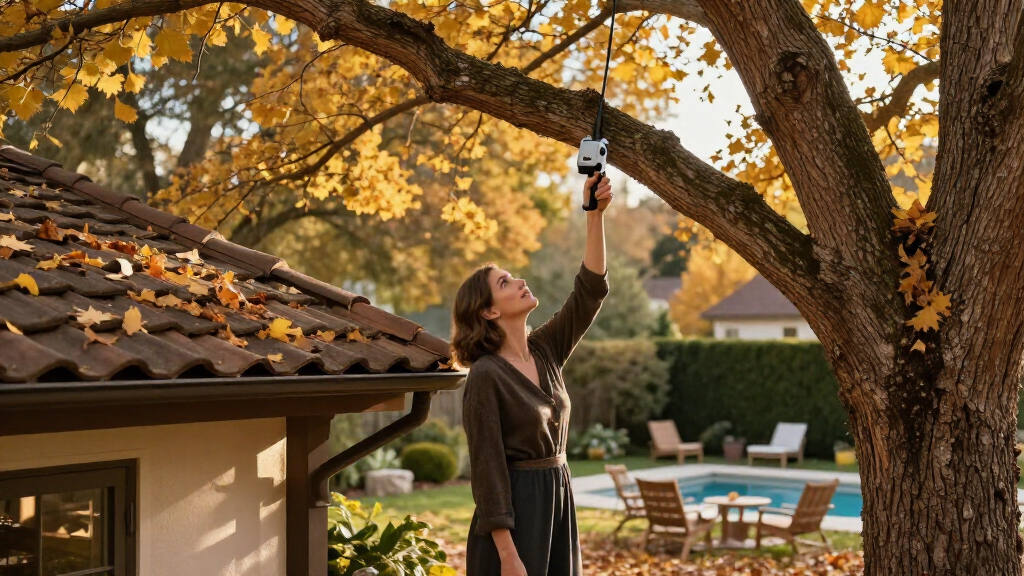
The report says fall, after deciduous trees begin shedding leaves, can be a useful time for a visual assessment because the canopy is less obscured. It recommends looking at trees from multiple angles and checking branches that extend over homes, streets, parked vehicles and pedestrian routes. Binoculars may help with a view of the canopy, but homeowners should not take risks climbing or working at height to inspect a tree.
Warning signs cited by arborists include large dead, diseased or dying branches, hanging limbs, cracks, fungal growth, weak connections between major stems and changes in a tree’s lean. At the base, the report says to look for cracks, a cavity extending around more than a third of the trunk, mushrooms, or roots lifting opposite a new lean. These signs can indicate a problem, but a visual check alone does not establish how likely a tree is to fail.
Some small branches may be within the scope of careful homeowner pruning, the report says, while large limbs, substantial structural concerns or a tree that appears to be leaning should be assessed by a qualified arborist. The article recommends considering what a falling branch or tree could hit before deciding what action to take. It describes structural pruning as one possible way to improve stability and says cabling may be considered for some large trees; removal may be needed in severe cases. Those choices depend on an on-site assessment, not a single checklist item.
Checking Trees Before Storm Season
A damaged limb over a house, vehicle or walkway can put people and property at risk if it breaks during severe weather. Finding a concern before winter may give an owner time to seek an assessment and arrange appropriate work, rather than responding after a branch has fallen. The report presents inspection as a precaution, not a guarantee against storm damage.
The advice also matters because tree work itself can be hazardous. Cutting branches from a ladder, using a pole saw near power lines, or attempting to remove a large limb can cause serious injury or property damage. Homeowners should leave high, heavy or structurally significant work to trained professionals and keep people away from areas where a tree appears unstable.
As an affiliate, we earn on qualifying purchases.
Why Fall Reveals Tree Defects
The report places the check within routine fall yard preparation. It notes that winter can bring strong winds, freezing temperatures and heavy snow or ice, each of which can stress branches and trunks. Snow can add weight to limbs; ice can also load branches and may be difficult to remove safely. A limb already weakened by decay or a poor connection may be more vulnerable under those conditions.
Levi Williams, a Tree Risk Assessment Qualified and ISA Certified Arborist with Tree Scouts Tree Service, recommends basic inspections before winter storms. Basil Camu, co-founder of Leaf & Limb, discusses the risk of two similar-sized trunks joined in a narrow V shape, which he says may be more prone to splitting than a wider U-shaped union. These are expert observations reported by Homes & Gardens, rather than findings from a new study or a formal public safety directive.
The article also distinguishes urgent hazards from issues that may be addressed later. It says safety pruning can be done in October or November, while some other pruning may be better left until late winter or early spring. Timing depends on the tree, the condition and local circumstances, so the report does not offer one schedule that applies to every species or region.
“I would always advise homeowners to do basic inspections of their trees before incoming winter weather storms.”
— Levi Williams, Tree Risk Assessment Qualified and ISA Certified Arborist with Tree Scouts Tree Service, as quoted by Homes & Gardens
Limits of a Visual Tree Check
The report does not identify a specific location, storm forecast, injury, property-damage incident or new regulation prompting the advice. It also does not quantify how much a pre-winter inspection reduces the chance of failure or provide a universal threshold for when a tree must be pruned or removed. Warning signs can indicate concern, but the risk and appropriate response depend on the tree and its surroundings.
It remains unclear how many homeowners will arrange inspections or how many trees may need work this season. The article does not provide local guidance on permits, protected trees, utility clearances or species-specific pruning schedules. Owners should consult a qualified local arborist or relevant local authority when those questions apply.
Assess Hazards Before Winter Arrives
Homeowners can begin with a ground-level visual check, focusing on trees whose branches extend over occupied areas and noting visible defects without approaching an unstable tree. If there are large dead limbs, trunk cracks, fungal growth, a new lean or lifting roots, the report’s guidance points toward contacting a qualified arborist for an assessment. Any pruning should match the scale of the work and be done without climbing or cutting near power lines.
As winter approaches, owners can monitor local weather alerts and address identified hazards before severe conditions arrive where practical. The source report does not name a specific follow-up date or announced inspection program. The next step for an individual property is therefore an assessment based on its trees, local conditions and the potential consequences of failure.
Key Questions
When should homeowners inspect trees before winter?
The Homes & Gardens report recommends checking after leaves begin to fall and before winter storms arrive. The best timing for pruning or other work can vary by tree and by the condition found.
What warning signs should I look for?
Look from a safe position for dead or hanging branches, cracks, fungal growth, weak stem unions, a new lean and roots lifting near the base. A visible sign is a reason to seek an assessment, not proof on its own that a tree will fail.
Can I prune a tree myself?
The report says small dead or damaged branches may be pruned with appropriate tools, but large limbs and structural problems should be handled by a professional. Do not climb to inspect or cut branches near power lines, and keep people away from trees that appear unstable.
Does a tree with two trunks need to be removed?
No. The report quotes arborist Basil Camu saying that two similar-sized trunks can be prone to splitting, particularly at a narrow union, but that observation does not mean every multi-trunk tree is unsafe. A qualified arborist can assess the particular tree and recommend whether any work is needed.
Source: rss
Halloween Picks
halloween
As an affiliate, we earn on qualifying purchases.