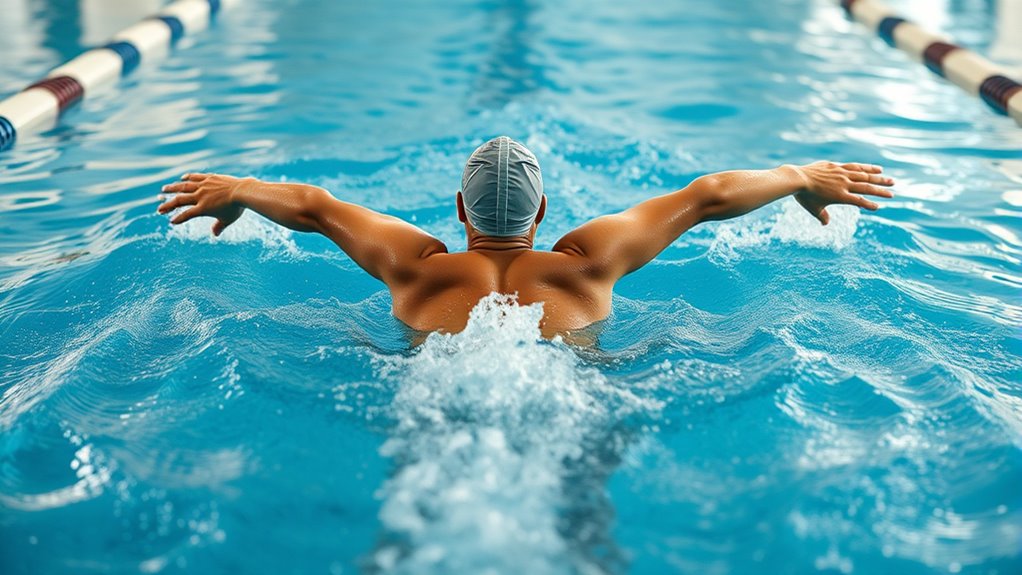

To master backstroke for cross-training, focus on a relaxed, streamlined body position and coordinated arm movements with a high elbow pull. Breathe rhythmically, inhaling during the pull and exhaling during recovery to keep steady and efficient. Keep your shoulders relaxed and use your back muscles to power each stroke. Practicing proper technique, including hand entry and body alignment, improves endurance and efficiency. If you continue exploring, you’ll discover more tips to refine your backstroke skills effectively.
Key Takeaways
- Focus on rhythmic breathing: inhale deeply during the pull and exhale during recovery for efficiency.
- Maintain proper arm entry with a slight outward angle and a high elbow during the pull phase.
- Keep shoulders relaxed and use back muscles to power the stroke, reducing tension and improving propulsion.
- Practice with fins or paddles to develop technique, strength, and body awareness for cross-training benefits.
- Prioritize smooth, continuous movements and consistent rhythm to enhance endurance and reduce fatigue.
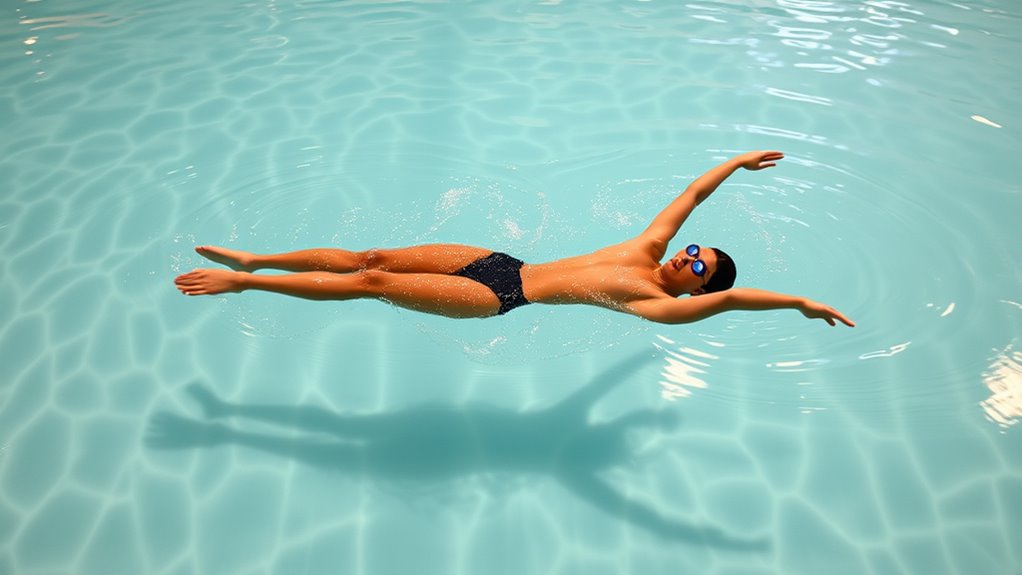
Have you ever wondered how to swim the backstroke efficiently? It’s a stroke that looks simple but requires good technique to maximize your efficiency and comfort in the water. The key to mastering the backstroke lies in understanding your breathing technique and arm positioning. These elements work together to create a smooth, effortless rhythm that keeps you moving forward without unnecessary strain.
When it comes to breathing, the backstroke offers the advantage of face-up swimming, so you don’t have to turn your head to breathe. Instead, your focus should be on maintaining a consistent breathing pattern that aligns with your arm movements. Inhale deeply as one arm enters the water and begins its pull, and exhale during the recovery phase when that arm swings out of the water. This rhythm helps you avoid breath-holding or uneven breathing, which can throw off your pace and cause fatigue. Practice rhythmic breathing, inhaling and exhaling steadily and evenly, to develop a natural, relaxed pattern. As you gain confidence, you’ll find that your breathing becomes more automatic, freeing you to concentrate on your arm movements and body position.
Arm positioning is equally critical. As you initiate the stroke, your hand should enter the water with a slight outward angle, fingertips first, directly above your shoulder. Keep your arm straight but relaxed, then extend it forward underwater with a slight bend at the elbow. During the pull phase, your arm should move in a high, S-shaped pattern, pulling water back toward your hip while maintaining a high elbow position. This high elbow catch provides more propulsion and minimizes drag, helping you glide smoothly through the water. When your hand reaches the hip, start the recovery phase by lifting your arm out of the water with your elbow leading, keeping your hand relaxed and close to your side. As you swing your arm forward, enter the water again and repeat the cycle.
Your arm positioning and breathing technique are interdependent; a well-timed breath allows you to keep your body aligned and your arms moving steadily. Focus on keeping your shoulders relaxed and using your back and shoulder muscles to power your stroke. Avoid overreaching or rushing the arm recovery, which can lead to sloppy form and wasted energy. Instead, aim for a fluid, continuous motion that feels natural and efficient. With consistent practice, these technical details will become second nature, helping you develop a strong, sustainable backstroke that’s perfect for cross-training or general fitness. Additionally, incorporating proper equipment like fins or paddles can help refine your technique and build strength.
Frequently Asked Questions
What Are Common Mistakes Beginners Make in Backstroke?
You often make mistakes like improper hand position, which can cause drag, and inconsistent kick rhythm, leading to fatigue. Beginners tend to overreach with their hands or keep them too wide, reducing efficiency. Additionally, irregular kicks can disrupt your balance and speed. Focus on maintaining a steady, streamlined hand position and a consistent kick rhythm to improve your backstroke technique and conserve energy during cross-training.
How Can I Improve My Backstroke Breathing Technique?
To improve your backstroke breathing technique, focus on maintaining a steady breathing rhythm that matches your arm movements. Keep your head relaxed and aligned with your spine, and avoid lifting it excessively. Make certain your arm positioning stays consistent, with your hands entering the water smoothly. Practice rhythmic breathing and proper arm coordination, and over time, you’ll find your breathing becomes more natural and efficient, boosting your overall backstroke performance.
What Equipment Is Essential for Practicing Backstroke?
You’ll want vital swimming accessories like goggles and a swim cap to stay comfortable and focused. Training aids such as kickboards and pull buoys are essential for practicing backstroke technique, helping you improve body position and arm movements. These tools make your practice more effective by isolating specific skills. With the right equipment, you’ll build confidence and efficiency in your backstroke, making cross-training sessions more productive and enjoyable.
How Do I Increase My Backstroke Speed Effectively?
To increase your backstroke speed, focus on technique refinement and incorporate speed drills into your training. Improve your body position, streamline your movements, and practice efficient arm pulls. Use interval training and sprint sets to boost your velocity. Consistent practice of these drills helps you develop better feel for the water and increases your overall speed, making your backstroke more powerful and efficient over time.
Are There Specific Drills to Enhance Backstroke Endurance?
To enhance your backstroke endurance, incorporate drill variations like bilateral breathing, single-arm strokes, and kick drills, which target different muscle groups and improve stamina. Use pacing strategies such as interval training and gradual speed increases to build sustained effort. By consistently practicing these drills and pacing techniques, you’ll develop greater endurance, allowing you to swim longer distances without fatigue while refining your technique for efficiency.
Conclusion
Mastering the backstroke enhances your overall swimming skills and boosts your fitness. Did you know that swimming can burn up to 400 calories per hour? Incorporating backstroke into your cross-training routine not only improves your endurance but also adds variety to keep you motivated. Keep practicing, stay consistent, and enjoy the benefits of this versatile stroke. Before you know it, you’ll be gliding through the water with confidence and ease!