
Dryland training can boost your swim performance by building core strength, flexibility, and muscular endurance outside the pool. Incorporate exercises like planks, squats, and resistance training to improve stability, power, and body control. Stretch regularly to enhance flexibility and prevent injuries, helping you move more efficiently through the water. Combining strength, flexibility, and conditioning makes your strokes more effective. Keep exploring these strategies, and you’ll discover how they can take your swimming to the next level.
Key Takeaways
- Incorporate core exercises like planks and Russian twists to improve stability and stroke efficiency.
- Use resistance training such as squats and pull-ups to build muscular endurance and power.
- Include dynamic stretching and yoga to enhance flexibility and prevent injuries.
- Combine cardiovascular workouts like running or cycling to boost aerobic capacity and stamina.
- Focus on balanced training with proper rest to optimize recovery and overall swim performance.

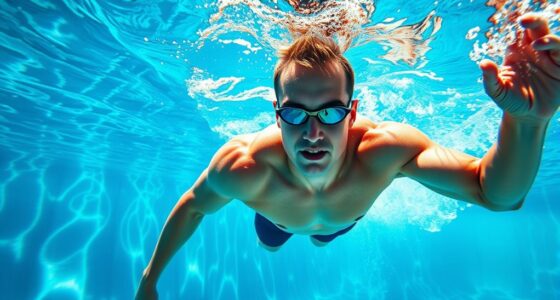
While swimming primarily takes place in the water, dryland training plays an essential role in enhancing your overall performance. It helps build a solid foundation that translates directly into better strength, endurance, and injury prevention during your swims. One of the most critical aspects of dryland training is improving your core strength. Your core acts as the powerhouse for every stroke, providing stability and transferring energy efficiently from your upper to your lower body. When your core is strong, you can maintain better body position in the water, reduce drag, and generate more powerful movements. Incorporating targeted core exercises like planks, Russian twists, and leg raises into your routine can make a noticeable difference in your swim efficiency.
Building core strength improves stability, reduces drag, and boosts swimming power for better performance.
Flexibility exercises are equally important as they help increase your range of motion, reduce muscle stiffness, and prevent injuries. Tight muscles can hinder your stroke mechanics, limit your reach, and cause discomfort during training or competitions. By dedicating time to flexibility exercises, such as dynamic stretches and yoga-inspired movements, you can improve joint mobility and muscle elasticity. This not only enhances your ability to perform smoother, more fluid strokes but also allows you to recover faster from intense workouts. Consistent stretching before and after your dryland sessions ensures your muscles stay pliable and ready for the demands of swimming.
In addition to core strength and flexibility, dryland training involves strength training that targets major muscle groups used in swimming. Resistance exercises like bodyweight squats, push-ups, and pull-ups help build muscular endurance and power. These exercises mimic the motions used in swimming strokes, reinforcing proper muscle engagement and coordination. Incorporating simple yet effective strength routines into your schedule boosts your overall muscle resilience, making you less vulnerable to fatigue and injury during long training sessions.
Another fundamental component is cardiovascular fitness, which you can develop through activities like interval running, cycling, or rowing. Improving your cardiovascular capacity ensures you have the stamina to maintain high-intensity efforts over extended periods, especially during races. Combining aerobic exercises with strength and flexibility work creates a thorough dryland program that supports every aspect of your swim performance.
Additionally, understanding the importance of proper recovery and rest is crucial, as it allows your muscles to repair and adapt, further enhancing your overall performance. Ultimately, integrating core strength and flexibility exercises into your dryland training enhances your body’s ability to perform with power, efficiency, and resilience. It complements your in-water workouts, helping you become a stronger, more flexible swimmer. By dedicating time to these essential elements, you’ll notice improvements in your technique, endurance, and overall swimming results.
core strength training for swimmers
As an affiliate, we earn on qualifying purchases.
As an affiliate, we earn on qualifying purchases.
Frequently Asked Questions
How Often Should I Incorporate Dryland Training Into My Swim Routine?
You should incorporate dryland training into your swim routine about two to three times a week. This training frequency allows you to build strength and endurance without overtraining. To enhance your results, focus on the ideal scheduling—preferably on days when you don’t have heavy swim sessions. Consistency is key, so listen to your body and adjust the intensity and frequency as needed to avoid injury and maximize performance.
What Specific Exercises Best Enhance Swim Performance?
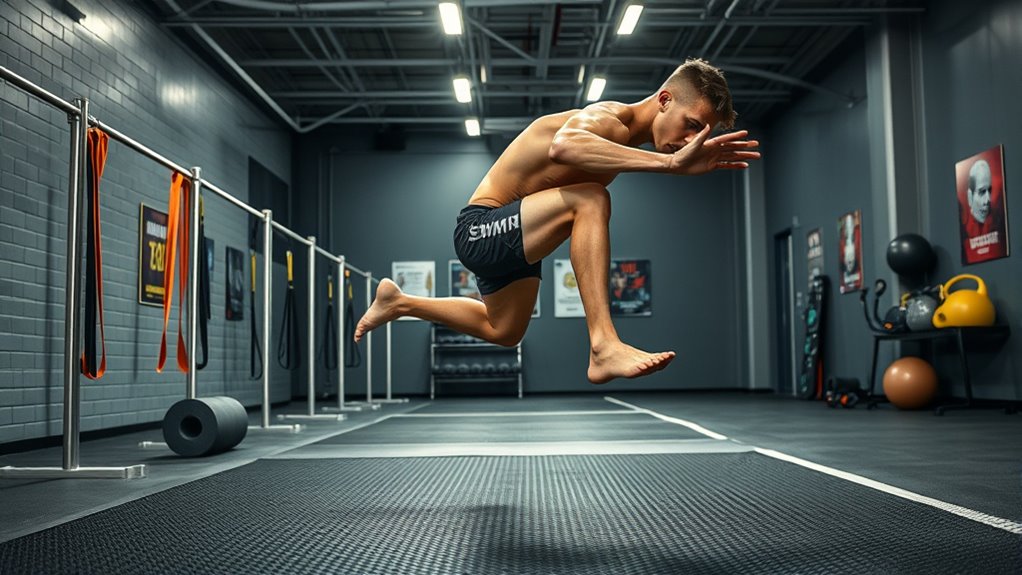
Think of your muscles as a well-tuned orchestra; each part must perform in harmony. To boost swim performance, focus on core strengthening exercises like planks and Russian twists. Incorporate plyometric drills such as box jumps and explosive push-ups to build power and quickness. These exercises enhance your stability and explosiveness, translating to better starts, turns, and overall efficiency in the water.
How Can Dryland Training Prevent Swim-Related Injuries?
Dryland training helps prevent swim-related injuries by addressing muscle imbalances and improving joint stability. When you strengthen weak muscles and balance your muscle groups, you reduce strain on your joints and lower injury risk. Focus on exercises that promote core strength, flexibility, and stability, ensuring your body can handle the repetitive motions of swimming. This proactive approach keeps you injury-free and boosts your overall swim performance.
Is Dryland Training Suitable for All Age Groups?
Did you know that 85% of youth athletes benefit from age-appropriate dryland training? You should consider age considerations and developmental stages when determining if dryland training suits all age groups. It can be adapted for children, teens, and adults, ensuring safe progression. Properly tailored programs help prevent injuries and improve performance, making dryland training suitable across various age groups when designed with individual needs and maturity levels in mind.
How Do I Balance Dryland Workouts With In-Water Training?
To balance dryland workouts with in-water training, schedule them strategically, perhaps alternating days or combining shorter sessions. Incorporate cross training benefits by focusing on strength and flexibility on dryland days, which boosts your overall performance. This balance also enhances mental toughness, as you adapt to different training stimuli. Listen to your body, ensuring adequate recovery, so both components complement each other and improve your swim performance effectively.
resistance bands for dryland training
As an affiliate, we earn on qualifying purchases.
As an affiliate, we earn on qualifying purchases.
Conclusion
By incorporating dryland training into your routine, you can boost your swim performance considerably. Imagine gaining just 2% more strength—enough to shave seconds off your race time and leave your competitors in your wake. Consistent strength work builds power, endurance, and resilience, turning your swimming into a more efficient and explosive effort. So, commit to dryland workouts; they’re your secret weapon to swimming faster and reaching new personal bests every time you plunge in.
yoga mats for flexibility exercises
As an affiliate, we earn on qualifying purchases.
As an affiliate, we earn on qualifying purchases.
swimming dryland training equipment
As an affiliate, we earn on qualifying purchases.
As an affiliate, we earn on qualifying purchases.