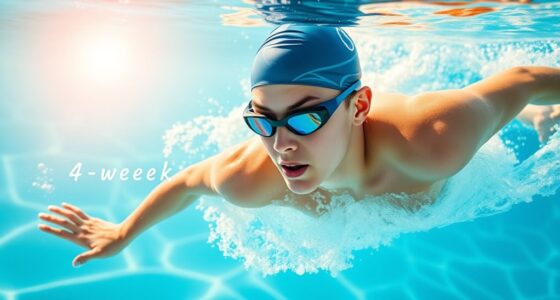
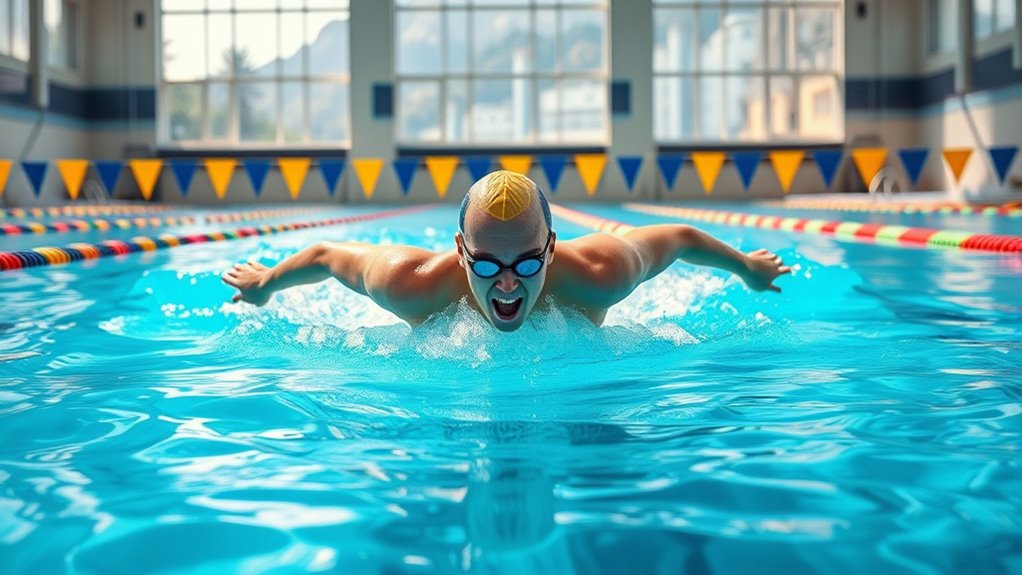

In a pool, you can practice essential open water skills like breathing techniques, including bilateral breathing, to improve efficiency and endurance. You can also refine navigation and sighting by lifting your head to stay on course, using pool edges as reference points. Stroke technique, head-down swimming, and fatigue reduction drills help build confidence and efficiency. Keep practicing these skills regularly, and soon you’ll be better prepared for outdoor challenges—discover how to make your training even more effective as you continue.
Key Takeaways
- Practice breathing techniques like bilateral breathing and controlled exhalation to improve endurance and efficiency.
- Use sighting drills to develop navigation skills, simulating open water scenarios with fixed reference points.
- Refine stroke technique and incorporate drills that mimic open water conditions to reduce fatigue and boost confidence.
- Rehearse open water transitions and confidence-building exercises within the pool environment.
- Regularly practice to reinforce skills, ensuring consistency and better preparedness for outdoor swimming.
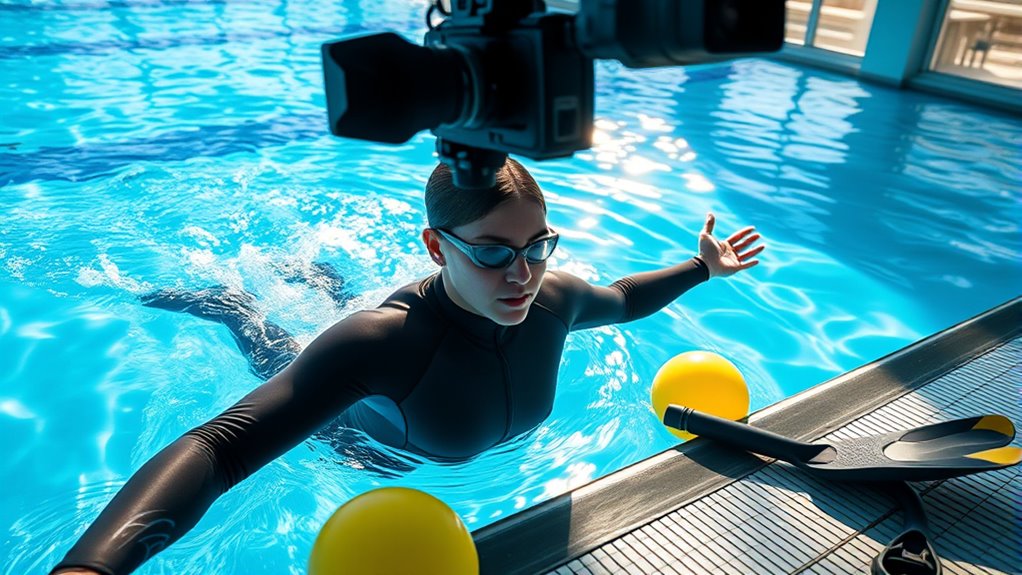
Have you ever wondered how to prepare for open water swimming while still in a controlled environment? Practicing in a pool is an excellent way to build your skills and confidence before heading into lakes or oceans. One of the fundamental aspects to focus on is your breathing techniques. Proper breathing helps you stay calm, conserve energy, and maintain a steady rhythm in open water. In the pool, you can experiment with different breathing patterns, such as bilateral breathing, which involves inhaling and exhaling alternately from both sides. This not only improves your overall breathing efficiency but also makes you more adaptable to changing conditions in open water. Practice controlled breathing exercises, like inhaling deeply through your nose and exhaling slowly through your mouth, to develop a consistent rhythm that feels natural and sustainable. This focus on breathing will carry over seamlessly when you transition to outdoor swims. Incorporating breathing exercises into your routine can further enhance your lung capacity and endurance.
Navigation practice is another *vital* skill you can hone in the pool. While it may seem less obvious, mastering navigation in a controlled environment prepares you for the unpredictability of open water. Start by practicing sighting techniques—lifting your head slightly to glance at a fixed point, like the pool edge or a marker on the wall, without disrupting your stroke rhythm. This teaches you to keep your body aligned and maintain a straight line when swimming long distances. You can also simulate open water scenarios by swimming in different directions, focusing on staying on course without relying on lane lines or walls. Use your goggles to identify reference points and periodically check your bearings. Developing good navigation habits in the pool boosts your confidence and ensures you won’t waste energy or become disoriented during open water swims.
In addition to breathing and navigation, the pool allows you to practice sighting drills and develop efficient stroke techniques that reduce fatigue. Incorporating drills that simulate open water conditions, like swimming with your head down for extended periods and then briefly lifting to sight, prepares you for the visual cues you’ll rely on outdoors. The pool provides a safe space to refine these skills without the distraction of waves or currents. Over time, these practices will help you become more comfortable and self-reliant in open water, knowing you’ve already developed the foundational skills in a controlled setting. The key is *consistency*: dedicating time to refine your breathing techniques and navigation practice will make your *transition* to open water much smoother and more enjoyable.
swimming training snorkel
As an affiliate, we earn on qualifying purchases.
As an affiliate, we earn on qualifying purchases.
Frequently Asked Questions
Can Pool Skills Fully Prepare Me for Open Water Conditions?
Pool skills can substantially help, but they don’t fully prepare you for open water conditions. You’ll improve your swim techniques and build confidence, and practicing pool safety is essential. However, open water presents challenges like currents, waves, and limited visibility that pools can’t replicate. To be truly prepared, you need to practice in open water environments, focusing on adapting your skills to real-world conditions and safety protocols.
How Do I Adapt Pool Skills for Strong Currents Outdoors?
To adapt pool skills for strong currents outdoors, focus on current adaptation by practicing resistance training in the pool. Incorporate exercises like paddling against the water’s flow and using resistance bands to build strength. When you’re outside, apply these skills by staying calm, adjusting your stroke, and using efficient techniques to counteract currents. This prepares you to handle real-world conditions more confidently and safely.
What Gear Should I Use When Practicing Open Water Skills in a Pool?
Imagine gearing up like a diver preparing for the deep, even in a pool. You’ll want scuba gear that fits comfortably, including a mask, fins, and a snorkel, to simulate real conditions. Selecting a wetsuit that matches water temperature keeps you warm and mobile. This gear helps you build confidence and skills, making your shift to open water smoother and more natural, like a fish ready to explore the vast ocean.
How Can I Simulate Waves and Rough Water in a Pool?
You can simulate waves and rough water in a pool through wave simulation techniques like using a wave generator or a paddleboard with a partner creating turbulence. Practice rough water skills by intentionally moving your body against the current or turbulence created by these methods. This helps you build confidence and improve your ability to handle challenging conditions, giving you valuable experience in a controlled environment before venturing into open water.
Are There Specific Safety Tips for Transitioning From Pool to Open Water?
When shifting from pool to open water, you should conduct a risk assessment beforehand and understand the environment. Always familiarize yourself with emergency procedures specific to the open water setting. Stay close to safety equipment, swim with a buddy, and keep an eye on changing weather conditions. Practicing these safety tips helps you stay prepared and confident, reducing risks and ensuring a safer experience in unpredictable open water conditions.
pool sighting and navigation goggles
As an affiliate, we earn on qualifying purchases.
As an affiliate, we earn on qualifying purchases.
Conclusion
Practicing open water skills in a pool boosts your confidence and safety when you’re swimming outdoors. It’s a proven fact that 80% of drowning incidents occur in open water, often because swimmers aren’t prepared. By honing skills like navigation, buoyancy, and breathing techniques in a controlled environment, you’re better equipped to handle real-world conditions. So, take advantage of your pool time—every practice brings you closer to safer, more confident open water adventures.
swimming fins for open water training
As an affiliate, we earn on qualifying purchases.
As an affiliate, we earn on qualifying purchases.
swimming kickboard for technique practice
As an affiliate, we earn on qualifying purchases.
As an affiliate, we earn on qualifying purchases.