
Staying hydrated as a swimmer means more than just drinking water; it involves maintaining your electrolyte balance, which includes sodium, potassium, calcium, and magnesium. These minerals regulate muscle function, nerve activity, and fluid levels, helping prevent cramps, fatigue, and sluggish recovery. During long workouts, replenish electrolytes with sports drinks or snacks, and hydrate consistently before, during, and after swimming. Understanding how electrolytes work can give you a real performance boost—continue to explore this crucial topic for better results.
Key Takeaways
- Electrolytes like sodium, potassium, calcium, and magnesium regulate muscle function, nerve activity, and fluid balance crucial for swimmers.
- Proper hydration involves consuming electrolyte-rich beverages before, during, and after swimming sessions to maintain balance.
- Imbalances in electrolytes can cause cramps, fatigue, and sluggish recovery, impairing swimming performance.
- Monitoring urine color and hydration cues helps determine when to replenish electrolytes effectively.
- Incorporating electrolyte management into training routines enhances performance, recovery, and overall hydration for swimmers.
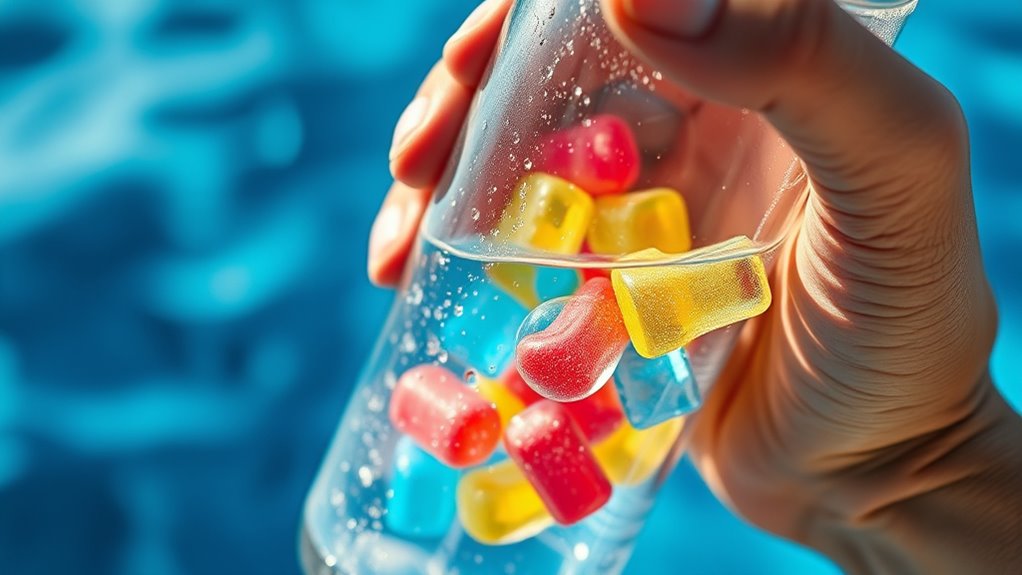
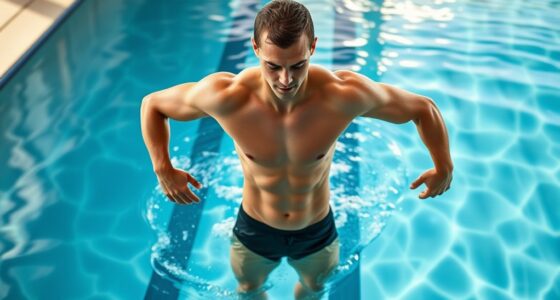
Have you ever wondered why staying hydrated is essential for swimmers? When you’re in the pool, your body loses fluids not just through sweat, but also via evaporation from your skin and breathing. Maintaining proper hydration isn’t just about drinking water; it’s about ensuring your electrolyte balance stays intact. Electrolytes like sodium, potassium, calcium, and magnesium are minerals that help regulate muscle contractions, nerve function, and fluid balance. When these minerals are out of whack, you might experience cramping, fatigue, or sluggish recovery, all of which can hinder your performance and extend your recovery time. That’s why understanding hydration strategies tailored for swimmers is so important.
Proper hydration and electrolyte balance are vital for optimal swimming performance and recovery.
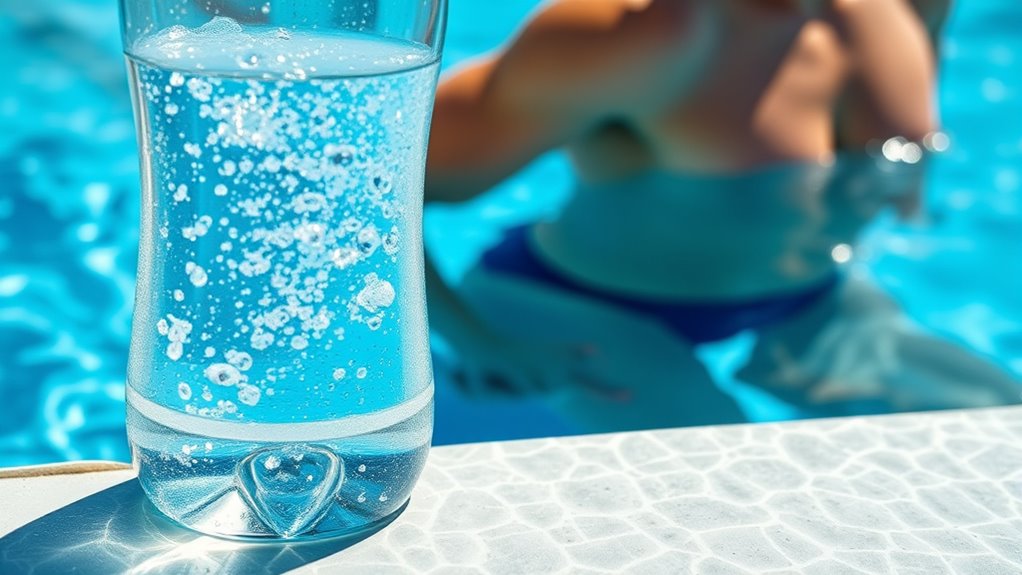
Effective hydration strategies involve more than just gulping down water before or after your swim. During long training sessions or competitions, you need a plan that replenishes not only lost fluids but also restores electrolytes. This might mean incorporating sports drinks designed to replace electrolytes, or consuming electrolyte-rich snacks, especially if you’re sweating heavily. It’s essential to listen to your body’s signals—thirst isn’t always the most reliable indicator of dehydration, especially during intense workouts. Instead, monitor the color of your urine; a pale, straw-like color typically indicates good hydration, while darker urine suggests you need to hydrate more.
Timing your hydration is just as critical as what you drink. Before you hit the pool, start hydrating several hours earlier, ensuring your body is already in a good fluid state. During your swim, if it lasts more than an hour, take small, frequent sips of an electrolyte beverage to maintain your electrolyte balance and prevent dehydration. After your session, prioritize rehydration by consuming fluids that contain electrolytes to help your muscles recover and reduce soreness. Remember, if you’re feeling overly fatigued, experiencing muscle cramps, or noticing darker urine, these are signs you need to boost your hydration efforts. Staying mindful of your electrolyte intake can make a significant difference in your overall performance and recovery.
Incorporating hydration strategies into your routine takes practice and awareness. It’s about creating a habit that supports your training and competition goals. By paying attention to your fluid intake, choosing drinks that replenish electrolytes, and timing your hydration properly, you’ll optimize your performance and recovery. Staying hydrated isn’t just about drinking water; it’s about maintaining a delicate balance of electrolytes that keeps your muscles functioning smoothly and your body ready to perform at its best. So, make hydration a priority, and your swimming will benefit from the extra edge of proper electrolyte management.
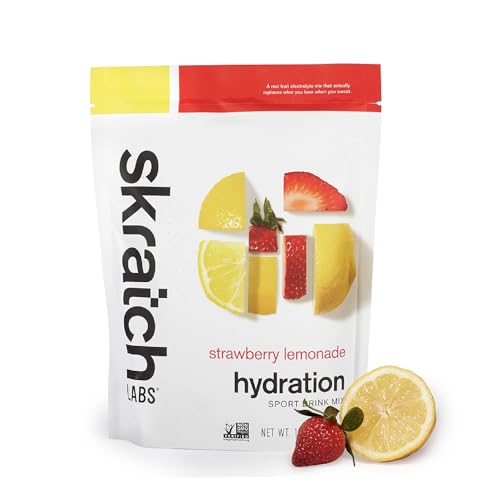
Skratch Labs Hydration Sports Drink Mix – Real‑Fruit Electrolyte Powder for Fast Hydration & Endurance | Strawberry Lemonade | 20 Servings | Vegan, Non‑GMO, Clean Ingredients
ELECTROLYTE REPLACEMENT – Replaces the electrolytes lost in sweat with a balanced profile of sodium, potassium, and glucose…
As an affiliate, we earn on qualifying purchases.
As an affiliate, we earn on qualifying purchases.
Frequently Asked Questions
How Do Electrolytes Affect Swimming Performance?
Electrolytes play a vital role in your swimming performance by helping maintain proper hydration strategies and supporting muscle recovery. When you stay balanced with electrolytes, your muscles function efficiently, reducing cramping and fatigue. Proper hydration, enhanced by electrolytes, guarantees your muscles recover faster after intense sessions. By paying attention to electrolyte intake, you keep your body in peak condition, allowing you to swim longer and more effectively with less risk of dehydration.
Can Overhydration Be Dangerous for Swimmers?
You might think more water is always better, but overhydration can actually be dangerous. It disrupts your hydration balance, leading to electrolyte imbalance, which can cause nausea, cramps, or even more serious issues like hyponatremia. Staying properly hydrated means maintaining that fine line—drink enough to perform well, but avoid overdoing it. Because in swimming, even excess water can sink you if you’re not careful.
Which Electrolytes Are Most Important for Swimmers?
You should focus on maintaining electrolyte balance by prioritizing sodium, potassium, magnesium, and calcium. These electrolytes help regulate muscle function, prevent cramps, and support hydration strategies during long swims. To stay properly hydrated, include electrolyte-rich drinks or foods, especially if you sweat heavily or swim for extended periods. Keep an eye on your intake to avoid imbalances, ensuring your body stays fueled and performing at its best in the water.
How Quickly Should I Rehydrate After a Swim?
You should start your post-swim recovery and hydration timing immediately after you finish swimming. Aim to rehydrate within 30 minutes to replenish lost fluids and electrolytes effectively. Drinking water with added electrolytes helps speed up recovery, reduce muscle cramps, and restore energy levels. Don’t wait too long, as prompt hydration supports ideal performance and helps you bounce back faster for your next workout or swim session.
Are Natural Electrolyte Sources Better Than Supplements?
Imagine you’re competing in a tough race, and you choose natural foods like bananas for electrolytes. Natural foods often provide balanced electrolytes and come with added nutrients, making them a better choice for sustained hydration. While supplements offer quick, targeted benefits, natural foods support overall health and recovery. For most swimmers, incorporating natural foods into their diet can be just as effective, if not more, than relying solely on supplements.

You Again Super Honey Clean Energy Gel, Honey & Himalayan Salt | Electrolyte Replenishment Running Fuel | Endurance Workouts & Cycling Gel | Paleo & Carnivore Snack | Gluten-Free | USA Made | 8-Pack
Natural Energy Gel for Athletes: Energize your run or workout with each pocket-sized clean energy packet of Super…
As an affiliate, we earn on qualifying purchases.
As an affiliate, we earn on qualifying purchases.
Conclusion
Staying hydrated with the right electrolytes keeps you performing your best in the water. Don’t think a simple glass of water is enough—adding electrolytes guarantees your muscles stay strong and prevent cramps. Imagine your body as a well-oiled machine; without proper hydration, it’s like trying to swim with a clogged engine. So, next time you hit the pool, remember: balance your fluids and electrolytes to swim confidently and efficiently.

Globe Electrolyte Replacement Tablets for Rehydration, Exercise Recovery, Youth & Adult Athletes, Hiking, Camping, & Sports Recovery and More… 50 Packets of 2 Tablets Each, 100 Count
CONVENIENT TRAVEL PACKS: 50Packets per Box. (100 Tablets) Keep Globe Electrolyte tablet packets in your medicine closet, car,…
As an affiliate, we earn on qualifying purchases.
As an affiliate, we earn on qualifying purchases.

Complete Electrolyte Supplement Pills High Absorption | Cmax Potassium Chloride Magnesium Sodium Calcium Zinc | Boost Endurance Muscle Recovery Mental Focus | Salt Electrolytes Tablets | Keto Friendly
Easy to take electrolyte capsules with a clean & transparent label | 11 powerful synergic electrolytes, trace minerals…
As an affiliate, we earn on qualifying purchases.
As an affiliate, we earn on qualifying purchases.