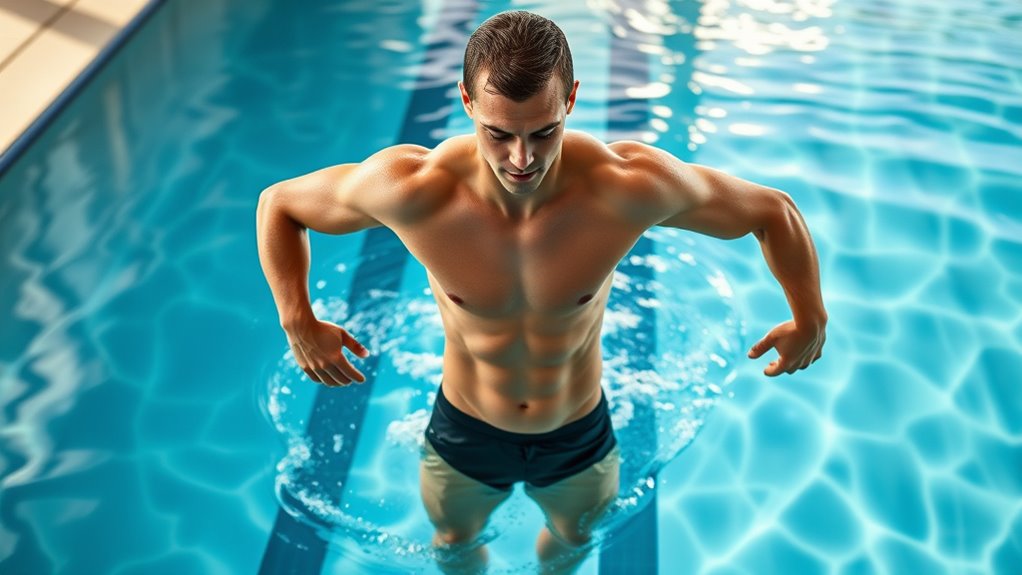

To improve your swimming, develop a mobility routine that targets your shoulders and hips. Start with dynamic stretching exercises like arm circles, cross-body stretches, hip circles, and leg swings before every session. Incorporate shoulder windmill swings and pigeon poses into your warm-up to enhance flexibility and rotation. Consistent practice will boost your stroke efficiency and reduce injury risk. Keep exploring these exercises to unleash better movement and stronger performance in the water.
Key Takeaways
- Incorporate dynamic shoulder movements like arm circles and windmill swings into your warm-up to enhance mobility.
- Use hip mobility drills such as leg swings, hip circles, and pigeon stretches to improve rotation and streamline position.
- Dedicate 5-10 minutes daily to shoulder and hip stretches to maintain flexibility and prevent injuries.
- Prioritize regular mobility exercises before swimming sessions to prepare muscles and optimize stroke efficiency.
- Combine static and dynamic stretches for shoulders and hips to promote long-term flexibility and sustained swimming performance.
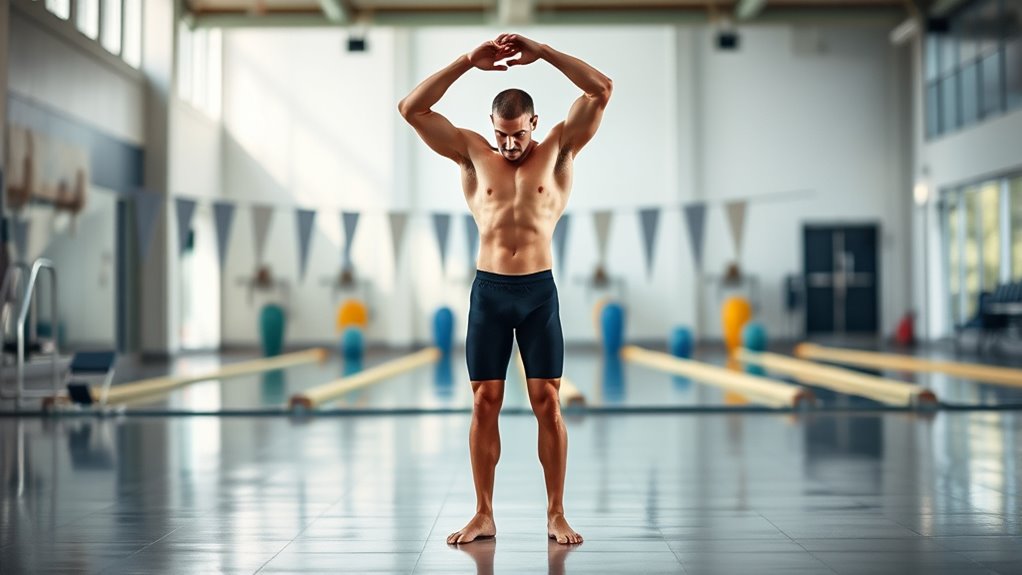
To perform at your best in the pool, maintaining ideal mobility is essential. Your shoulders and hips are critical for efficient swimming, and neglecting their flexibility can limit your performance and increase injury risk. Focusing on shoulder flexibility and incorporating targeted hip mobility drills into your routine will help you move more freely through the water, conserve energy, and improve your overall stroke technique.
Start by prioritizing shoulder flexibility. Your shoulders are involved in almost every stroke, so ensuring they’re supple and strong makes a noticeable difference. Simple stretches like arm circles, cross-body shoulder stretches, and doorway chest openers can warm up your shoulder joints before training. Incorporate dynamic movements that mimic swimming motions—like windmill arm swings or shoulder rolls—to improve range of motion and prepare your muscles for intense activity. Consistently working on shoulder flexibility can lead to smoother arm recovery and a more powerful pull, reducing fatigue and discomfort during long sessions.
Prioritize shoulder flexibility with stretches and dynamic movements to enhance stroke efficiency and reduce fatigue.
In addition to shoulder exercises, integrating hip mobility drills is equally essential. Your hips serve as the foundation for your body’s rotation and streamline position. Tight hips can restrict your ability to rotate efficiently, which affects your stroke length and rhythm. To combat this, include hip mobility drills like leg swings, hip circles, and pigeon stretches in your warm-up or cool-down routines. These exercises help loosen tight muscles around the hips, allowing for a greater range of motion. When your hips are more mobile, you’ll notice easier body rotation during freestyle and backstroke, creating a more fluid and effective swim stroke.
A consistent mobility routine that combines shoulder flexibility exercises and hip mobility drills can be integrated seamlessly into your training schedule. Dedicate a few minutes before each swim session to dynamic stretches, focusing on these key areas. Over time, you’ll notice increased ease of movement, reduced stiffness, and better control over your body in the water. Improved mobility not only enhances your performance but also helps prevent common swimming injuries like shoulder impingements or hip strains. Incorporating proper maintenance and care of your muscles and joints can further optimize your mobility and longevity in the water.
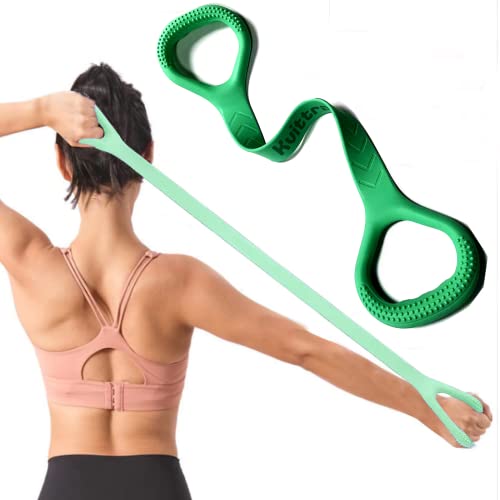
Kvittra Figure 8 Resistance Band, Arm Back Shoulder Exercise Elastic Rope Stretch Fitness Band, Foot, Leg, Hand Stretcher, Arm Exerciser for Yoga Pilates Stretching Physical Therapy, Home Gym Workout
UPGRADED MANUAL DESIGN EXERCISE BANDS – Made of natural latex, designed with an 8 shape, perfectly fits your…
As an affiliate, we earn on qualifying purchases.
As an affiliate, we earn on qualifying purchases.
Frequently Asked Questions
How Often Should Swimmers Perform Shoulder and Hip Mobility Routines?
You should perform shoulder and hip mobility routines at least 3-4 times a week. Consistent stretching helps improve your flexibility and reduces injury risk by maintaining joint health. Incorporate dynamic stretches before swimming and static stretches afterward to maximize injury prevention. Regular mobility work keeps your muscles and joints flexible, enabling better performance and minimizing the chances of strains or injuries during intense training sessions.
Are There Any Contraindications for Certain Mobility Exercises?
Yes, some mobility exercises may pose risks to joint safety, especially if you have pre-existing injuries or limited range of motion. Always listen to your body and consider exercise modifications to prevent strain or discomfort. If an exercise causes pain, stop immediately and consult a healthcare professional. Prioritizing joint safety guarantees you build mobility effectively without risking injury or setbacks.
Can Mobility Routines Prevent Swimming-Related Injuries?
A stitch in time saves nine, so your mobility routines can definitely help prevent swimming-related injuries. By focusing on injury prevention and flexibility enhancement, you prepare your shoulders and hips for the demands of swimming. Regularly incorporating targeted mobility exercises keeps your joints healthy, reduces strain, and improves your range of motion. This proactive approach minimizes the risk of strains and overuse injuries, letting you swim stronger and longer with fewer setbacks.
What Equipment Is Needed for Effective Mobility Exercises?
You’ll need resistance bands and foam rollers for effective mobility exercises. Resistance bands help you improve shoulder and hip flexibility by providing gentle resistance during stretches and movement drills. Foam rollers are essential for releasing muscle tightness and increasing blood flow, which enhances mobility. Keep these tools handy in your routine to maximize your stretching effectiveness, prevent injuries, and boost overall performance in the water.
How Long Does It Take to See Improvements in Flexibility?
You’ll typically see improvements in flexibility within 3 to 4 weeks if you stick to your routine consistently. Progress indicators include increased range of motion, reduced stiffness, and easier movement during swimming. Keep in mind that everyone’s flexibility timeline varies, depending on your starting point and effort. Regularly track your progress to stay motivated, and remember, persistence is key to achieving lasting flexibility gains.
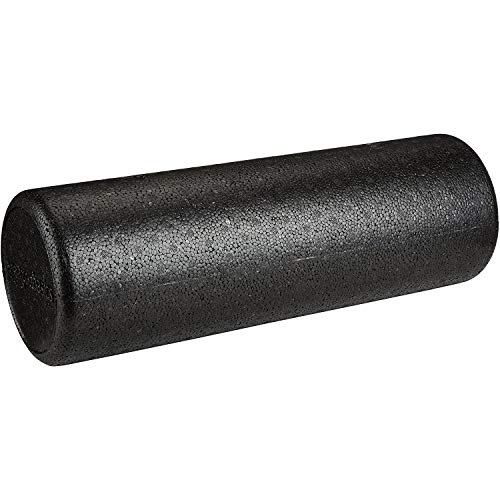
Amazon Basics High-Density Foam Roller for Exercise and Recovery, 18 Inches, Black
High-density foam roller in Black
As an affiliate, we earn on qualifying purchases.
As an affiliate, we earn on qualifying purchases.
Conclusion
Now that you’ve unfastened these mobility secrets for your shoulders and hips, imagine the next time you hit the pool—every stroke smoother, more powerful. Feel the anticipation build as your body moves with effortless grace, shadows of past limitations fading away. Stay committed, and soon you’ll notice the difference, almost as if you’re gliding through water that’s lighter, freer. The journey isn’t over; it’s just beginning. Are you ready to see how far you can go?

Meadows 18 ft x 33 ft Oval Above Ground Swimming Pool Kit | 52 Inch Steel Walls | Bundle Includes: 25 Gauge Liner, A-Frame Ladder, Sand Filter System with Pump & Skimmer
COMPLETE SETUP – Includes everything you need to start swimming! Slide-lock resin A-frame ladder with barrier in taupe…
As an affiliate, we earn on qualifying purchases.
As an affiliate, we earn on qualifying purchases.

QuickFit 2 Pack – Stretching Exercise Poster – Laminated 18" x 24" & Bodyweight Exercise Playing Cards – 2.5" x 3.5"
Laminated 18" x 24" Stretching Exercise Poster
As an affiliate, we earn on qualifying purchases.
As an affiliate, we earn on qualifying purchases.