
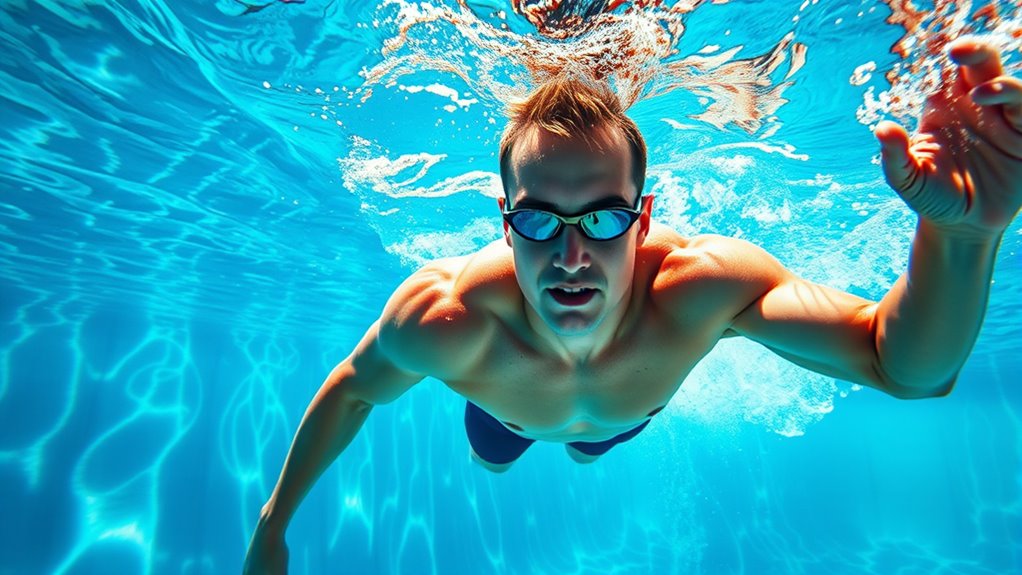

Many believe swimming alone guarantees fat loss and muscle gain, but that’s a misconception. Water resistance helps tone muscles, yet it doesn’t automatically burn fat or build significant muscle without targeted training and proper nutrition. Relying solely on laps or routine changes won’t lead to faster results. To truly improve body composition, you need accurate assessments and a balanced approach. Keep exploring to discover how to make your swimming efforts more effective.
Key Takeaways
- Water resistance alone does not guarantee muscle gain or fat loss without targeted training and proper nutrition.
- Swimming by itself is insufficient for significant body composition changes; combining with strength exercises enhances results.
- Relying solely on routine variety or increased lap counts does not ensure progress; personalized assessments are essential.
- Hydrostatic testing provides accurate body composition data, guiding effective, tailored swimming and training strategies.
- Quick fixes and endless laps are ineffective; sustained, informed efforts are necessary for meaningful body composition improvements.

Many common beliefs about body composition are actually misconceptions that can hinder your progress. When it comes to swimming, one of the biggest myths is that you need to rely solely on traditional methods like calorie counting or endless laps to see results. Instead, understanding your body composition and how it responds to water-based exercise can make a vital difference. For example, some people think that doing different drills or changing routines frequently—sometimes called muscle confusion—will automatically lead to better results. While variety can be beneficial, simply switching up your swimming styles or routines without understanding your body’s needs might not be enough. To truly gauge your progress, hydrostatic testing is a valuable tool. This method measures your body fat percentage and muscle mass by submerging you in water, giving you accurate insights that surpass the limitations of scales or visual assessments. Recognizing your true body composition allows you to tailor your swimming workouts more effectively, focusing on areas that need improvement and avoiding unnecessary frustration.
Understanding your body composition with hydrostatic testing can optimize your swimming results.
Additionally, incorporating body composition testing can help you track your progress more precisely and adjust your training accordingly. Another misconception is that swimming alone will drastically change your body composition without additional effort. While swimming is excellent for cardiovascular health, muscle endurance, and low-impact exercise, it’s not a magic bullet for fat loss or muscle gain. Many believe that because water provides resistance, they don’t need strength training or proper nutrition. However, combining swimming with targeted strength exercises can optimize muscle development and fat reduction. It’s also a myth that doing more laps or longer sessions guarantees faster results. Quality, consistency, and proper recovery matter far more than simply increasing workout duration. Overtraining can lead to fatigue and injury, setting you back instead of moving you forward.
Some assume that swimming doesn’t help build muscle because water resistance isn’t the same as weightlifting. While it’s true that swimming emphasizes endurance and toning muscles, it can contribute profoundly to muscle growth—especially if you incorporate specific techniques like resistance training or interval swimming. Moreover, many overlook the importance of recovery and nutrition in body composition changes. Proper hydration, protein intake, and rest are vital components that complement your swimming efforts.
Ultimately, busting these myths requires a more informed approach. Use hydrostatic testing to understand where you stand, incorporate a mix of swimming and strength training, and avoid the trap of thinking more is always better. Recognize that real progress comes from smart, consistent efforts tailored to your body’s unique needs, rather than relying solely on misconceptions or quick fixes.
Frequently Asked Questions
Does Swimming Automatically Improve Muscle-To-Fat Ratio?
Swimming can help improve your muscle-to-fat ratio, but it doesn’t automatically do so. If you focus on consistent muscle gain through targeted workouts and combine that with fat reduction strategies like proper nutrition, you’ll see better results. Swimming boosts overall fitness, supports muscle development, and burns calories, but achieving an ideal muscle-to-fat balance requires a combination of exercise, diet, and dedication.
Can Swimming Help You Lose Belly Fat Specifically?
Imagine your belly as a stubborn fortress, but water resistance can be your secret weapon. Swimming helps you burn calories efficiently, targeting fat everywhere, including your belly. While you can’t spot-reduce fat, consistent swimming creates a calorie deficit that gradually melts away belly fat. Immerse yourself in the water regularly, and let each stroke symbolize your determination—turning resistance into transformation, revealing a leaner, stronger you beneath the surface.
Is Water Weight Loss Sustainable Long-Term?
Yes, water weight loss can be sustainable long-term if you focus on reducing water retention through a balanced diet and regular exercise. Swimming helps you burn calories and create a calorie deficit, which promotes fat loss over time. Keep in mind that water weight may fluctuate, but maintaining healthy habits guarantees steady progress. Stay consistent with hydration and activity to achieve lasting results, rather than relying solely on temporary water loss.
Do Swimmers Have a Different Body Composition Than Runners?
Swimmers and runners wear different body suits like night and day. You’ll find swimmers tend to have more upper body muscle and a leaner core, offering aesthetic benefits and boosting cardiovascular health. Runners often develop strong legs and a slightly different fat distribution. Both sports enhance body composition, but swimming’s resistance training gives you a unique blend of muscle tone and endurance, making your physique a true work of art.
How Does Swimming Impact Metabolism Compared to Other Exercises?
Swimming considerably boosts your metabolic rate because it’s a full-body workout that requires constant effort. Compared to other exercises, it often involves moderate to high exercise intensity, which helps burn calories even after you finish. The resistance of water makes your muscles work harder, increasing your overall metabolism. So, if you want to elevate your metabolic rate, swimming is an excellent choice, especially when combined with varied intensity levels.
Conclusion
Don’t let myths about body composition drown your confidence like a sinking ship. Remember, swimming builds muscle and burns fat, but everyone’s body responds differently. It’s like a unique puzzle you get to solve with patience and consistency. Keep swimming, stay informed, and trust your progress. Your body’s composition is a journey, not a quick fix. Immerse yourself with an open mind, and watch your confidence and fitness flow naturally, just like water finding its way.