To prevent cramps while swimming, stay well-hydrated by drinking water and electrolyte drinks throughout the day and during your swim. Fuel your body with potassium, magnesium, and calcium-rich foods, and eat a balanced snack beforehand. Incorporate warm-up stretches to loosen muscles and pay attention to early signs of tightness. Combining proper hydration, nutrition, and warm-up routines can help keep cramps at bay—continue exploring for more effective tips to stay comfortable in the water.
Key Takeaways
- Stay well-hydrated by drinking water and electrolyte drinks steadily before and during swimming.
- Consume foods rich in potassium, magnesium, and calcium to support muscle function.
- Perform dynamic warm-up and stretching routines to prepare muscles and reduce cramp risk.
- Eat a balanced snack before swimming and replenish electrolytes afterward for sustained muscle health.
- Recognize early signs of muscle tightness and stretch gently to prevent cramps during activity.
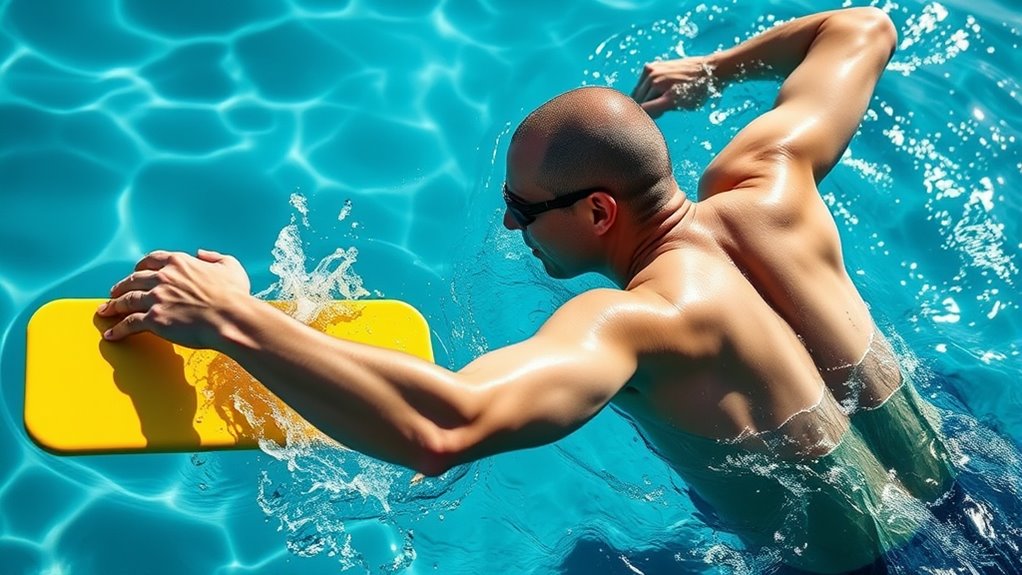
Swimming is an enjoyable workout, but cramps can quickly interrupt your session and leave you frustrated. To prevent this from happening, paying attention to your hydration strategies and nutritional tips is essential. Proper hydration helps maintain the balance of electrolytes in your muscles, reducing the risk of sudden cramps. Before you hit the pool, make sure you’re well-hydrated by drinking water steadily throughout the day. During your swim, sipping small amounts of water or electrolyte drinks can keep your muscles functioning smoothly, especially if you’re swimming for extended periods or in warm environments. Avoid waiting until you’re thirsty, as dehydration can sneak up quickly underwater and catch you off guard.
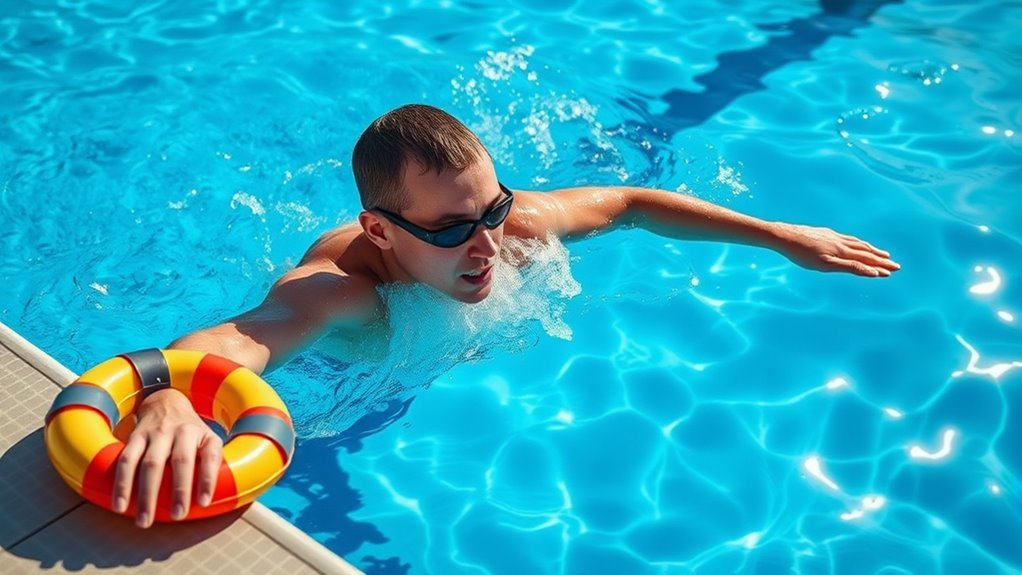
Stay well-hydrated before and during swimming to prevent cramps and keep muscles functioning smoothly.
Alongside hydration, your nutritional intake plays a crucial role in cramp prevention. Consuming foods rich in potassium, magnesium, and calcium supports muscle health and reduces the likelihood of cramping. Incorporate bananas, sweet potatoes, nuts, and leafy greens into your diet regularly. These nutrients help maintain the electrical impulses necessary for muscle contractions and relaxation. It’s also beneficial to have a small, balanced snack before swimming, like yogurt or a handful of nuts, to ensure your muscles are fueled and less prone to spasms. Be cautious with excessive caffeine or alcohol intake, as they can dehydrate you and increase cramp risk.
Timing your nutrition is just as important as what you eat. Eating a meal with complex carbs and healthy fats about 1-2 hours before swimming gives your muscles sustained energy and hydration support. Post-swim, replenish lost electrolytes with a nutritious smoothie or recovery drink that contains potassium and magnesium to aid muscle recovery and prevent delayed cramps. Avoid restrictive diets that cut out essential minerals, as these can contribute to muscle imbalances and cramping. Incorporating proper hydration strategies into your routine can significantly reduce the likelihood of cramping during your swim.
Additionally, integrating proper warm-up and stretching routines can prepare your muscles for activity, further reducing cramp chances. Focus on dynamic stretches that loosen your muscles before diving in. Pay attention to your body’s signals; if you start feeling muscle tightness, pause and stretch gently. Consistent hydration and good nutritional habits are your first line of defense against cramps, but combining these with proper warm-up routines maximizes your chances of enjoying a smooth, cramp-free swim. Remember, staying proactive with hydration strategies and nutritional tips keeps your muscles healthy and ready to perform, allowing you to focus on your swim rather than cramps.

Little Giant APCP-1700 115-Volt, 1/3 HP, 1745 GPH, Automatic, Submersible, Swimming Pool Cover Pump with 25-Ft. Cord, Light Blue, 577301
APPLICATIONS: designed for automatic removal of water from pool covers, boat covers or rooftops - pump activates in...
As an affiliate, we earn on qualifying purchases.
Frequently Asked Questions
Can Dehydration Cause Cramps During Swimming?
Yes, dehydration can cause cramps during swimming because it disrupts your electrolyte balance, which is essential for proper muscle function. When you’re dehydrated, your muscles are more prone to fatigue and spasms. To prevent this, stay well-hydrated before and after swimming, and consider replenishing electrolytes if you’re swimming for extended periods. Maintaining hydration helps keep your muscles working smoothly and reduces the risk of cramps.
Are There Specific Stretches to Prevent Swimming Cramps?
Think of your muscles as a well-tuned orchestra—stretching routines keep every instrument in harmony. To prevent swimming cramps, focus on stretches that target your calves, hamstrings, and quadriceps. Incorporate dynamic stretches before swimming, like leg swings and lunges, to boost muscle flexibility. Post-swim, gentle static stretches help relax your muscles. Regularly practicing these routines guarantees your muscles stay limber, reducing the risk of cramps and keeping your swim smooth and effortless.
How Does Diet Influence Cramp Prevention While Swimming?
Your diet greatly influences cramp prevention while swimming by maintaining electrolyte balance and reducing muscle fatigue. Eating foods rich in potassium, magnesium, and calcium helps keep your muscles functioning properly. Staying well-hydrated before and during your swim also supports electrolyte levels. Avoid excessive caffeine and alcohol, as they can dehydrate you. Proper nutrition and hydration guarantee your muscles stay strong and less prone to cramps during your swim.
Do Different Swimming Strokes Impact Cramp Likelihood?
Different swimming strokes can affect your cramp likelihood. For example, breaststroke efficiency relies on smooth, controlled movements, reducing muscle strain and cramps. In contrast, butterfly technique demands powerful, rapid motions that can tire muscles quickly, increasing cramp risk. Focus on proper form and pacing in both strokes to minimize cramps. Staying hydrated and stretching well before swimming also helps, no matter which stroke you prefer.
Is It Safe to Swim Immediately After Experiencing a Cramp?
It’s generally safe to swim again after a cramp, but you should wait until your muscle relaxes fully. Studies show that cramps affect nearly 50% of swimmers, highlighting the importance of muscle relaxation. To stay safe, hydrate well and follow hydration tips like drinking water before, during, and after swimming. Listen to your body, and avoid pushing through pain to prevent further injury.

In The Swim 18' x 36' Premium Blue Rectangle Solar Pool Cover 12 Mil for Solar Heating Above Ground Pools and Inground Pools
Heat Retention & Solar Warming: Harnesses the power of the sun to naturally warm your pool water while...
As an affiliate, we earn on qualifying purchases.
Conclusion
To prevent cramps while swimming, stay well-hydrated, stretch properly, and maintain electrolyte balance. Some believe that magnesium supplements can help, and research suggests they might reduce muscle cramps, but results vary. While no foolproof method exists, listening to your body and preparing with good hydration and stretching can make a difference. Trust your experience and stay attentive to your muscles—these simple steps could keep you comfortable and safe in the water.

VINGLI Pool Cover Reel Set Pool Solar Cover Reel for Inground Swimming Pool, Aluminum Solar Swimming Inground Cover Blanket Reel (Upgrade) (18 Feet)
Important Notice.To prevent damage to pool cover roller and accessories during shipping, such as crushing or impact, we...
As an affiliate, we earn on qualifying purchases.
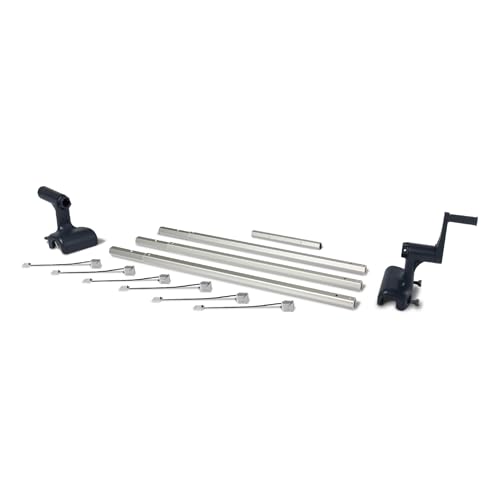
Intex Heavy Duty Solar Above Ground Pool Cover Reel Aluminum Adjustable with Locking Mechanism for Rectangle Frame Pool, Cover Not Included
Efficiently roll out your solar pool cover with this convenient hand-cranked solar cover reel, ensuring your pool stays...
As an affiliate, we earn on qualifying purchases.