


Before your solo sessions, plan for emergencies by keeping a well-stocked first aid kit, ensuring your phone is charged, and sharing your schedule with someone trustworthy. Wear proper gear like supportive shoes and protective equipment, and inspect your equipment for damages regularly. Choose safe, well-lit areas free of hazards, warm up properly, and pay close attention to how your body feels throughout. Following these tips will help you stay safe and prepared—learn more to maximize your safety.
Key Takeaways
- Always inform someone trusted about your workout plan, location, and schedule before starting.
- Keep a fully stocked first aid kit and a charged phone nearby for emergencies.
- Use proper gear, inspect equipment regularly, and start with lighter loads to prevent injuries.
- Choose familiar, well-lit areas with clear space and good footing for safe outdoor workouts.
- Warm up before and cool down after exercises, and listen to your body’s signals to avoid overexertion.
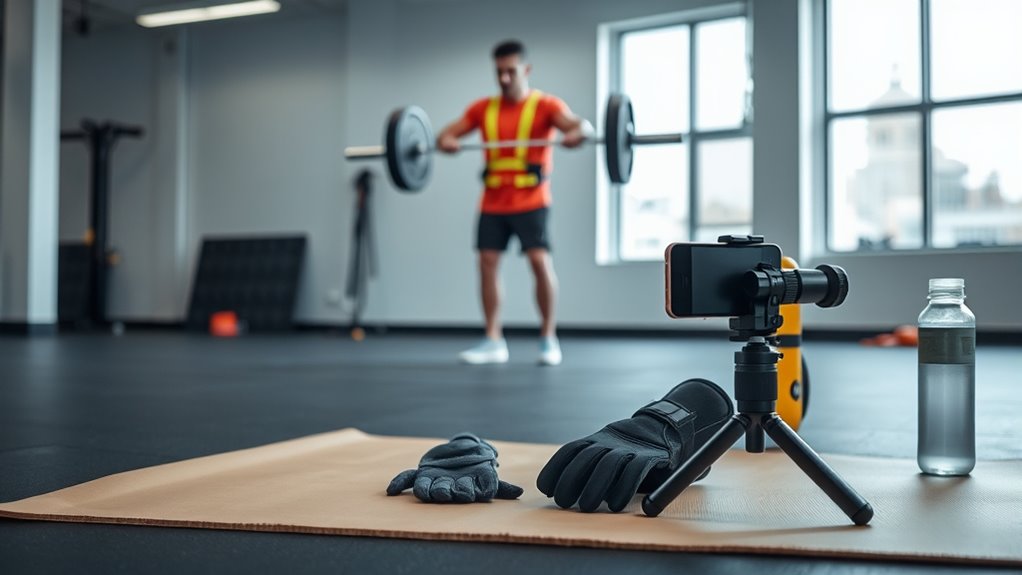
Training alone can be highly effective, but it also comes with certain risks. When you’re working out solo, you’re responsible for your own safety, which makes emergency preparedness essential. Before you start, make sure you have a plan in place for what to do if an injury or emergency occurs. Keep a fully stocked first aid kit nearby, and familiarize yourself with basic first aid procedures. Additionally, ensure that someone you trust knows your workout schedule and location, so they can alert authorities if you don’t check in after a set amount of time. Having a charged cell phone within reach is a must, allowing you to call for help if necessary.
Proper gear plays a crucial role in keeping you safe during solo training sessions. Wearing the right equipment not only enhances performance but also minimizes the risk of injury. Invest in high-quality athletic shoes suited to your activity, as worn-out or inappropriate footwear can cause strains or slips. Use protective gear like gloves, knee pads, or helmets if your workout involves high-impact movements or equipment. For outdoor workouts, dressing appropriately for the weather is vital; moisture-wicking clothes, layers, and sun protection help prevent heat exhaustion or hypothermia. Reflective gear or bright colors are also important if you’re training in low-light conditions, ensuring you’re visible to others.
Wearing proper, high-quality gear reduces injury risk and enhances safety during solo workouts.
Equipment safety shouldn’t be overlooked. Make sure all your gear is in good condition—check for frayed cables, loose screws, or worn-out padding. Properly maintaining your equipment reduces the chances of malfunction or accidents during your session. When using weights or machines, start with lighter loads to master proper form before progressing. Never ignore your body’s signals; if you’re feeling dizzy, pain, or fatigue, stop immediately and assess your condition. Pushing through discomfort can lead to serious injury, especially when you’re alone and help may not be immediately available.
In addition to gear, preparing your environment is equally important. Clear your workout area of obstacles or hazards that could cause trips or falls. If you’re training outdoors, choose familiar, well-lit locations with good footing and easy access to help if needed. Always warm up before intense activity and cool down afterward to prevent strains. Conducting regular safety checks on your equipment and surroundings helps prevent accidents. Remember, even with proper gear and emergency plans in place, listening to your body and staying alert are your best defenses. Solo training offers freedom and focus, but it demands responsibility—being prepared and equipped ensures you can enjoy your workout safely and confidently.
Frequently Asked Questions
What Should I Do if I Sustain an Injury During Solo Training?
If you sustain an injury during solo training, stop exercising immediately to prevent further damage. Apply first aid—clean the wound, apply pressure to stop bleeding, and use ice to reduce swelling. Seek medical attention if necessary. To prevent future injuries, focus on injury prevention by warming up properly, using correct form, and listening to your body. Always have a basic first aid kit handy during solo workouts.
How Can I Ensure Proper Form Without a Trainer?
To guarantee proper form without a trainer, spot check your movements regularly and use mirror feedback to observe your posture and technique. Focus on maintaining correct alignment and controlled movements. Record yourself periodically to review your form, and compare it to instructional videos or images online. Listening to your body and making adjustments as needed helps prevent injury and improves your workout effectiveness. Consistent self-monitoring is key to safe solo training.
What Emergency Contacts Should I Have on Hand?
Think of your emergency contacts as a safety net catching you if you fall. Keep a list of emergency contacts, including local authorities and a trusted friend or family member, readily accessible. Use safety apps that can quickly alert these contacts if needed. Always have your phone charged and within reach, so you can activate your emergency contacts swiftly. This way, you’re prepared for any unexpected situations during your solo workout.
How Do I Stay Motivated During Solo Workouts?
To stay motivated during solo workouts, try incorporating motivational strategies like setting clear goals and rewarding yourself for progress. Create energizing workout playlists that keep you moving and focused. Mix up your routine to prevent boredom, and visualize your achievements to boost confidence. Remember, consistency is key, so keep a positive mindset and remind yourself of your reasons for working out. These tips will help you stay committed and energized throughout your session.
What Are the Signs of Overtraining or Fatigue?
You might notice signs of exhaustion like persistent muscle soreness, unusual fatigue, or decreased performance. Physical warning signals include lingering fatigue, irritability, or trouble sleeping. If you experience dizziness, shortness of breath, or joint pain, these are clear signs of overtraining or fatigue. Pay attention to your body and rest when needed, as ignoring these signals can lead to injury or longer recovery times. Listening to your body keeps your training safe and effective.
Conclusion
While solo training offers freedom and focus, safety should never take a backseat. Think of it as your secret weapon—without it, even the strongest session can turn risky. Balancing independence with caution keeps you empowered and injury-free. Remember, the most important part of your workout isn’t just pushing limits but knowing when to pause and protect yourself. Stay vigilant, stay safe, and enjoy your training journey—because your health is your true victory.