
To keep your high-use training pool clean and safe, you need to regularly monitor water chemistry, including pH, disinfectants, and alkalinity, with accurate testing tools. Maintain your filtration system by cleaning and inspecting filters often, and perform routine surface skimming, brushing, and vacuuming to remove debris. Consistent chemical dosing and system checks prevent imbalances, algae growth, and equipment issues. Keep up with these practices to guarantee ideal water quality—more tips await to help you stay ahead.
Key Takeaways
- Monitor and adjust pH, disinfectant levels, and alkalinity daily to prevent algae growth and ensure swimmer safety.
- Use high-capacity, efficient filtration systems with regular cleaning and media replacement to maintain water clarity.
- Implement routine surface skimming, wall brushing, and vacuuming to remove debris missed by filters.
- Conduct frequent water testing and system checks to quickly identify and correct water chemistry imbalances.
- Combine diligent water chemistry management, filtration maintenance, and cleaning routines for optimal water quality and system longevity.
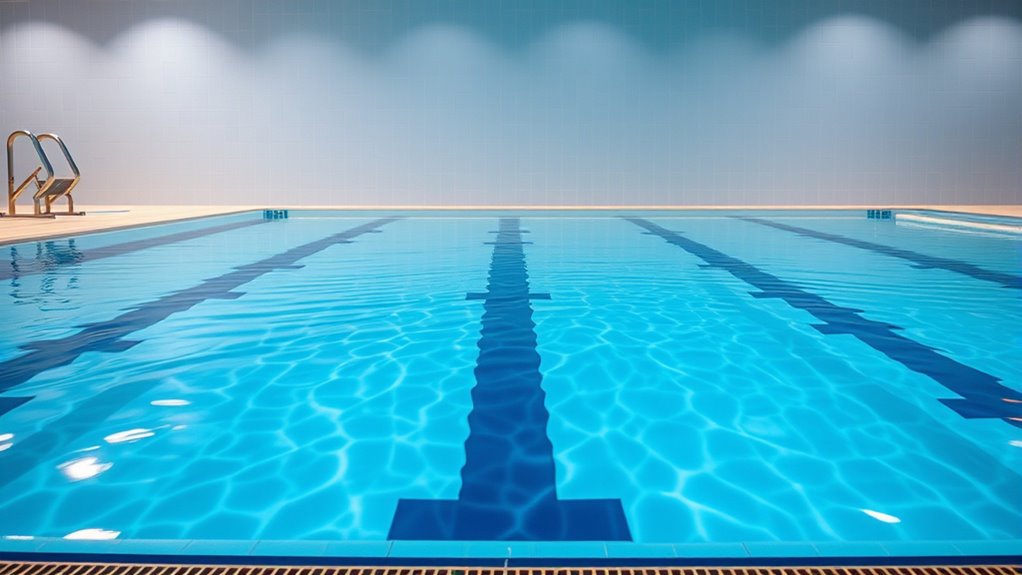
Maintaining clear and healthy water is essential when managing high-use training pools, where frequent use can quickly lead to contamination and chemical imbalance. You need to stay vigilant about water chemistry, ensuring that pH levels, disinfectant concentrations, and alkalinity are consistently monitored and adjusted. Proper water chemistry keeps the water safe for swimmers and prevents issues like algae growth, cloudy water, or skin irritation. Regular testing is your first line of defense—using reliable test kits or digital meters to check pH, chlorine levels, bromine, and total alkalinity helps you identify problems early before they escalate. Balancing these parameters isn’t a one-time task; it’s an ongoing process that requires daily attention, especially in high-use environments.
Regular water testing and balancing are vital for safe, clear high-use training pools.
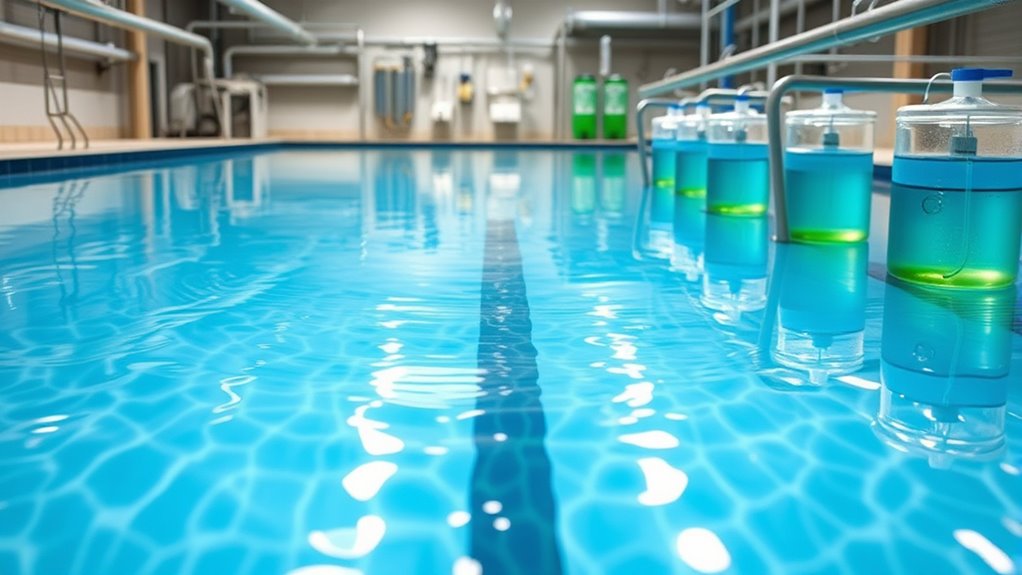
Filtration systems play a crucial role in maintaining water quality in high-use pools. These systems continuously remove debris, dirt, and microorganisms from the water, preventing buildup that can compromise water clarity and safety. You should regularly inspect and clean your filtration equipment—backwashing sand filters, rinsing cartridge filters, or replacing diatomaceous earth as needed. High-efficiency filters with adequate turnover rates are vital; they ensure that water is circulated and filtered quickly enough to handle the volume of swimmers. When choosing filtration systems, prioritize models designed for high-traffic pools, as they typically have higher flow rates and better contaminant removal capabilities. A well-maintained filtration system works synergistically with water chemistry adjustments, ensuring the disinfectants are effective and the water remains crystal clear. Additionally, reliable filtration systems are essential to handle the increased load and prevent water quality issues in high-use environments.
In addition to routine testing and maintenance, you’ll want to develop a cleaning schedule that includes skimming surface debris, brushing pool walls, and vacuuming the floor. These manual efforts complement your filtration system by removing particles that filters might miss. Chemical dosing equipment can also help automate chemical additions, maintaining consistent water chemistry without the guesswork. Remember that high-use pools generate more waste, so you may need to increase the frequency of water testing and filtration system checks to keep everything in balance. Proper water care isn’t just about reacting to issues; it’s about proactive management—anticipating needs and maintaining systems diligently.
Ultimately, keeping your high-use training pool safe and inviting demands a comprehensive approach. Consistent water chemistry management, regular filtration system maintenance, and thorough cleaning routines work together to prevent contamination and ensure swimmer safety. With attentive care, you’ll maintain water clarity, reduce chemical costs, and extend the lifespan of your equipment. Your dedication to these practices creates a healthy environment where swimmers can train effectively and enjoyably, knowing that the water they’re in is properly maintained.
Frequently Asked Questions
How Often Should Water Testing Be Conducted in High-Use Pools?
You should test the water in high-use pools at least daily to maintain proper pool chemical balance and verify safety. Regular testing helps you monitor water temperature, which impacts chemical effectiveness and swimmer comfort. By checking chemical levels and temperature frequently, you can promptly adjust chemicals and temperature settings, preventing issues like algae growth or bacteria buildup. Consistent testing keeps the pool safe, clean, and ready for high-volume use.
What Are the Best Chlorine Levels for High-Traffic Training Pools?
Think of your pool’s chlorine levels as the heartbeat of water safety. Keep chlorine levels between 3-5 ppm for high-traffic training pools, ensuring chlorine stability and proper water turnover. Regular testing helps maintain these levels, preventing bacteria buildup and cloudy water. By doing so, you create a safe, inviting environment where swimmers can train confidently, knowing their water is as reliable as a steady heartbeat.
How Can I Prevent Algae Growth in Busy Training Pools?
To prevent algae growth in busy training pools, focus on consistent pool maintenance and algae prevention strategies. Maintain proper sanitizer levels, like chlorine, and regularly test water parameters. Skim debris daily and brush pool surfaces to disrupt algae spores. Proper filtration and circulation are key, so ensure equipment operates efficiently. By staying proactive and vigilant, you’ll keep your pool clean, clear, and algae-free even during high traffic periods.
What Filtration System Is Most Effective for High-Volume Pools?
You should choose a filtration system with advanced filtration technology, like multi-stage or cartridge filters, to guarantee effective pool circulation. These systems handle high water volumes efficiently, removing debris and contaminants quickly. Proper pool circulation is vital, so make certain your pump runs long enough daily to keep water moving consistently. This combination prevents algae growth, maintains water clarity, and keeps your high-use training pool safe and clean for swimmers.
How Do I Manage Ph Levels During Peak Usage Times?
Did you know that pH levels can shift up to 0.5 in just a few hours during peak usage? To manage pH levels effectively, monitor water frequently and perform pH adjustment as needed. Use appropriate chemicals for balancing, and always follow manufacturer instructions. Keep an eye on your test readings, and make gradual adjustments to maintain ideal water quality, ensuring safe and comfortable training conditions even during busy times.
Conclusion
Maintaining high-use training pools requires effort, but the rewards are clear—crystal-clear water and safe swimming. Think of it like tending a garden; consistent care keeps everything blooming. Just as a gardener prunes and waters daily, you’ll keep your pool pristine and inviting. Remember, your dedication transforms a simple pool into a reliable training space, balancing the daily grind with the joy of a perfect swim. Keep up the care, and your pool will thrive.