
TL;DR

Get pool and patio gear delivered free with Prime
- Fast, free delivery on millions of items
- Prime Video, Amazon Music and more included
- Member-only deals all year
Vinegar is not a universal deck cleaner: Trex lists white vinegar for hard-water deposits on some current composite boards, while other surfaces and finishes may react differently. Experts recommend checking the deck maker’s instructions and using warm soapy water and an appropriate brush for routine cleaning.
White vinegar is not a one-size-fits-all deck cleaner, according to a Gardening Know How report that compared care instructions from composite-deck manufacturers and guidance for wood finishes. Trex approves it for hard-water deposits on some current composite lines, but acid may lighten those boards, and vinegar runoff can harm plants it contacts.
The report says Trex lists white vinegar as an option for chalky hard-water deposits on some of its current composite boards. The company advises rinsing thoroughly, and warns that products containing acid or bleach can lighten board color. Trex recommends warm soapy water and a soft-bristle brush for everyday dirt. The report advises trying an approved cleaner on a small, inconspicuous area first.
Other brands do not necessarily give the same guidance. TimberTech’s care guide does not mention vinegar, instead directing owners toward its diluted deck cleaner or a pH-neutral detergent for railings. Its instructions specify a medium-to-stiff nylon brush for composite boards. The report says that when a manufacturer has not approved a cleaner, owners cannot know from the guidance whether it will affect the surface.
For wood decks, the condition and type of finish matter. The report notes that acidic brighteners such as oxalic acid are used in some preparation work on bare wood, but that does not mean household vinegar is appropriate for a painted or stained deck. For coated boards, the finish maker’s directions should guide cleaner choice.
Why Runoff and Finish Matter
The practical question is not just whether vinegar can remove a mark. Cleaner choice can affect the deck’s color or finish, and wash water can carry the product beyond the boards. The report says household white vinegar typically contains about 5% acetic acid, which can damage leaf tissue on contact. Rinse water reaching hostas, vegetable seedlings or other broadleaf plants may brown or damage them.
Runoff also matters when a deck slopes toward a pond or storm drain. The report cautions that a product described as biodegradable is not necessarily harmless to aquatic life while it is washing away. Using the least aggressive cleaner that works, and controlling where rinse water flows, can reduce avoidable damage to landscaping and nearby water.
Routine upkeep can also limit the need for stronger products. Removing leaves and other debris helps prevent material from holding moisture against the deck, while regular cleaning can address ordinary dirt before it builds up. The report says Trex recommends spring and fall cleaning in response to pollen and leaf litter; owners should check the current instructions for their own boards.
Products Worth Considering

Orbit B-hyve Smart Indoor/Outdoor 12-Zone Sprinkler Controller

Greenworks 40V Cordless Leaf Blower/Vacuum, 505 CFM, 5.0 Ah Battery and Charger

Weber Searwood XL 600 Wood Pellet Smoker Grill, 36 inches, Black
As an affiliate, we earn on qualifying purchases.
Manufacturer Rules Differ by Surface
The report’s central distinction is between composite boards, bare wood and finished wood. Trex’s guidance allows vinegar for a specific problem on some current lines, not as an all-purpose cleaner. Its warning about possible lightening means even that approved use calls for care. TimberTech’s guidance, as described in the report, does not list vinegar and points users to other products.
Wood-cleaning advice also depends on what has been applied to the surface. An acid brightener used to prepare bare wood is a different treatment from repeatedly washing a stained or painted deck with household vinegar. The report says some finish makers approve only designated cleaners, so the product label and the deck maker’s care guide are more relevant than a general household-cleaning tip.
For routine dirt on wood or composite, the report recommends warm water, a small amount of dish soap and a brush suited to the material. It says mildew or gray weathering on wood may require a stronger wood cleaner, such as an oxygen-based product, while cautioning against assuming bleach is safe: a cited stain maker warns chlorine bleach can damage finishes and bare wood and can harm plants it splashes.
What the Guidance Does Not Settle
The report does not establish that vinegar is safe for every Trex board, every composite brand or every wood finish. Its approval is tied to a particular use—hard-water deposits—and some current Trex lines. The exact product instructions for an individual deck, including its generation, finish and condition, remain decisive; the report does not provide a universal vinegar dilution or application method.
It is also unclear how a particular deck finish will respond to repeated vinegar cleaning if its maker has not approved the product. Results may depend on the cleaner, concentration, surface condition and frequency of use. The report’s advice is to consult the current care guide rather than infer compatibility from another brand’s instructions.
Pressure-washer limits vary, too. The report says Trex sets a maximum of 3,100 psi with a fan tip at least 8 inches from certain Transcend, Enhance and Select boards, while not recommending pressure washing on early-generation lines. TimberTech sets a 1,500 psi limit for rinsing only, with the spray directed along the grain. These limits are not permission to use a pressure washer on every deck.
Check the Deck’s Care Guide
Before cleaning, identify the board material and, for wood, the finish. Check the current manufacturer’s care instructions for approved cleaners, brush type and any pressure-washing limits. If vinegar is approved for a specific stain or deposit, follow the directions and test a small area first; do not assume that approval extends to other surfaces or cleaning jobs.
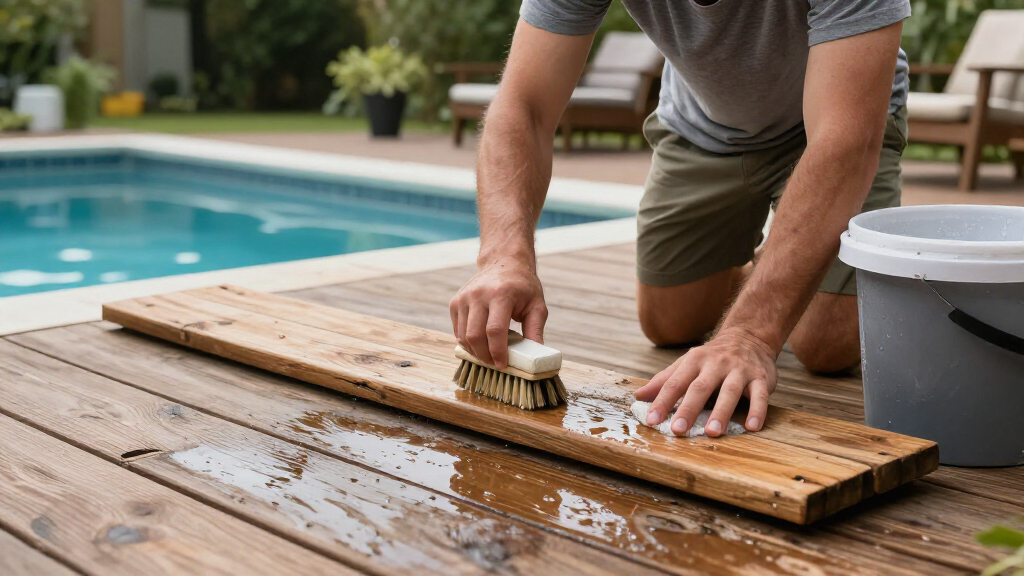
For ordinary dirt, begin with a broom to remove dry leaves, then use warm water, a little dish soap and the brush recommended for the surface. Work in sections and rinse before suds dry. Keep wash water away from vulnerable plants, ponds and drains where possible. If stains persist, use a deck cleaner approved for that material and finish rather than escalating to an unapproved acid or bleach.
Key Questions
Can I use vinegar on a Trex deck?
Trex lists white vinegar for hard-water deposits on some current composite lines. The report says acid-containing products may lighten board color, so follow the current care guide, rinse thoroughly and test a small area first. That limited approval does not make vinegar a general cleaner for every Trex board.
What should I use for routine deck dirt?
The report recommends warm water, a small amount of dish soap and a brush suited to the decking. Trex calls for soft bristles; TimberTech’s guidance calls for medium-to-stiff nylon on its composite boards. Check the instructions for your exact product.
Can vinegar damage plants near my deck?
It can. The report says household vinegar contains about 5% acetic acid, which can damage leaves on contact. Keep rinse water away from garden plants, especially seedlings and broadleaf plants, and take care near ponds or storm drains.
Is vinegar safe for a stained or painted wood deck?
The report does not recommend treating vinegar as safe for every finish. Follow the stain or paint maker’s cleaning directions; if vinegar is not approved, its effect on that particular finish is uncertain.
Can I pressure-wash composite decking?
Limits differ by manufacturer and product line. The report says Trex discourages pressure washing on its early-generation lines and sets specific conditions for some current boards; TimberTech specifies up to 1,500 psi for rinsing only. Check the exact board’s care guide before using a pressure washer.
Source: gardeningknowhow.com