
TL;DR
This article explains confirmed methods for propagating spider plants, focusing on division and plantlet removal. Proper techniques ensure healthy new plants for gardeners.
Garden experts confirm that **dividing mature spider plants** and removing plantlets are the most reliable methods for propagation. These techniques, supported by horticultural sources, allow gardeners to grow new healthy plants efficiently and with minimal risk. If you’re interested in optimizing your plant care routines, check out how to save heat-stressed plants.
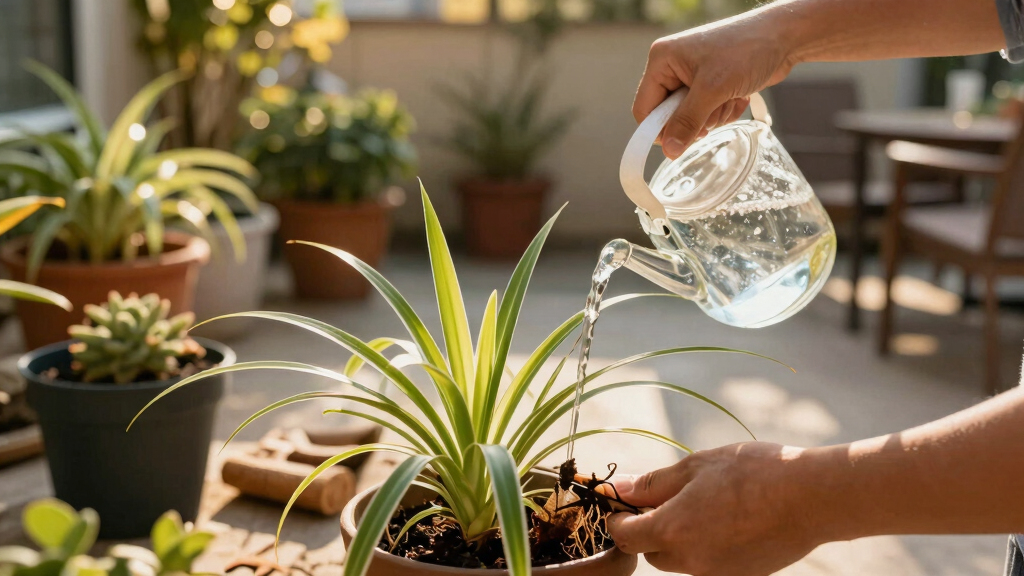
According to horticultural sources, propagation of spider plants (Chlorophytum comosum) can be successfully achieved through two primary methods: **division** of the root ball and **removal of plantlets** that develop on the mother plant’s runners. Experts emphasize that division should be performed when the plant is actively growing, typically in spring or early summer, by carefully separating sections of the root system with a clean, sharp tool.
For plantlet propagation, gardeners are advised to wait until the plantlets develop roots while still attached to the mother plant. Once rooted, these plantlets can be carefully detached and potted separately. Both methods have been validated by horticultural guides and experienced growers as effective for producing healthy new plants.
It is important to ensure that tools are sterilized before division to prevent disease transmission, and that new plants are provided with appropriate watering and indirect sunlight to establish successfully. For more tips on plant propagation, see my 5 pro growing tips.
Why Proper Propagation Methods Matter for Spider Plants
Effective propagation techniques enable gardeners to expand their collections or share plants with others, promoting plant health and longevity. Correct methods reduce the risk of disease and ensure that new plants develop strong root systems. As spider plants are popular houseplants valued for their air-purifying qualities and ease of care, mastering propagation can enhance both personal collections and commercial cultivation.

SINSETU 6 Pcs Plant Propagation Friends, Plant Propagation Buddy, Plant Cutting Holder for Shoots, Sprouts and Stems, Cute Plant Propagation Support Growth Tool for Indoor Garden
- Supportive Plant Propagation Tool: Helps plants grow stronger and healthier
- Easy to Use Design: No tools needed, simple to fix on vases
- Versatile Plant Support: Suitable for flowers, herbs, vegetables
As an affiliate, we earn on qualifying purchases.
As an affiliate, we earn on qualifying purchases.
Established Propagation Practices for Spider Plants
Spider plants have been cultivated as ornamental houseplants for decades, with propagation methods documented in horticultural literature. Traditionally, division and plantlet removal are recommended, with these techniques gaining widespread acceptance among gardeners. Recent online guides and expert advice continue to endorse these methods, emphasizing their simplicity and high success rate.
While some sources suggest propagation via seed, this method is less common and more time-consuming, with lower reliability for home growers. The focus remains on division and plantlets, which produce faster, more predictable results.
“Dividing mature spider plants and carefully removing rooted plantlets are the most straightforward and reliable methods for propagation.”
— Horticultural Expert Dr. Emily Green
Uncertainties About Propagation Timing and Techniques
While the basic methods of division and plantlet removal are well-established, it remains unclear whether specific timing or environmental conditions significantly influence success rates. There is also limited data on propagation during different seasons or under varying indoor conditions, and some growers report variable results.
Further research or expert consensus may clarify optimal timing and conditions for propagation, especially for novice gardeners.
Next Steps for Gardeners and Plant Enthusiasts
Gardeners are encouraged to try propagation during the active growing season, typically spring or early summer, following the verified methods. Experts suggest monitoring the health of new plants and adjusting watering and light conditions accordingly. Ongoing studies or horticultural updates may provide more detailed guidance in the future.
Additionally, sharing experiences and results on gardening forums can help refine best practices and address remaining uncertainties.
Key Questions
Can I propagate spider plants at any time of year?
Propagation is most successful during the plant’s active growing period, typically in spring or early summer. However, with proper care, division and plantlet removal can be attempted year-round indoors.
What tools should I use for dividing spider plants?
Use sterilized, sharp scissors or a clean knife to carefully cut through roots during division, minimizing damage and preventing disease transmission.
How long does it take for plantlets to root?
Rooting of plantlets typically takes 1 to 3 weeks, depending on environmental conditions such as humidity, temperature, and light.
Are there risks involved in dividing spider plants?
Risks include potential root damage or disease transmission if tools are not sterilized. Proper technique and care can mitigate these risks.
Can I propagate spider plants from seed?
While possible, seed propagation is less common and slower, with lower success rates compared to division and plantlet removal. Most growers prefer the latter methods for reliable results.
Source: rss