

TL;DR

Get pool and patio gear delivered free with Prime
- Fast, free delivery on millions of items
- Prime Video, Amazon Music and more included
- Member-only deals all year
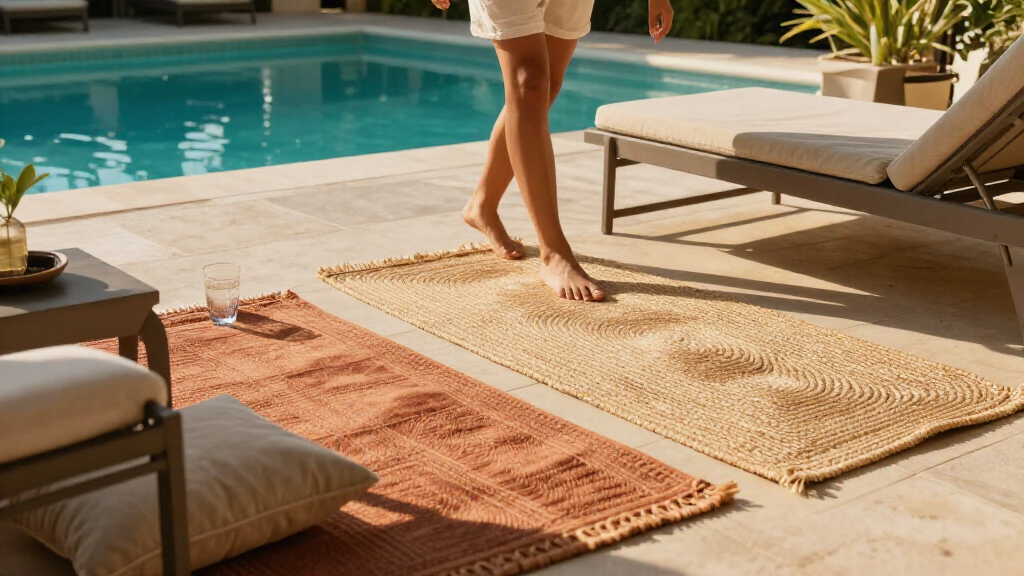
Livingetc has published design advice on using more than one rug in a room, focusing on open-plan living and dining spaces. Designer recommendations include choosing rugs that share a color or texture, using a large rug to anchor furniture, and hiding joins when two rugs sit side by side.
Livingetc has published advice on using more than one rug in a room, with designers explaining how rugs can mark out living and dining zones in open-plan homes while preserving a sense of flow. The guidance distinguishes between placing rugs in separate areas and layering them in one seating group, and warns that side-by-side rugs can feel disconnected if the room is too small or the arrangement lacks a plan.
In an open-plan room where a kitchen, dining area and lounge share one footprint, rugs can provide visual boundaries without walls. The report recommends first deciding what each zone needs to do. A larger rug can sit beneath a sofa and chairs to anchor a seating group, while another can help a dining table read as a separate destination. The rugs need not match, but a shared color, similar contrast or complementary textures can link them.
For one seating area, the report presents layering as an alternative to dividing the room into separate rug zones. A larger, understated rug can provide the base, with a smaller accent rug on top adding pattern or color. Marie Flanigan of Marie Flanigan Interiors recommends making the lower rug subtle enough to anchor the furniture and using the top layer to introduce personality. This can also help when a preferred design is not available in a size large enough for the whole arrangement, or is costly.
Side-by-side rugs may suit a large room with two distinct furniture groupings, but the report cautions against using them automatically. If two rugs are placed together to cover a wider area, Ann Marie Cousins, founder of AMC Design, advises hiding their join beneath a coffee table or dining table where possible. In smaller rooms, an awkward strip between rugs can make the layout feel unintentionally divided.
Rugs Can Shape Open-Plan Zones
The advice addresses a practical design choice in homes where several activities happen in one shared space. Rugs can help organize furniture and define uses without blocking sightlines or changing the floor plan. That can make a living area and dining area feel distinct while still part of one room.
The report also makes clear that adding rugs is not a guaranteed fix for an undefined layout. Their size, placement and relationship to furniture matter: rugs that compete in pattern or leave awkward gaps may create visual fragmentation rather than useful separation. The recommendations give readers a way to weigh zoning against cohesion before buying or rearranging rugs.
Products Worth Considering

Orbit B-hyve XR 16-Zone Indoor/Outdoor Smart Sprinkler Timer

Greenworks 60V Cordless Leaf Blower with 2.5 Ah Battery and Charger

EGO POWER+ Cordless Electric Leaf Blower 530 CFM with Battery (LB5302)
As an affiliate, we earn on qualifying purchases.
Separate Zones or Layered Rugs
The Livingetc report frames the question around two different arrangements. Side-by-side rugs can anchor separate areas, such as a dining space and a lounge, while layering places a smaller rug over a larger one within the same seating area. Which approach makes sense depends on the room’s size, furniture layout and intended effect.
To connect different rugs, the report suggests repeating a color, balancing a busy pattern with a quieter design, or using texture as a link. It also advises considering the surrounding flooring, upholstery and artwork, rather than choosing each rug in isolation. The source offers design recommendations, not measured evidence about how these choices affect room use.
““Rugs are a great way to zone a space within your home, working particularly well in open-plan layouts such as a living room.””
— Ann Marie Cousins, founder of AMC Design
No Universal Rug Formula
The report gives qualitative design guidance, not fixed measurements for rug size, spacing or the distance between separate zones. It does not establish that one arrangement will work in every room. The outcome depends on factors such as the room’s dimensions, furniture placement, rug patterns and the overall interior scheme.
The supplied source also does not state when the article was published, provide product testing or compare the approaches in a formal study. Its recommendations should be read as expert design opinions, rather than technical rules or claims of proven results.
Plan Placement Before Buying
The practical next step is to map the furniture groupings and decide whether the room needs separate zones or one layered arrangement. Readers considering two rugs can check how each will sit relative to the sofa, chairs or dining table, whether the designs share a visual connection, and whether a join can be concealed. The source does not announce a follow-up study or further design guidance.
Key Questions
Can you use two rugs in one open-plan room?
Yes. Livingetc’s report says two rugs can help distinguish areas such as a lounge and dining space while keeping the room open. It recommends choosing placement and designs that work with the furniture and connect visually.
Should two rugs be side by side or layered?
Side-by-side rugs can anchor separate zones in a larger room. For one seating area, the report suggests layering a smaller accent rug over a larger, quieter base. The choice depends on the room and the effect intended.
How can different rugs look cohesive?
The report suggests repeating a color, pairing a restrained pattern with a bolder one, or linking the rugs through texture. It also advises considering the flooring, upholstery and artwork around them.
How can you join two rugs without making the seam obvious?
Ann Marie Cousins recommends placing the join beneath a coffee table or dining table where possible. Her advice is aimed at larger rooms where two rugs are being used together because a single large rug is unavailable.
Are two side-by-side rugs right for a small room?
The report cautions that two rugs may leave an awkward strip between them and make a smaller room feel divided. A single well-sized rug or a layered arrangement may be a better fit, depending on the layout.
Source: livingetc.com