
Regular inspections and cleaning are essential for keeping your balance tank running smoothly. You should check for corrosion, sediment buildup, leaks, and the functionality of fittings and gauges. Draining and scrubbing the interior helps prevent biological growth and maintains water quality. Keeping detailed records of each maintenance session allows you to monitor the tank’s condition over time. If you want to guarantee peak performance and extend your tank’s life, there’s more to explore below.
Key Takeaways
- Conduct regular inspections to detect corrosion, leaks, sediment buildup, and ensure all fittings and gauges function properly.
- Drain and thoroughly clean the tank interior to remove debris, sediment, and prevent biological growth.
- Address corrosion promptly by removing rust and mineral deposits to maintain tank integrity and water quality.
- Record maintenance activities and tank conditions to monitor trends and plan future upkeep effectively.
- Implement preventive measures, such as proper coatings and water treatment, to extend tank lifespan and ensure system reliability.
Have you ever considered how indispensable a well-maintained balance tank is for your system’s efficiency? This essential component plays a significant role in ensuring smooth operation, stable pressure, and consistent water supply. One of the key aspects of maintaining your balance tank is focusing on inspections and cleaning, which directly influence water quality and corrosion prevention. Neglecting these tasks can lead to degraded water conditions, equipment failure, and costly repairs down the line.
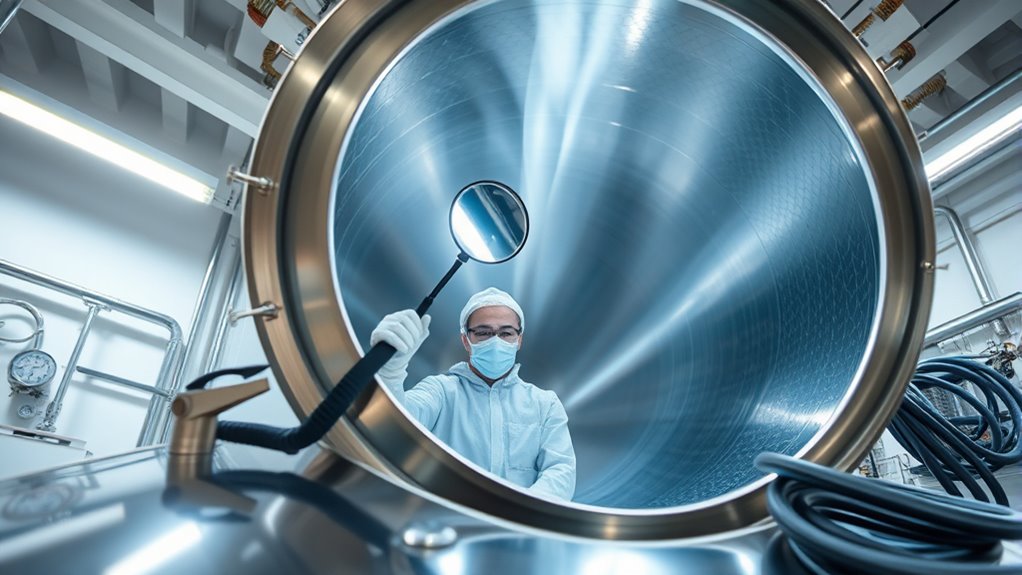
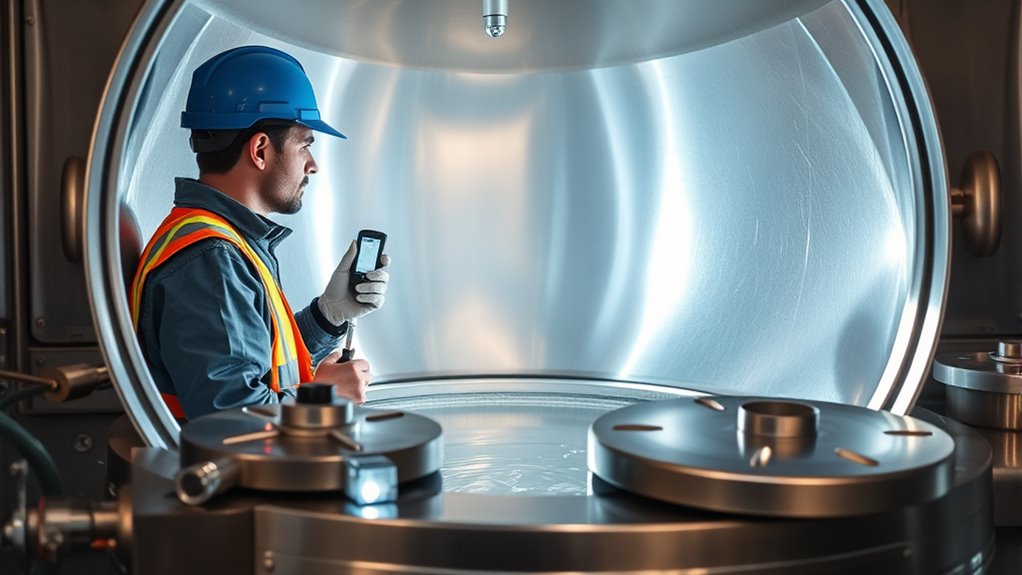
When you perform regular inspections, you’re actively monitoring the tank’s condition, looking for signs of corrosion, sediment buildup, or leaks. Corrosion prevention is critical because rust and mineral deposits can compromise the tank’s integrity, contaminate the water, and reduce its lifespan. During inspections, check the tank’s interior and exterior surfaces carefully. Look for any discoloration, pitting, or scaling that might indicate corrosion or sediment accumulation. Additionally, verify that all fittings, valves, and gauges are functioning properly. This proactive approach allows you to address minor issues before they escalate into major problems, saving you time and money. Regular maintenance also helps identify early signs of wear, ensuring longevity and efficient operation.
Regular inspections help identify corrosion, sediment buildup, and leaks early, protecting your tank’s longevity and system efficiency.
Cleaning your balance tank is equally important for maintaining ideal water quality. Over time, sediments, algae, and mineral deposits can settle at the bottom, impacting the tank’s performance and water purity. Regular cleaning involves draining the tank completely, removing any accumulated debris, and scrubbing the interior surfaces if necessary. Use non-corrosive cleaning agents compatible with your system to avoid damaging the tank while effectively removing buildup. After cleaning, ensure the tank is thoroughly rinsed and dried before refilling. This process helps prevent biological growth and maintains water purity, which is essential for system reliability and safety.
In addition to routine inspections and cleaning, it’s wise to keep detailed records of each maintenance cycle. Tracking the condition of your tank over time can help identify patterns and anticipate future needs. Proper documentation also ensures compliance with industry standards and makes troubleshooting more straightforward if issues arise. Remember, maintaining water quality isn’t just about cleanliness; it’s about protecting your entire system from corrosion and contamination, ultimately extending your tank’s service life.
Frequently Asked Questions
How Often Should Balance Tanks Be Inspected for Optimal Performance?
You should inspect your balance tanks at least every 6 to 12 months for ideal performance. Regular inspection frequency helps identify wear, corrosion, or leaks early, ensuring proper maintenance scheduling. Keep a detailed log of inspections and cleanings to stay on top of tank condition. If your system operates under demanding conditions or in harsh environments, consider more frequent inspections to prevent potential issues and maintain reliability.
What Are the Signs Indicating a Balance Tank Needs Cleaning?
If you notice your balance tank looks more like a swamp than a water container, it’s time to clean it! Signs include excessive sediment buildup, strange odors, or visible tank corrosion. These issues can seriously hinder performance and cause damage. Don’t wait until it’s too late—regular cleaning prevents costly repairs, keeps sediment out of your system, and guarantees smooth operation. Keep an eye out for these signs to maintain peak efficiency.
Are There Specific Safety Precautions During Tank Maintenance?
When maintaining a balance tank, you should wear protective gear like gloves, goggles, and a mask to prevent exposure to harmful substances. Always follow emergency procedures, such as shutting off the system and ventilating the area if spills or leaks occur. Confirm proper training before starting work, and have safety equipment like fire extinguishers nearby. These precautions keep you safe and help prevent accidents during tank maintenance.
Can Balance Tank Maintenance Be Performed by In-House Staff?
Think of your team as a skilled pit crew; with the right in-house expertise and staff training, they can handle balance tank maintenance effectively. Yes, in-house staff can perform inspections and cleaning, but it’s essential they understand safety protocols and proper procedures. Regular training ensures your team stays sharp and confident, preventing costly mistakes. When equipped with knowledge, your staff can maintain tanks efficiently, saving time and resources.
What Are the Common Causes of Tank Contamination?
You should be aware that common causes of tank contamination include issues related to tank material and contamination sources. If your tank’s material reacts with certain substances or isn’t resistant to corrosion, it can lead to contamination. Additionally, contamination sources like dirty fill water, debris, or improper sealing can introduce bacteria or other pollutants. Regular inspections and choosing the right tank material can help prevent these issues effectively.
Conclusion
Regularly inspecting and cleaning your balance tank is like tending to the heart of your water system—you keep it clear and steady, preventing unseen issues from bubbling up. Think of each inspection as a gentle breath, invigorating your system’s health. When you maintain it properly, you’re not just preventing leaks or buildup; you’re ensuring the steady flow of life itself. Keep it clean, keep it running smoothly—your system’s silent guardian.