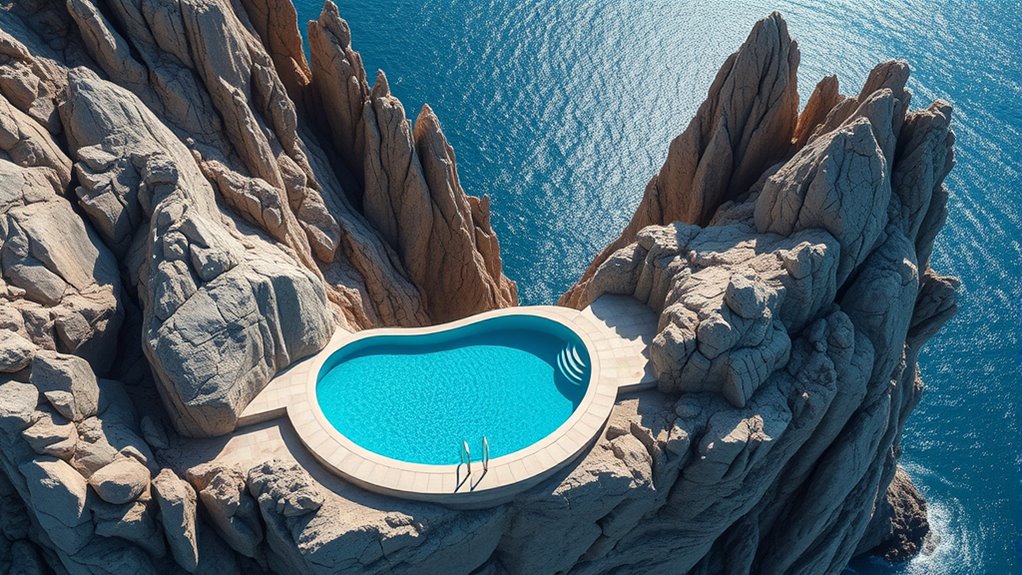
When designing a cliffside pool, you must prioritize soil stability by evaluating rock and soil properties, nearby groundwater, and erosion patterns. Reinforcement techniques like anchoring systems, retaining walls, and drainage solutions are essential to prevent water buildup and soil movement. Proper engineering ensures safety and durability, blending natural beauty with stability. Paying attention to geotechnical analysis and ongoing maintenance keeps your pool secure over time—if you want to learn how these elements come together seamlessly, keep exploring.
Key Takeaways
- Conduct comprehensive geotechnical analysis to evaluate soil and rock stability before construction.
- Incorporate reinforcement methods like anchoring systems and retaining walls to support the structure.
- Design effective drainage solutions to prevent water buildup and reduce pressure on cliff face and supports.
- Ensure proper foundation depth and placement based on soil composition and load-bearing capacity.
- Prioritize ongoing safety, inspection, and maintenance to preserve structural integrity over time.
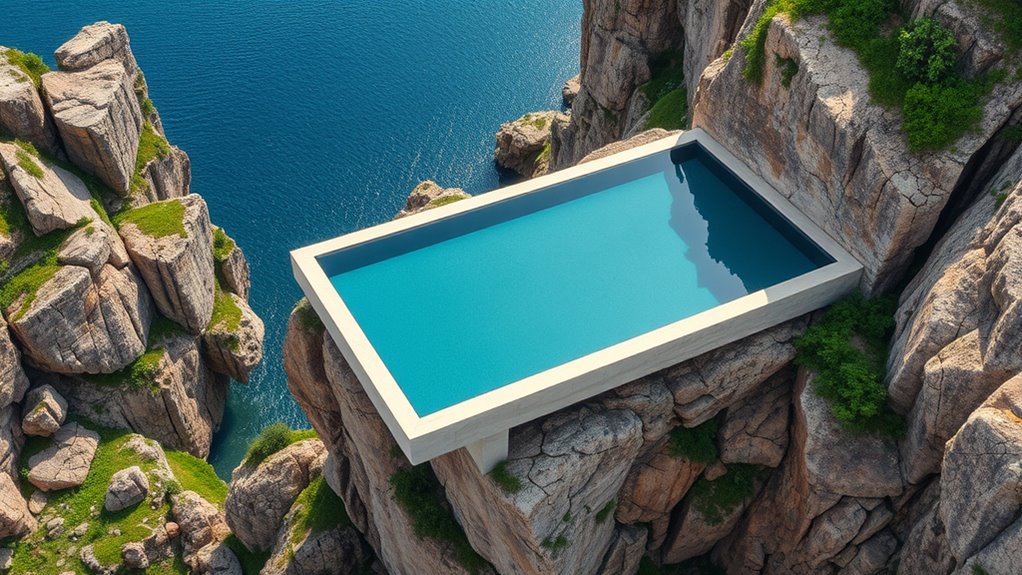
Building a cliffside pool presents unique structural challenges that require careful planning and engineering. One of the first steps you need to take is conducting a thorough geotechnical analysis. This process involves studying the soil and rock properties of the cliff face to determine its stability and load-bearing capacity. Without this analysis, you risk designing a pool that could cause landslides or structural failure over time. You’ll want to work with geotechnical engineers who can assess factors like soil composition, groundwater levels, and natural erosion patterns. Their findings will guide your decisions on the pool’s placement, depth, and construction methods. Additionally, understanding soil stability is essential for predicting how the cliff will respond to the new structure and environmental factors.
Conduct a thorough geotechnical analysis to ensure cliffside pool stability and safety.
Once you understand the site’s geotechnical profile, you’ll need to focus on reinforcement methods. Reinforcing the cliff face is vital to guarantee the pool’s stability and safety. These methods might include anchoring systems, retaining walls, or soil nails that secure loose or unstable ground. For example, you could install tension anchors into the rock or soil to provide additional support, preventing movement or collapse. Reinforcement techniques also involve installing shotcrete or concrete layers that act as a protective shell, stabilizing the surface and preventing erosion. The goal is to create a robust structure that can withstand environmental forces like wind, rain, and temperature fluctuations, which could otherwise weaken the cliff over time.
In addition to reinforcement, you’ll need to consider drainage solutions to prevent water from accumulating behind retaining structures, which can lead to increased pressure and potential failure. Proper drainage systems, such as weep holes or drainage pipes, help direct water away from critical areas. Also, you should plan for regular maintenance and inspections, making sure that the reinforcement methods remain effective and the cliff face stays stable. This ongoing vigilance minimizes risks and extends the lifespan of your cliffside pool.
Ultimately, building a cliffside pool requires a combination of precise engineering, geotechnical understanding, and innovative reinforcement methods. It’s not just about creating a beautiful feature; it’s about guaranteeing safety and durability in a challenging environment. With careful planning, professional input, and proper reinforcement strategies, you can enjoy a stunning pool that feels seamlessly integrated into the natural landscape without compromising stability. Remember, rushing this process or cutting corners can lead to dangerous consequences, so take the time to thoroughly evaluate and reinforce your site. When done correctly, your cliffside pool can become a breathtaking and secure addition to your property, offering unparalleled views and a one-of-a-kind swimming experience.

PURPLE LEAF 10' x 12' Outdoor Retractable Pergola Aluminum with DIY Sun Shade Canopy Patio Modern Heavy-Duty Bronze Shelter for Garden Yard Pavilion Grape Trellis Porch, Beige
5 Crossbeams: Made with a strong aluminum frame and powder coating, pergolas are built to withstand warping or...
As an affiliate, we earn on qualifying purchases.
Frequently Asked Questions
How Do Weather Conditions Affect Cliffside Pool Stability?
Weather conditions greatly impact your cliffside pool’s stability. Heavy rain and rapid weather patterns can increase erosion, weakening the cliff’s structure and risking collapse. To protect your pool, you should implement erosion control measures, such as retaining walls or drainage systems, which help manage water flow and reduce soil erosion. Regular inspections and adaptations to weather changes ensure your pool remains secure and stable over time.
What Emergency Access Options Are Available for Cliffside Pools?
Think of emergency access as your lifeline dangling over a chasm. You should install clear, well-marked rescue routes and emergency exits that are readily available from all pool areas. Consider ladders, safety ropes, and designated escape pathways that can be quickly accessed during an emergency. Regular drills ensure everyone knows the routes, turning chaos into calm, and making sure help is just a step away when seconds count.
How Often Should Structural Inspections Be Performed?
You should schedule structural inspections for your cliffside pool at least once a year, especially to monitor for any signs of erosion control issues or the need for pool reinforcement. Regular inspections help identify potential vulnerabilities early, ensuring the stability of the surrounding land and the integrity of the pool structure. In areas prone to erosion, more frequent assessments might be necessary to prevent costly damage or safety hazards.
Are There Specific Safety Barriers Required?
You should definitely have safety barriers in place, like sturdy pool fencing and clear safety signage, to protect everyone enjoying your cliffside paradise. These barriers aren’t just rules—they’re guardians for loved ones, giving peace of mind. Make certain your fencing is secure and signage visible, reminding everyone of safety rules. It’s a small but crucial step to ensure your stunning pool remains a source of joy without worry.
What Are the Long-Term Maintenance Considerations?
You need to regularly inspect your pool for wear and tear, especially considering pool material selection that withstands weather and erosion. Keep up with cleaning and chemical balance to prevent damage. Incorporate landscaping integration thoughtfully to prevent root intrusion and erosion. Periodic structural assessments help identify potential issues early, ensuring safety and longevity. Maintaining proper drainage and erosion control methods also protect your pool’s foundation for long-term durability.

Patio Kingdom 12FT Cantilever Umbrella with Base Large Curvy Outdoor Aluminum Offset Umbrella w/ 360° Rotation, UV Resistant Canopy for Patio, Garden, Backyard, Grey
Elegant & Functional Design: Featuring a sleek curved aluminum pole and an easy-to-use crank system, this 12FT cantilever...
As an affiliate, we earn on qualifying purchases.
Conclusion
When designing a cliffside pool, you must prioritize stability and safety. For instance, imagine a homeowner building a pool on a rugged hillside; by using reinforced concrete and proper anchoring, they prevent future collapse. Always consult with structural engineers to guarantee your vision is both breathtaking and secure. With careful planning and the right materials, you can enjoy stunning, safe cliffside swimming that transforms your outdoor space into a breathtaking retreat.

Devoko Patio Furniture Sets 6 Pieces Outdoor Sectional Rattan Sofa Manual Weaving Wicker Patio Conversation Set with Glass Table and Cushion (Beige)
【Sturdy & Durable】: This outdoor furniture set is handcrafted from 100% polyester fiber and high-quality PE wicker. Its...
As an affiliate, we earn on qualifying purchases.

Yoolax Solar Motorized Louvered Pergola 10x13FT with Remote Control, Electric Aluminum Retractable Pergola with LED Light, Rain Wind Sensor, Adjustable Rainproof Roof, Drainage System, Outdoor Gazebo
【Solar-Powered Electric Control】This pergola features a solar-powered louver system, utilizing solar energy for operation without the need for...
As an affiliate, we earn on qualifying purchases.