TL;DR

Get pool and patio gear delivered free with Prime
- Fast, free delivery on millions of items
- Prime Video, Amazon Music and more included
- Member-only deals all year
Livingetc has published four Japanese tablescaping ideas for autumn hosting, drawing on practices described in collaboration with Nakagawa, a Nara craft maker and retailer founded in 1716. The suggestions include combining individual place settings with shared dishes, choosing bowls for the person using them, matching vessels to the food and changing tableware with the season.
Livingetc has published four Japanese-inspired tablescaping lessons for autumn hosting, describing ways to combine individual place settings, shared dishes and seasonally chosen tableware. The report, developed with Nakagawa, a craft maker and retailer founded in Nara in 1716, presents these as adaptable ideas for Western dining rooms rather than formal requirements.
The first suggestion is to combine personal settings with shared serving dishes. The report describes an oshiki, a flat tray placed in front of each diner, holding items such as a rice bowl, soup bowl and small plate. Dishes are also served on larger platters in the middle of the table for people to share. Livingetc says the approach brings together the structure of individually arranged courses and the informality of family-style dining.
The second lesson is to choose some tableware for the individual rather than buying only matching sets. The report says family members may have their own rice bowls and chopsticks, selected according to hand size and preferred feel. It presents this as a personal detail that can make a table feel considered, while allowing different pieces to sit together.
Third, the report treats the vessel as part of the food’s presentation and experience. It recommends considering a bowl’s weight, warmth and texture, as well as the space around the food on a plate. Small plates known as mame-zara are offered as one starting point; the source describes them as roughly saucer-sized and says they can be collected over time and mixed or matched.
A More Personal Autumn Table
The ideas matter to hosts because they offer a way to change the feel of a meal without replacing an entire dining set or adding elaborate decoration. A household can keep its existing table and introduce shared serving plates, individual bowls or a few small ceramics to make the setting feel more personal.
The seasonal approach also puts attention on practical choices: what people will eat from, how a bowl feels in the hand and whether the serving style suits the gathering. These are design suggestions, not evidence that any particular arrangement will make guests more comfortable. Their value, as presented by Livingetc, is that they give hosts concrete options for adapting a table to the meal and the season.
Products Worth Considering

Greenworks 40V 16-Inch Brushless Cordless Chainsaw with 4.0Ah Battery and Charger

Daltack 14-Pack Polycarbonate Greenhouse Panels (6' x 2' x 0.24)

14 Pcs Polycarbonate Greenhouse Panels, 6' x 2' x 0.24'' Twin-Wall Panels, Polycarbonate Sheet for All Weather Outdoor Garden and Greenhouse
As an affiliate, we earn on qualifying purchases.
The Livingetc report says Japanese table settings can give each diner a defined place while keeping dishes in the middle for sharing. It uses the phrase meimei no ba for each person’s own place and identifies the individual tray as an oshiki. The article connects this arrangement to a broader set of choices about how food is served and experienced.
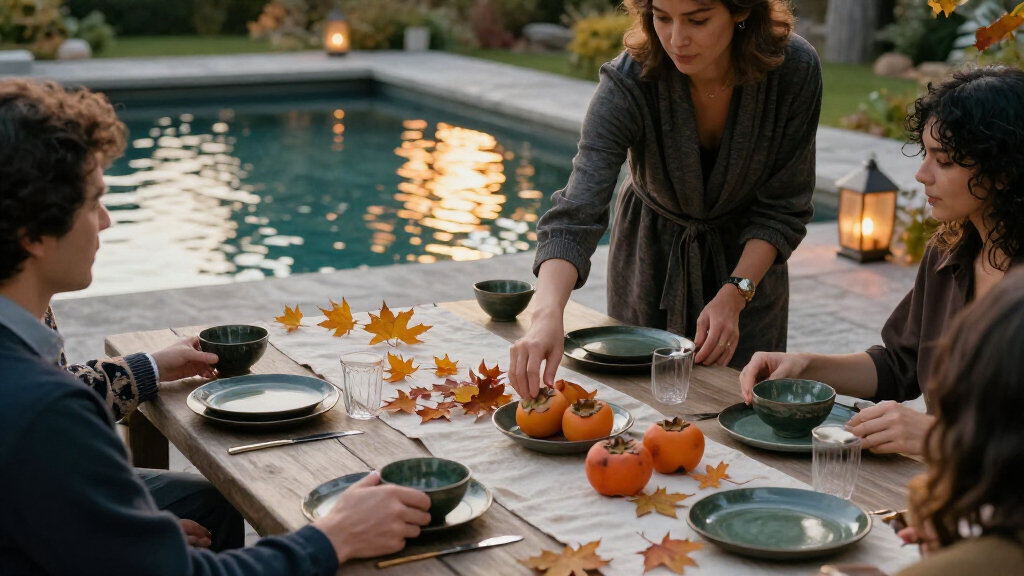
For autumn, its fourth recommendation is to change the plates and bowls, rather than redesigning the whole table. The report suggests warm clay and glazes in persimmon and rust tones, with one small seasonal detail, such as a chrysanthemum-shaped chopstick rest or a mame-zara. It contrasts these with glass and white porcelain used for summer settings and says the seasonal arrangement can look ahead to the coming season.
“The vessel is the kimono of the food.”
— Livingetc report
What the Guide Does Not Establish
The source is an interior-design advice report, not a survey or study of Japanese households. It does not establish how common each described practice is across Japan, or whether all households follow the same customs. Its recommendations are presented as habits observed in Japanese tablescapes and ideas readers can adapt.
The source also does not provide a publication date, detailed sourcing for every cultural description or evidence comparing the effect of different table settings on guests. The phrase about vessels and food is attributed in the article to Kitaōji Rosanjin, described there as a potter who opened a Tokyo restaurant in 1925; the supplied material does not include a separate source verifying that attribution.
Adapting the Ideas at Home
The report offers no announced follow-up or event. For readers applying its advice, the next step is to start with the meal: decide which dishes will be shared, what each guest needs at their place and whether a few bowls or small plates can suit the food. Hosts can then add a seasonal accent through ceramics or a single small arrangement, rather than changing the whole table.
Livingetc also points readers toward Japanese kitchen-storage ideas in a closing line, but the supplied material does not detail those lessons. Any further guidance or product information would need to be checked in the original publication.
Key Questions
What are the four Japanese-inspired tablescaping lessons?
Livingetc recommends combining individual place settings with shared dishes, considering the person who will use each bowl or pair of chopsticks, treating the vessel as part of the food and changing plates or bowls with the season.
What is an oshiki?
In the report, an oshiki is a flat tray set in front of a diner. It can hold a rice bowl, soup bowl and small plate alongside dishes served for sharing.
What are mame-zara?
The article describes mame-zara as small plates about the size of a saucer. It suggests collecting them gradually and using them either in a coordinated group or mixed together.
How does the report suggest making a table feel autumnal?
It suggests swapping summer glass or white porcelain for warm clay and glazes in persimmon and rust tones, then adding a small seasonal detail. The advice is to change the tableware, not the entire table.
Source: livingetc.com