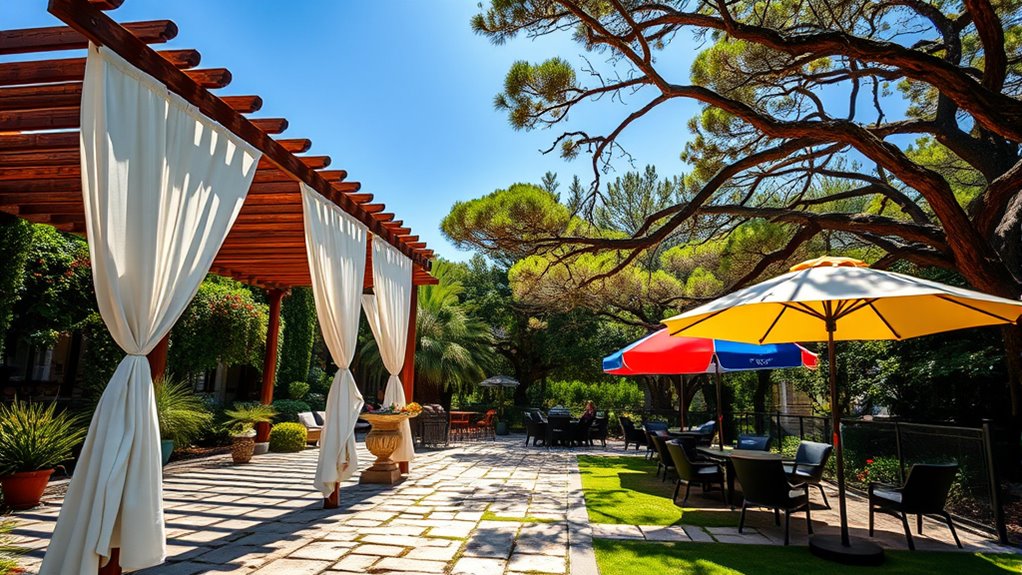

To create effective shade strategies, you can combine umbrellas, pergolas, and trees to suit different needs. Umbrellas offer flexible, portable shade, perfect for quick relief, while pergolas provide long-term coverage with customizable materials like fabric, vinyl, or metal. Trees add natural, seasonal shade that cools in summer and lets sunlight in during winter. Mixing these options guarantees your outdoor space stays comfortable year-round. Discover more ways to optimize your outdoor comfort as you continue.
Key Takeaways
- Combine umbrellas, pergolas, and trees for flexible, layered shading suited to different seasons and times of day.
- Choose canopy materials like fabric for cost-effective shading or vinyl and metal for durability and weather resistance.
- Use adjustable or retractable structures to modify shade coverage as sunlight and weather conditions change throughout the year.
- Plant deciduous trees to provide summer shade and allow sunlight in winter, enhancing natural cooling and warming.
- Integrate natural and man-made shade solutions for a versatile, comfortable outdoor environment with year-round usability.

Have you ever wondered how to keep your outdoor spaces cool and comfortable during hot, sunny days? One effective way is to incorporate various shade strategies that suit your needs and aesthetic preferences. When considering options like umbrellas, pergolas, or trees, it’s essential to understand how different canopy materials influence your shaded area’s effectiveness and look. Canopy materials vary from fabric, vinyl, to metal, each offering different levels of durability, UV protection, and style. For example, canvas or polyester fabrics are popular for umbrellas and pergolas because they’re lightweight and provide excellent shade, but they may need occasional replacement or treatment to withstand seasonal shading changes and weather conditions. Vinyl covers tend to be more durable and weather-resistant, making them ideal for long-term outdoor use, especially when you want consistent shade through different seasons. Metal canopies, often made from aluminum or steel, provide a more permanent, sturdy option, creating a modern and sleek look.
Implementing seasonal shading is another key to maintaining a comfortable outdoor environment year-round. During the summer, when the sun is strongest, you’ll want to maximize shade coverage, perhaps by adjusting the position of umbrellas or extending pergola covers. As the seasons change and the sun’s angle shifts, your shade setup should adapt accordingly. For instance, in spring and fall, when the sun is lower, you might add removable panels or retractable canopies to enhance coverage without blocking the pleasant breezes. Trees naturally provide seasonal shading, offering full summer cover and allowing more sunlight in winter when they shed their leaves. If you’re planting new greenery, consider deciduous trees that provide excellent shade in summer but let sunlight through in colder months, helping you reduce cooling costs and enjoy outdoor comfort throughout the year. Additionally, understanding IRA tax laws can help you plan your outdoor investments more efficiently.
Your choice of canopy materials and your approach to seasonal shading directly impact the usability and comfort of your outdoor spaces. A well-designed shade strategy considers not only the immediate need to block the sun but also how your coverings will perform over time and through different weather patterns. Whether you opt for a stylish umbrella with fabric canopy, a sturdy pergola with weather-resistant materials, or strategically planted trees, each option offers unique benefits. Combining these elements can create a versatile, adaptable outdoor area that remains cool and inviting regardless of the season. By understanding how canopy materials and seasonal shading work together, you’ll find it easier to enjoy your outdoor space comfortably and efficiently all year long.

JEAREY 9FT Outdoor Patio Umbrella Outdoor Table Umbrella with Push Button Tilt and Crank, Market Umbrella 8 Sturdy Ribs UV Protection Waterproof for Garden, Deck, Backyard, Pool (Beige)
ATTENTION: Due to different screen display, there may be a little color difference from image
As an affiliate, we earn on qualifying purchases.
As an affiliate, we earn on qualifying purchases.
Frequently Asked Questions
Which Shade Option Is Most Eco-Friendly?
You’ll find trees are the most eco-friendly shade option because they use sustainable materials and naturally provide shade without energy consumption. Trees promote eco-friendly design by improving air quality, supporting biodiversity, and reducing the need for artificial cooling. Pergolas made from sustainable wood also rank high, but umbrellas often use synthetic fabrics and metals that aren’t as environmentally friendly. Choosing natural, durable materials maximizes your eco-conscious impact.
How Much Maintenance Do Pergolas Require?
A pergola’s maintenance is surprisingly manageable, almost like a breeze! Depending on the materials—wood, vinyl, or metal—you’ll need to follow a maintenance schedule. Wooden pergolas require regular sealing and staining every couple of years, while vinyl or metal ones need occasional cleaning with soap and water. Overall, with a bit of upkeep, your pergola stays beautiful and functional for years, making it a low-hassle addition to your outdoor space.
Can Trees Be Planted for Shade in Small Yards?
Yes, you can plant trees for shade in small yards, but you need to take into account tree placement carefully. Choose compact or slow-growing varieties that won’t overwhelm your yard’s size. Proper placement ensures the tree provides ample shade without crowding your space. Keep in mind that trees take time to mature, so plan accordingly. With thoughtful selection and positioning, you’ll enjoy natural shade even in limited yard space.
What Are the Best Materials for Durable Umbrellas?
Like a knight’s armor, the best umbrellas combine durable fabric and sturdy frame materials. For fabric durability, go for acrylic or polyester fabrics, as they resist fading, mold, and tearing. When selecting frame materials, aluminum offers lightweight strength, while fiberglass provides flexibility and resilience. These materials guarantee your umbrella withstands wind, sun, and rain, keeping your outdoor space shaded and protected for seasons to come.
How Do I Choose the Right Shade for My Climate?
To choose the right shade for your climate, focus on climate-specific shading that suits your area’s weather patterns. Consider seasonal shade planning to adapt throughout the year—use lighter options for summer and more robust solutions for winter. If you experience intense sun, opt for durable materials like treated fabric or wood. For rainy or windy regions, look for sturdy structures that can withstand the elements. Tailor your shade choice to stay comfortable year-round.

GQZGGXX 8' X 10' Outdoor Clear Tarp Curtain Waterproof Wind-Proof 0.35mm Transparent Vinyl Tarp for Patio Pergola Garden Canopy Rainproof Anti-Tear PVC Thick Cover with Grommets
【HIGH QUALITY MATERIAL】is made of transparent PVC plastic, Edge Stitches Made of Polyester Fiber, Corners with Rubber Triangular…
As an affiliate, we earn on qualifying purchases.
As an affiliate, we earn on qualifying purchases.
Conclusion
By choosing the right shade strategy—whether umbrellas, pergolas, or trees—you can create a cooler, more comfortable outdoor space. Did you know that trees can reduce surrounding air temperatures by up to 20°F? That’s a powerful reminder of nature’s cooling ability. So, consider your needs and environment carefully. With the right shade, you’ll enjoy more outdoor days, save on energy costs, and boost your home’s appeal. Embrace shade and transform your outdoor experience today.
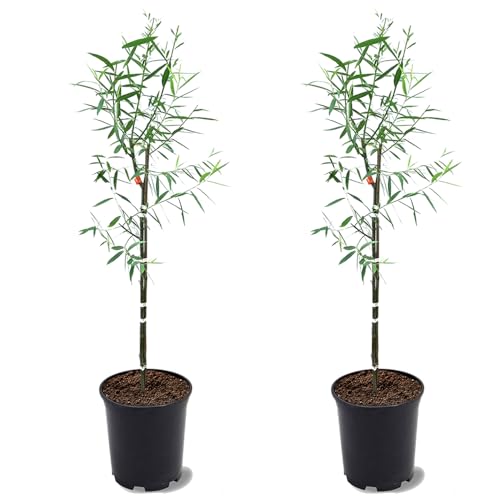
Weeping Willow, Deciduous, Fast-Growing, Shade Tree, 2-3 ft Tree Height, 1 gal Nursery Pot (Due to Agricultural Laws, we Cannot Ship to CA, AZ, AK, or HI), 2 Trees
As an affiliate, we earn on qualifying purchases.
As an affiliate, we earn on qualifying purchases.

10' X 10' Pergola Shade Cover for Outdoor Retractable Durable Fabric Canopy Replacement Top Only, Sun Shade for Outside (Beige)
Perfect Fit: Designed specifically for 10' x 10' pergolas, this replacement canopy cover provides complete overhead sun protection…
As an affiliate, we earn on qualifying purchases.
As an affiliate, we earn on qualifying purchases.