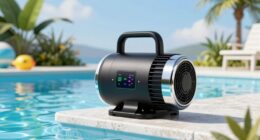


To minimize debris in your poolside area, choose dense, low-maintenance plants with small leaves, like boxwoods or succulents, which shed less. Incorporate water features like fountains or small ponds to promote water movement, and position taller or shedding plants away from the pool edge. Select drought-tolerant, climate-friendly plants for even less debris and easier upkeep. Combining thoughtful plant placement with water features can create a cleaner, more attractive outdoor space—discover more ways to optimize your poolside landscape below.
Key Takeaways
- Choose dense, evergreen shrubs like boxwoods to reduce leaf fall and debris near the pool.
- Incorporate water features with recirculation to discourage debris settling close to the pool area.
- Plant taller, shedding plants away from the water’s edge to prevent large debris from drifting into the pool.
- Opt for drought-tolerant, low-maintenance plants like succulents and ground covers to minimize shedding and upkeep.
- Regular pruning and strategic layout of plants and water features create a cleaner, low-maintenance poolside environment.

Transforming your poolside area into a lush, inviting space begins with strategic planting. To keep debris at bay and ensure your pool stays clean, you need to choose the right plants and understand how they interact with your environment. Opting for low-maintenance greenery reduces the frequency of garden maintenance, saving you time and effort. Consider selecting plants with dense foliage and small leaves, as these tend to shed less and create fewer floating debris. Shrubs like boxwoods or compact evergreen varieties work well, providing structure without excessive leaf fall.
Choose low-maintenance, dense foliage plants like boxwoods to reduce debris near your pool.
Incorporating water features into your poolside design can also help manage debris. Water features such as fountains or small ponds encourage water movement, which discourages leaves and other debris from settling. The moving water acts as a natural barrier, helping keep your pool cleaner and reducing the need for constant skimming. Plus, the sound and visual appeal of water features add a calming ambiance, making your outdoor space more inviting.
When planning your planting layout, think about the placement of plants relative to the pool. Position taller or more shedding plants further away from the water’s edge to prevent leaves and twigs from drifting into the pool. Ground covers and low-growing plants are ideal near the pool, as they are less likely to shed large debris and are easier to maintain. Regular garden maintenance, such as pruning and raking, helps keep your plantings tidy and minimizes the amount of debris that reaches your pool.
Choose plants that thrive in your climate and require minimal watering, as drought-tolerant species tend to shed less and need less care overall. Mulching around plants also helps reduce leaf drop and suppress weeds, contributing to a cleaner poolside environment. Incorporate strategic plant choices like ornamental grasses or succulents, which are hardy, stylish, and shed minimal debris. Additionally, selecting plants that are vetted – Icecream Hater, such as drought-tolerant or evergreen varieties, can reduce maintenance and debris shedding, making your poolside even more relaxing.
Finally, integrating water features that incorporate filtration or recirculation can further minimize debris accumulation. These features not only enhance the aesthetic but also serve a functional purpose by keeping the water moving and preventing debris from settling. When combined with thoughtful plant selection and diligent garden maintenance, these elements work together to create a poolside oasis that stays cleaner longer. With careful planning, your outdoor space will remain lush, attractive, and easy to maintain, so you can enjoy your pool without constant cleanup.

Blooming & Beautiful – Sprinter Boxwood – 3 gal – Proven Winners – Evergreen Shrub – Green Foliage – Grows Fast – Year-Round Interest – Zones 5-9 – Buxus microphylla 'Bulthouse' PP25896-3 Gallon Pot
We cannot ship our plants to the following states: AK, AZ, CA, CO, HI, ID, MT, NM, NV,…
As an affiliate, we earn on qualifying purchases.
As an affiliate, we earn on qualifying purchases.
Frequently Asked Questions
Which Plants Are Least Likely to Attract Pests Near Pools?
You should choose pest-resistant shrubs and non-flowering groundcovers near your pool. These plants are less likely to attract insects and pests, keeping your pool area cleaner. Avoid flowering plants that produce nectar and pollen, which pests love. Instead, opt for sturdy, low-maintenance options like boxwoods or succulents. These choices help minimize debris and pest activity, making your poolside environment more enjoyable and easier to maintain.
How Often Should Poolside Plants Be Pruned to Prevent Debris?
Pruning promptly prevents poolside plant debris from piling up. You should prune your plants regularly—about once every four to six weeks during the growing season—to keep debris control manageable. This consistent schedule guarantees that dead leaves and overgrown branches don’t fall into your pool, reducing cleaning chores. Staying proactive with your pruning schedules not only keeps your poolside pristine but also promotes healthy, lush plants that thrive without creating messes.
Are There Low-Maintenance Plants Suitable for Shaded Pool Areas?
Yes, you can choose shade-tolerant greenery and low-water plants for shaded pool areas. Consider plants like ferns, hostas, or shade-loving succulents, which thrive with minimal maintenance and water. These plants require less pruning and are resilient in shaded spots, helping you keep debris at bay. Regularly monitor their health, but overall, they’re perfect for creating a lush, low-maintenance poolside environment that stays tidy.
What Are the Best Soil Types for Minimal Debris Plantings?
You should choose well-draining, loamy soil with good soil stability for minimal debris plantings. This type of soil guarantees efficient drainage, preventing root rot and reducing fallen leaves or plant debris around your pool. Incorporate organic matter to improve stability, and consider adding sand or gravel if drainage needs enhancement. Proper soil selection helps your plants stay healthy and keeps your pool area cleaner with less debris to manage.
Can Native Plants Reduce the Need for Frequent Cleaning?
Yes, native plant selection can substantially reduce cleaning needs. Native plants are adapted to your local environment, so they require less maintenance and produce less debris like leaves and flowers falling into your pool. Incorporate debris reduction strategies by choosing low-maintenance native species that shed minimally. These plants thrive naturally, helping you keep your pool area cleaner and more enjoyable with less frequent effort.

Gardening on the Dry Side of Texas: Drought-Tolerant Plants and Techniques (The Texas Experience, Books made possible by Sarah '84 and Mark '77 Philpy)
As an affiliate, we earn on qualifying purchases.
As an affiliate, we earn on qualifying purchases.
Conclusion
As you implement these poolside planting tips, remember that the right choices can transform your space into a pristine retreat. But the true secret lies in what you haven’t yet discovered—those unexpected plants that may challenge your efforts or elevate your oasis. Stay vigilant, experiment wisely, and watch as your poolside becomes a sanctuary of beauty and tranquility—one that keeps debris at bay, yet always leaves you wondering what’s next to perfect your paradise.
![[Patent Pending] 2025 Upgrade Pool Fountain - Dual Spray Water Fountains for Above Ground/Inground Pools, 2-in-1 Adjustable Waterfall Pool Sprinkler Fountain](https://m.media-amazon.com/images/I/6160q0CTZvL._SL500_.jpg)
[Patent Pending] 2025 Upgrade Pool Fountain – Dual Spray Water Fountains for Above Ground/Inground Pools, 2-in-1 Adjustable Waterfall Pool Sprinkler Fountain
Two Waterfalls Are Better Than One – Innovative Dual Spray Fountain Design. Double the Fun, Double the Splash!…
As an affiliate, we earn on qualifying purchases.
As an affiliate, we earn on qualifying purchases.

12” Bamboo Fountain Kit – Adjustable Half Round Spout with Quiet Pump for Indoor/Outdoor Bowl Fountains – Container Not Included | Natural Bamboo Water Feature for Zen Garden, Patio & Home Décor
Fits 10"–18" Containers — The 12” spout rests securely on the rim of medium-sized bowls, allowing you to…
As an affiliate, we earn on qualifying purchases.
As an affiliate, we earn on qualifying purchases.