To keep your pool umbrella stable in windy weather, focus on a sturdy pole design made from durable materials like aluminum or fiberglass. A heavy base, ideally around 50 pounds, is essential to prevent tipping. Opt for a rounded canopy shape, which deflects wind better than flat designs. Use high-quality, UV-resistant fabric to guarantee longevity. Finally, consider tilt mechanisms and anchoring systems for added stability. Want to learn more about enhancing your umbrella’s performance?

Get pool and patio gear delivered free with Prime
- Fast, free delivery on millions of items
- Prime Video, Amazon Music and more included
- Member-only deals all year
Key Takeaways
- Sturdy, thicker poles made from durable materials like aluminum or fiberglass enhance stability against bending or breaking in windy conditions.
- A heavy base, ideally weighing at least 50 pounds, keeps the umbrella grounded and prevents tipping in light breezes.
- Canopy shape matters; rounded designs deflect wind better, while square or rectangular shapes are more prone to tipping.
- High-quality, UV-resistant fabric ensures durability, reducing wear and the risk of collapse from weather exposure.
- Additional stability features like tilt mechanisms and anchoring systems provide flexibility and security in changing wind conditions.
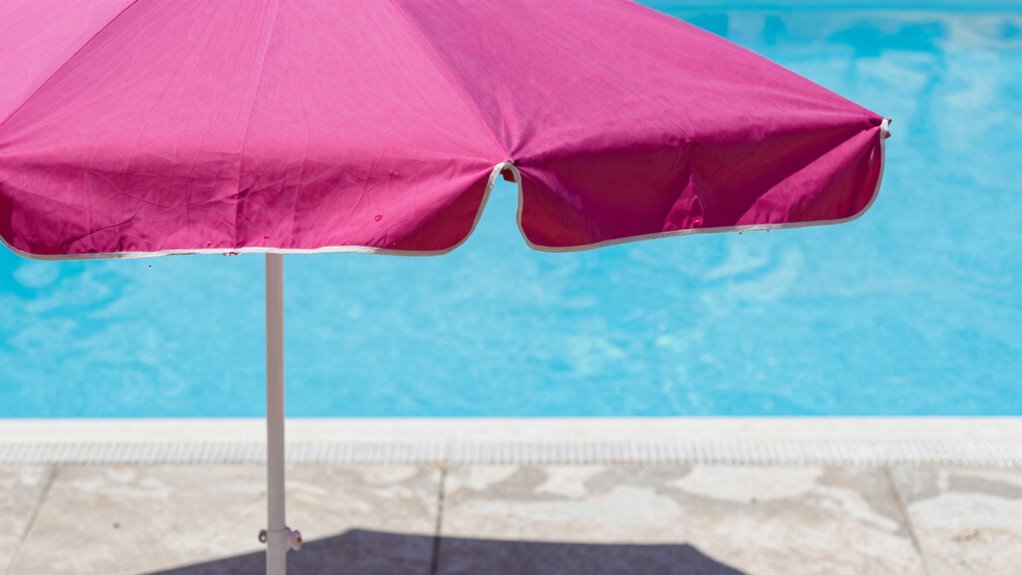
When you’re enjoying a sunny day by the pool, the last thing you want is for your umbrella to topple over in the wind. To avoid that frustrating scenario, it’s vital to understand the factors that contribute to a pool umbrella‘s stability in breezy conditions. One of the first things to reflect upon is the pole design. A sturdy, well-constructed pole can withstand gusts better than a flimsy one. Look for a pole that’s thicker and made from durable materials like aluminum or fiberglass, which can provide the necessary strength to resist bending or breaking.
Next, think about base weight. A heavy base is essential for keeping your umbrella grounded. If the base isn’t heavy enough, even a light breeze can send your umbrella spiraling. Opt for bases that weigh at least 50 pounds or more, depending on the height of the umbrella. Additionally, some bases come with the option to fill them with sand or water, enhancing stability even further.
A heavy base is crucial for stability; aim for at least 50 pounds to keep your umbrella grounded in breezy conditions.
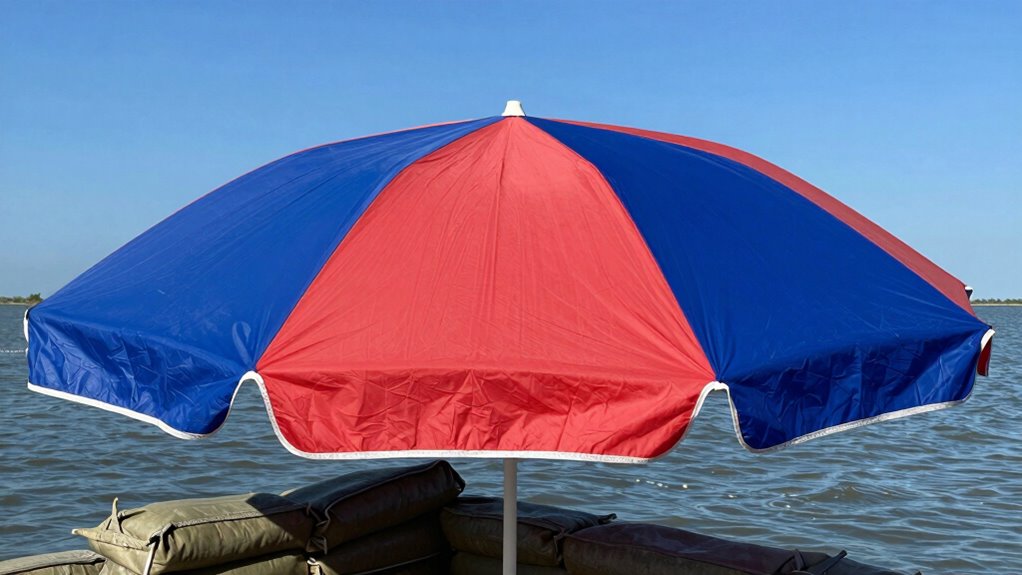
Canopy shape also plays a significant role in how well your umbrella stands up against the wind. A rounded or aerodynamic shape can help deflect wind rather than catch it, preventing it from acting like a sail. On the other hand, square or rectangular canopies might catch more wind, making them more susceptible to tipping. So, when choosing your umbrella, think about how its shape will interact with the wind.
Fabric durability is another key factor. You want a canopy made from high-quality, UV-resistant materials that can withstand not just the sun but also the elements. Look for fabrics that have been treated to resist tearing and fading. The longer your umbrella lasts, the less you’ll need to worry about it collapsing due to wear and tear.
Tilt mechanisms offer an added benefit for adjusting your umbrella’s angle in response to changing sunlight or wind conditions. A good tilt feature lets you reposition the canopy without having to move the entire structure, which can also aid in maintaining stability during breezy spells. Moreover, selecting an umbrella with a wind-resistant design can further improve its ability to withstand gusty conditions.
Finally, don’t overlook anchor options. Some umbrellas come with integrated anchoring systems that can help secure them to the ground. If you’re in a particularly windy area, investing in extra anchors or tie-downs can make a world of difference. By keeping these factors in mind, you can enjoy your poolside retreat without the anxiety of your umbrella blowing away.
heavy base pool umbrella 50 pounds
As an affiliate, we earn on qualifying purchases.
As an affiliate, we earn on qualifying purchases.
Frequently Asked Questions
What Materials Are Best for Pool Umbrella Construction?
When choosing materials for pool umbrella construction, go for aluminum or fiberglass frames for their durability factors. These materials resist rust and withstand harsh weather. For the canopy, look for UV-resistant fabric like polyester or acrylic, which offers both protection and longevity. Additionally, consider design features like a vented top to allow wind to pass through, reducing the risk of damage. This combination guarantees your umbrella stands strong and lasts longer by the poolside.
How Can I Clean My Pool Umbrella Effectively?
To clean your pool umbrella effectively, start with a gentle rinse using a hose to remove loose dirt. Then, mix warm water with mild soap and use a soft brush for tough stains. Avoid harsh chemicals that could damage the fabric. Rinse thoroughly and let it dry completely before closing. For ongoing maintenance, consider storing it away during storms and regularly checking for wear and tear to prolong its life.
What Is the Lifespan of a Typical Pool Umbrella?
A typical pool umbrella lasts about 5 to 10 years, depending on its durability and care. You might worry that exposure to sun and wind will shorten its life, but choosing high-quality materials can make a big difference. Plus, consider the environmental impact—investing in a durable umbrella means less waste over time. Regular maintenance and proper storage can help you enjoy your umbrella for many seasons, making it a smart choice.
Are There Portable Pool Umbrella Options Available?
Yes, there are portable pool umbrella options available! These portable designs are perfect for easy transport and setup. Look for umbrellas with features like sturdy bases and enhanced wind resistance to keep them stable. Many models come with lightweight frames, making them easy to carry. When you choose a quality portable umbrella, you can enjoy shade by the pool without worrying about it tipping over in the breeze.
Can I Repair a Damaged Pool Umbrella?
Absolutely, you can repair a damaged pool umbrella! Think of it as giving your trusty shade provider a makeover. Start by evaluating the damage—check for tears or bent ribs. For minor rips, use waterproof tape or patch kits to enhance your umbrella maintenance. If the frame’s compromised, consider replacing specific parts. Remember, incorporating wind resistant features during repairs can extend its life and keep your umbrella standing strong against breezy days!
Conclusion
To keep your pool umbrella stable in windy weather, focus on weight and design. For instance, a family in Florida switched to a heavy-duty, wind-resistant umbrella with a sturdy base. Despite the frequent storms, their umbrella stood strong, providing shade and protection without toppling over. Investing in the right equipment makes all the difference, ensuring you can enjoy your poolside relaxation without worrying about the wind ruining your day.
Fall Picks
fall essentials
As an affiliate, we earn on qualifying purchases.