
TL;DR

Get pool and patio gear delivered free with Prime
- Fast, free delivery on millions of items
- Prime Video, Amazon Music and more included
- Member-only deals all year
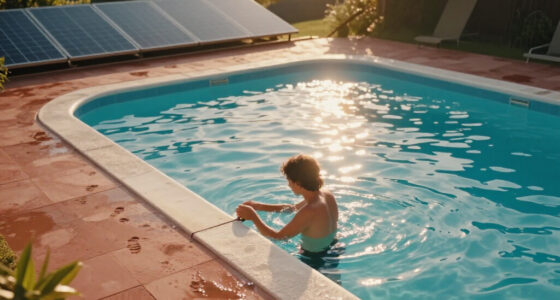
Solar pool heaters use sunlight to warm pool water, usually by circulating it through dark collectors and returning it to the pool. Their output depends on sun, weather, collector size, and heat loss, so a pool cover and a good installation plan can make a major difference. They often suit owners who want to extend the swimming season, but they cannot promise a set temperature in every climate.
A sunny afternoon can warm the top layer of your pool, while the water still feels cold enough to send you scrambling for a towel. Solar pool heaters help move more of that sunshine into the water, often with low day-to-day energy use. The catch is that weather, wind, collector space, and overnight heat loss all shape what you get.
This guide explains how solar pool heaters work, what affects their performance, and how to judge whether one fits your pool. You’ll also learn why a simple pool cover can matter as much as adding more collectors, how to think about sizing, and when a heat pump or gas heater may suit your plans better. The goal: choose a setup that matches how and when you actually swim.
Think of solar heating as a way to collect warmth when the day offers it, then hold onto as much as possible after sunset. A family that swims on sunny weekends from May to September may value that approach differently from someone who wants a reliably hot pool on chilly weekday mornings. Knowing your own pattern makes the decision clearer.
Solar thermal collectors transfer sunlight’s heat directly to pool water; photovoltaic panels generate electricity instead.
A collector area near 50–100% of pool surface area is a planning starting point, not a guaranteed design size.
Sun, shade, wind, air temperature, and pool exposure all affect heat gain and heat loss.
A pool cover can reduce overnight heat loss and help solar heat last longer.
Compare solar, heat pump, and gas systems against your swimming schedule, local energy prices, and temperature expectations.
How Solar Pool Heaters Turn Sunshine Into Warmer Water
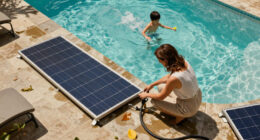
Solar pool heaters warm pool water by sending it through sun-heated collectors, then returning it to the pool. A typical setup uses the pool pump, filter, valves or a controller, and dark polymer collectors mounted on a roof, rack, or nearby structure. Water moves through the collectors like a stream through a sun-warmed garden hose, picking up heat along the way.
In a common arrangement, filtered water travels to the collectors only when they’re warmer than the pool. A controller can compare temperatures and direct the flow when conditions make sense. That keeps the collectors from acting like a radiator in reverse on a cool, cloudy day. Some systems use a separate pump; many use the existing pool circulation pump, provided it can handle the needed flow and added plumbing resistance.
Most pool collectors use unglazed materials such as polypropylene or rubber. They’re designed for pool-water temperatures and form broad, dark surfaces that absorb sunlight. Glazed solar collectors, which often serve domestic hot-water systems, appear less often in pool setups and may cost more.
For example, a homeowner with a south-facing, unshaded roof could route water through collectors during sunny afternoons and send it back to the pool before evening. That’s solar thermal heating, which transfers heat directly to water. Solar photovoltaic panels work differently: they generate electricity, which could power a heat pump, but they don’t directly heat the pool water.
Products Worth Considering

Traeger Tailgater 20 Portable Wood Pellet Grill and Smoker, 300 sq. in.

Greenworks 60V Electric Leaf Blower with 610 CFM Airflow and 2.5 Ah Battery + Charger

Rachio 3 Smart Sprinkler Controller, 8-Zone
As an affiliate, we earn on qualifying purchases.
What Sets Your Pool’s Temperature—and What You Can Control
Sunlight, air temperature, wind, collector area, and heat loss determine how much solar pool heating you feel in the water. A large collector array in bright weather can add useful warmth, while shade, cool air, and a persistent breeze can cut the gain. Pool exposure matters too: a pool that loses heat overnight has to make up more of that loss the next day.
Collector area is often planned at roughly 50–100% of the pool’s surface area as a starting range. It isn’t a sizing guarantee. A windy site, a shorter sunny season, shade, or a higher temperature goal may call for more area; a sheltered pool with a cover may need less. For a 400-square-foot pool, that rough planning range would mean about 200–400 square feet of collector surface before a local installer accounts for the site.
A cover helps because evaporation carries heat away, especially overnight. Imagine an uncovered pool after a breezy evening: the water keeps giving up warmth while you sleep. A cover slows that loss, so the heater has less ground to make up. For a household that swims after work, covering the pool overnight can make yesterday’s sunshine count the next afternoon.
Temperature expectations should match the weather. Solar heating often extends the swimming season or helps maintain a comfortable temperature during favorable conditions; it can’t guarantee a fixed temperature every day. Ask an installer to explain assumptions about your climate, pool cover, collector size, and swimming schedule rather than relying on a universal temperature promise.
Compare Solar, Heat Pump, and Gas Heating Before You Choose
Solar pool heating offers low day-to-day energy use, heat pumps offer more controlled heating, and gas heaters can warm water quickly. Your best fit depends on whether you value low operating costs, speed, dependable temperature control, or use across a cold season. The tradeoffs become clearer when you compare how each system behaves on an ordinary Tuesday, not just on a perfect sunny weekend.
| System | What it does well | What can limit it | Example fit |
|---|---|---|---|
| Solar thermal | Uses sunlight directly and can have low day-to-day energy costs | Output varies with sunshine, air temperature, wind, and available collector space | A family extending sunny-season weekend swims |
| Heat pump | Offers more controlled heating using electricity | Performance and running costs depend on outdoor conditions and electricity prices | An owner who wants steadier heating and has a suitable power supply |
| Gas heater | Can heat water quickly | Fuel costs and availability affect operating expense | A pool used occasionally when fast warm-up matters |
A solar heater may suit a pool owner who can wait for sunny days and has space for collectors. Someone hosting a one-day event on a cool weekend may prefer a system that can heat the pool on demand. A heat pump can provide more predictable heating than solar thermal in many situations, though its performance still depends on conditions and equipment.
Don’t treat a home’s photovoltaic panels as if they were solar thermal collectors. PV panels make electricity; a thermal system passes pool water through sun-warmed collectors. You could pair PV with an electric heat pump, but that’s a different system with different equipment and costs. Compare quotes based on your desired season, local energy prices, equipment, and installation needs.
Use These Five Checks to Plan a Solar Pool Heater
A good plan starts with your swimming routine, then checks the pool, sun, mounting area, and pump. These five checks help you turn “I want warmer water” into a practical conversation with an installer. They also expose a common mismatch early: a homeowner may want reliable heat on cloudy spring mornings, while the site only offers modest collector space and intermittent sun.
- Choose your target season. Decide whether you want extra weeks at the edges of summer or a warm pool through cooler weather. Those goals call for different expectations and may call for different equipment.
- Measure the pool’s surface area. Use it as a first sizing reference; the common 50–100% collector-area range is only a starting point.
- Check sun and shade. Note which roof or ground areas receive direct sun, and when trees or neighboring buildings cast shadows.
- Inspect the mounting site. Roof pitch, orientation, structural condition, access, pipe runs, wind, snow, and local building requirements all matter.
- Ask about pump flow and controls. Confirm the pump can handle collector flow and added resistance, and ask whether automatic controls bypass collectors when they’re cooler than the pool.
For instance, a 20-by-20-foot pool has 400 square feet of surface area, giving a rough initial collector range of 200–400 square feet. If the roof is partly shaded and the family wants early-season swimming, the installer may adjust the design or recommend a different heating plan. A pool cover and actual site measurements should inform the quote.
Know the Running Costs, Maintenance, and Weather Tradeoffs
Solar pool heating exchanges variable heat output for low day-to-day energy use. Sunlight supplies the heat, but you still have equipment and installation costs, and many systems use a pump to circulate water. The upfront price and any payback period depend on collector area, roof access, plumbing, labor, local energy prices, and what kind of heating the system replaces.
That makes a single universal price or payback claim misleading. A pool owner replacing frequent gas heating in a sunny region may see a different result from someone who only swims a handful of times each summer. Ask for a quote that spells out equipment, installation, any pump or control changes, and the assumptions behind the projected savings. Local incentives and product availability can change, so check current local information before budgeting.
Maintenance is usually modest, but “low maintenance” doesn’t mean “no attention.” Check for leaks, inspect valves and controls, and keep pool water chemistry within recommended ranges for your system. If freezing weather is possible, ask how to drain or protect the collectors and plumbing before winter. A homeowner in a region with hard freezes, for example, shouldn’t assume that leaving water in exposed pipes is harmless.
Recent improvements often focus on installation layouts, durable materials, valves, and controls that work with variable-speed pumps or pool automation. The underlying approach remains simple: move water through a collector when it can gain heat. That simplicity is useful, but the hardware still needs to fit your roof, plumbing, pump, and climate.
Set Realistic Expectations for Clouds, Night, and Cold Weather
Solar collectors add less heat on cloudy days and don’t add heat at night. Their output rises and falls with available sunshine and surrounding conditions. A cover can help retain heat overnight, but it doesn’t make the collectors produce warmth after sunset. Think of the cover as a lid on a warm pot: it slows the escape of heat the system has already gathered.
In a cool or windy climate, a sunny stretch may still bring useful warmth during the swimming season, but shorter days and colder air reduce output. A homeowner in a northern climate could enjoy a more comfortable pool on bright midsummer afternoons yet still find spring evenings too chilly. Freeze protection or seasonal draining may also be needed where water in the collectors or pipes could freeze.
Ask what your system is expected to do during a typical week, rather than asking only for its best-case result. The answer should account for pool exposure, wind, cover use, collector area, and your desired water temperature. If you need the pool heated quickly for a specific date, solar thermal alone may not match that schedule.
Plan around the days you actually swim. A cover helps a family preserve warmth between weekend swims, while a solar-only setup may frustrate someone who wants a set temperature regardless of weather. For that second pattern, compare a heat pump or gas heater, or ask a qualified installer whether a combined setup suits your pool. Make the choice with local climate and energy costs in view.
Frequently Asked Questions
How warm will a solar pool heater make my pool?
There’s no single temperature increase that applies to every pool. Collector size, sunshine, air temperature, wind, pool exposure, and cover use all affect the result. Ask for an estimate based on your site and desired swimming season.
How many solar collectors do I need?
A common planning range for thermal collector area is about 50–100% of the pool’s surface area. Shade, climate, wind, pool-cover use, and your target temperature can change the design. Clarify whether “solar panels” means thermal collectors or photovoltaic panels, since they serve different purposes.
Can solar pool heaters warm water on cloudy days or at night?
Collectors gain less heat on cloudy days and don’t add heat at night. A pool cover helps limit overnight heat loss, but it cannot replace sunshine or create heat.
Do solar pool heaters work in cold climates?
They can add useful warmth during sunny parts of the swimming season, but short days and cold air reduce output. Ask about freeze protection or seasonal draining if your area gets freezing weather, and consider another heater if you need reliable warmth through a cold season.
Will a solar pool heater work with my current pump?
Often, yes, but the pump must provide suitable flow and handle the extra resistance from the collector plumbing. Have a qualified installer check pump capacity, valves, controls, and equipment compatibility before settling on a design.
Do I need a pool cover with solar heating?
A cover isn’t always required, but it can reduce evaporation and overnight heat loss. For a pool used on sunny weekends, covering it between swims can help the system hold onto the warmth it collected.
How much does installation cost, and how long does payback take?
Cost depends on pool size, collector area, roof access, plumbing, labor, local prices, and any pump or control changes. Payback also depends on the type and amount of heating the solar system replaces. Request a local quote with the assumptions shown, and check current incentives with official local sources.
Conclusion
Start with your swimming schedule, the sun your site receives, and whether you’ll cover the pool. Those details will tell you more than a generic temperature promise or a collector-size rule of thumb. Ask for a site-specific plan that accounts for the pool, roof or mounting area, pump, climate, and your target season.
Solar pool heating works best when you let the sunny hours do their part and keep the warmth from slipping away at night. With a good cover and realistic expectations, yesterday’s sunshine can feel like a softer first step into the water tomorrow.