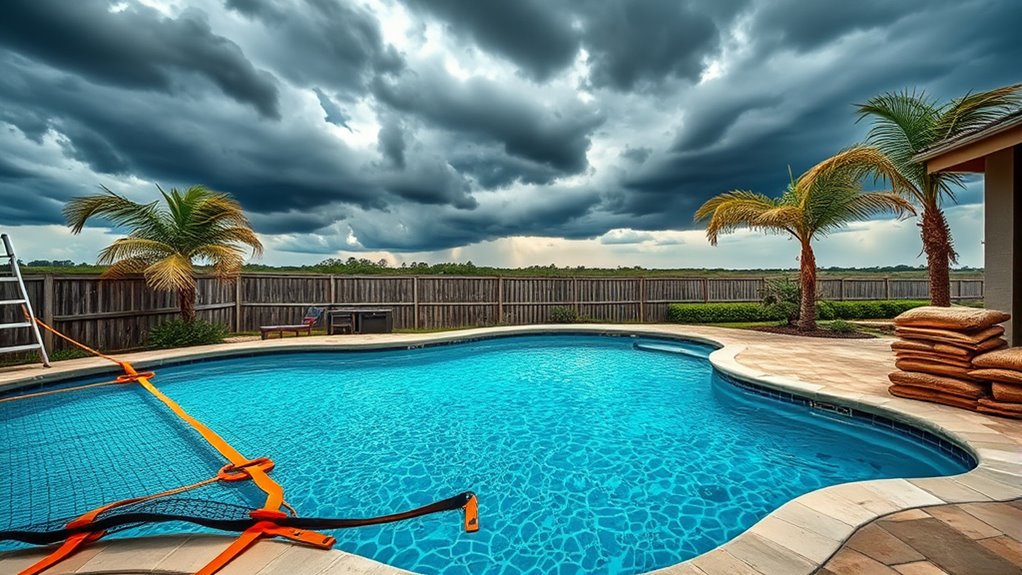

To protect your pool before a hurricane, install storm shutters on windows and doors, secure or remove loose items like furniture and umbrellas, and cover the pool with a tight, durable cover. Check and balance your pool chemicals beforehand, store chemicals safely, and secure pool equipment like ladders and diving boards. After the storm, inspect for damage, debris, and chemical imbalance. Keep your safety measures intact. Continue to guarantee your pool remains protected and ready to recover quickly.
Key Takeaways
- Install storm shutters around windows and doors to prevent damage from high winds and flying debris.
- Cover the pool with a tight mesh or solid cover and secure it to withstand strong winds.
- Remove or secure pool furniture, ladders, and diving boards to prevent projectiles and accidents.
- Check and stabilize pool safety fences, and store chemicals safely away from the storm area.
- Inspect the pool for debris and damage after the storm, then recheck chemical levels before use.

Are you prepared for a hurricane? If not, it’s time to get organized, especially when it comes to protecting your pool. Hurricanes can cause serious damage—not just to your home but also to your backyard oasis. Taking proactive steps now can save you money and hassle later. Start by focusing on storm shutter installation around your windows and doors. These sturdy barriers are essential for keeping high winds and flying debris from shattering glass and entering your home. Installing storm shutters might seem like a small detail, but it plays a vital role in safeguarding your property. Once your shutters are in place, turn your attention to your pool area. Securing your pool’s safety equipment and covering the pool itself can prevent debris from sinking in and clogging filters or damaging the structure. If you have a mesh or solid pool cover, make sure it’s tightly secured, so it doesn’t blow away in the storm.
While safeguarding your physical property, don’t forget about pool chemical safety. Storms can be unpredictable, and flooding or power outages might compromise the chemical balance of your pool. Before the hurricane arrives, check the chemical levels—chlorine, pH, alkalinity—and adjust them as needed. Proper chemical balance helps prevent algae growth and bacterial development if the pool gets contaminated or left unused for a while. Store your pool chemicals in a safe, dry place away from the storm’s reach, making certain they’re sealed tightly and protected from any potential leaks. During the storm, avoid attempting to add chemicals or make adjustments, as this can be dangerous and unnecessary at that point. Additionally, maintaining proper chemical levels is crucial for preventing algae and bacteria growth, especially during extended periods of disuse or contamination. Once the storm passes, inspect your pool thoroughly. Remove any debris, check for leaks, and recheck chemical levels before resuming normal use.
Secure pool chemicals and check levels before a storm to prevent algae and bacterial growth.
Preparing your pool also involves clearing the surrounding area of loose items like patio furniture, umbrellas, and toys that could become projectiles. Secure or store these items safely inside your garage or shed. If you have a pool safety fence, ensure it’s sturdy and fastened properly to withstand strong winds. Remember, safety always comes first—if your pool has a ladder or diving board, secure or remove these to prevent accidents during the storm.
Ultimately, your goal is to minimize damage and keep everyone safe. By taking steps like storm shutter installation, securing your pool area, and ensuring pool chemical safety, you’re creating a protective barrier that can withstand the worst. Being prepared before a hurricane hits isn’t just smart; it’s essential for peace of mind and safeguarding your property. With some planning now, you’ll be ready to weather the storm and get back to enjoying your backyard once it’s over.
Amazon Product B0FK9Q1H7X
As an affiliate, we earn on qualifying purchases.
Frequently Asked Questions
How Can I Prevent Algae Growth After a Hurricane?
To prevent algae growth after a hurricane, you need to maintain proper chemical balance in your pool. Test and adjust pH, chlorine, and alkalinity levels regularly to guarantee ideal algae prevention. Shock the pool if necessary and run the filter continuously to clear debris and contaminants. Keeping your water properly balanced and clean will help inhibit algae growth, making your pool safe and inviting once the weather clears.
Should I Drain My Pool Before a Hurricane?
Wondering whether you should drain your pool before a hurricane? It’s generally best to keep the water level consistent for stability. You should cover your pool securely and perform thorough chemical treatments to prevent algae and bacteria growth. Draining can cause structural issues and make your pool more vulnerable to damage. Instead, maintain proper water levels, ensure the pool cover is tight, and balance chemicals for ideal protection during severe weather.
What’s the Best Way to Secure Pool Equipment?
To secure your pool equipment, start by removing and storing smaller items like skimmers and hoses. Use sturdy pool covers to protect the surface and prevent debris from entering. For larger equipment such as pumps and filters, make certain they are properly anchored or moved to a secure indoor location if possible. Proper equipment anchoring and covering help prevent damage and keep your pool area safe during severe weather.
How Do I Check for Pool Damage Post-Storm?
After the storm, you should start with a thorough pool cover inspection to spot any tears or debris that could cause damage or contamination. Next, assess the water level—if it’s notably lower, it could indicate leaks or runoff issues. Check for floating debris, cloudy water, or any visible damage to your pool’s surface. Address any problems promptly to guarantee your pool’s safety and cleanliness before refilling or restarting your system.
When Is It Safe to Reopen My Pool After a Hurricane?
You should wait until the storm has fully passed and authorities say it’s safe before reopening your pool. First, check for any damage from the storm, including debris and pool cover maintenance issues. Then, test and balance the water chemistry, adjusting pH, chlorine, and alkalinity levels as needed. Only reopen your pool once it’s clean, safe, and the water chemistry is properly balanced to guarantee a safe swimming environment.
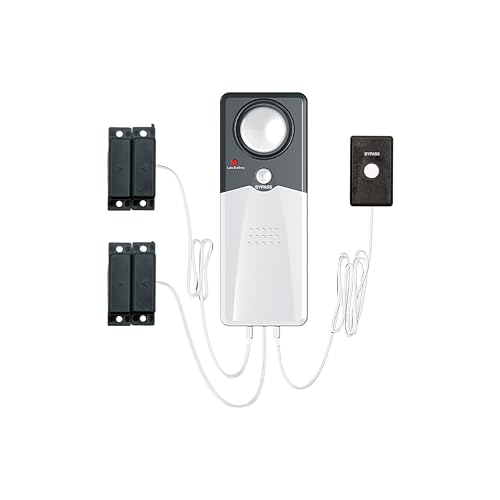
Techko S189 Ultra Slim Safe Pool Alarm for Kids, ETL Listed UL 2017 Compliant, Indoor/Outdor Weather Resistant, 110db Loud Alarm with 2X Bypass Buttons, Gray, 1Count
Pass Pool Inspections: Compliant with UL 2017 safety standards & Child Pool Safety Law
As an affiliate, we earn on qualifying purchases.
Conclusion
By taking these simple steps, you’re anchoring your pool against nature’s fury, turning chaos into calm. Think of your preparations as a sturdy shield, ready to deflect wind and rain’s relentless assault. When the storm passes, your pool will stand resilient, a shining oasis amid the tempest’s wreckage. With each safeguard you put in place, you’re not just protecting water—you’re safeguarding peace of mind, allowing you to breathe easy when the skies finally clear.

BCONE® Pool Alarm by Lifebuoy® | ASTM F2208 Certified | Floating Safety Device with App Alerts + Alexa Voice Control | 2.4GHz Wi-Fi | for Inground & Above-Ground Pools
· Connectivity - Connects to Alexa and Google Assistant. Smartphone App connectivity to fully control the system, no...
As an affiliate, we earn on qualifying purchases.

(2026 Upgrade) WYBOT C1 Cordless Robotic Pool Vacuum for Inground Pools, Above Ground Pool Cleaner 4-in-1 Wall & Waterline Cleaning Up to 1,614sq.ft, 150mins Smart Navigation, App Support
Powerful Suction with Dual Brushes: Built with an upgraded independent water pump motor delivering up to 3,038 GPH...
As an affiliate, we earn on qualifying purchases.