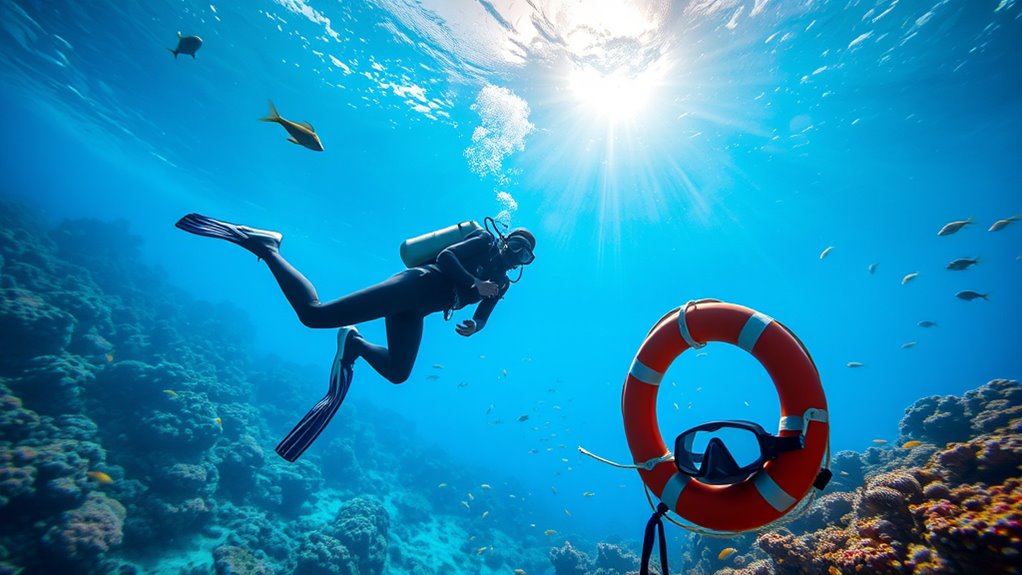

To enjoy diving safely without risk, prioritize equipment checks before each dive, ensuring all gear is in good condition and functioning properly. Plan your dive carefully by monitoring weather, tide, and visibility, and stick to sites suitable for your experience. Keep calm in emergencies by practicing drills and following established procedures, using signaling devices confidently. Staying prepared and aware makes your dives safer; explore further tips to deepen your skills and enjoy the deep end responsibly.
Key Takeaways
- Conduct thorough pre-dive equipment checks and maintenance to ensure reliability underwater.
- Plan dives carefully, considering weather, visibility, and your experience level.
- Practice emergency procedures and drills regularly to build confidence and quick response skills.
- Maintain constant communication with your dive buddy and stick to the planned route and depth.
- Stay calm during emergencies, utilize signaling devices, and follow established protocols to ensure safety.
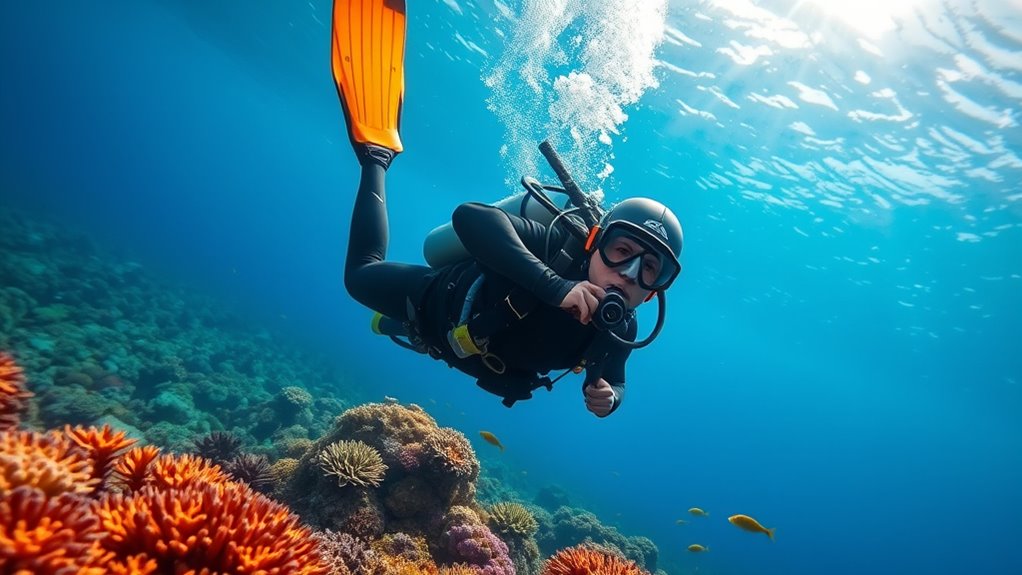
Diving can be an exhilarating experience, but it also comes with inherent risks that require careful attention. One of the most important safety measures you can take is ensuring your equipment is in top condition. Regular equipment maintenance is essential; check your gear thoroughly before each dive. Inspect your mask, fins, regulators, and buoyancy control device for any signs of damage or wear. Replace worn-out parts and ensure everything functions properly. Properly maintained equipment not only enhances your comfort but also reduces the likelihood of malfunctions underwater, which could turn dangerous in an instant. When you prioritize equipment maintenance, you’re actively safeguarding yourself against equipment failure, giving you peace of mind to focus on the dive itself.
Equally crucial is emergency preparedness. No matter how experienced you are, unexpected situations can arise. Familiarize yourself with emergency procedures before you dive. Know how to handle situations like equipment failure, buddy separation, or sudden health issues. Carry a dive knife or signaling device, and ensure you know how to use it effectively. Practice emergency drills regularly so they become second nature—this way, if a crisis occurs, you won’t panic. Communicate your dive plan clearly with your buddy, including your expected return time and route. In case of an emergency, staying calm and following your training can make all the difference. Remember, being prepared isn’t just about knowing what to do; it’s about having the right tools and mindset to respond swiftly and confidently.
Another key aspect is pre-dive planning. Always check weather conditions, tide schedules, and visibility levels. These factors can profoundly influence safety. Never push your limits; stick to dive sites suited for your experience level. Keep your dive computer or depth gauge close, and monitor your depth and air supply constantly. Don’t forget to do a thorough buddy check to confirm that all gear fits well and functions correctly. Keep your emergency contacts updated and accessible, and consider carrying a signaling whistle or mirror for surface emergencies. The more prepared you are, the better equipped you’ll be to handle unexpected events.
diving equipment check kit
As an affiliate, we earn on qualifying purchases.
As an affiliate, we earn on qualifying purchases.
Frequently Asked Questions
What Should I Do if I Experience a Underwater Emergency?
If you experience an underwater emergency, stay calm and follow emergency procedures. Signal for help using clear signaling techniques like a whistle or hand signals to attract attention. Ascend slowly and safely, sharing air if necessary, and monitor your breathing and depth. Keep your equipment secure, stay with your buddy, and follow your training. Remember, staying composed and using proper signaling techniques are key to managing underwater emergencies effectively.
How Can I Tell if I Am Physically Fit to Dive?
You should start with a fitness assessment to determine your physical readiness for diving. If you have any medical conditions or concerns, consult your doctor to confirm you’re fit to dive. Make sure you’re in good cardiovascular health, have adequate strength, and can handle the physical demands of diving. Being honest about your health status helps prevent emergencies and ensures you enjoy your dive safely.
Are There Specific Health Conditions That Prevent Safe Diving?
Certain health conditions can prevent safe diving, so medical restrictions are essential to regard. Conditions like heart issues, respiratory problems, or ear and sinus issues may pose risks underwater. A pre-dive screening helps identify these concerns early, ensuring you don’t dive if it’s unsafe. Always consult a healthcare professional before diving, and follow their advice to stay safe and enjoy your diving experience without unnecessary risks.
What Equipment Is Essential for Safe Diving?
When it comes to safe diving, you need the right equipment. Essential diving gear includes a mask, snorkel, fins, wetsuit, and a regulator. Always follow a safety checklist before your dive to make sure everything’s in working order. Proper gear helps you breathe, see clearly, and stay warm underwater, reducing risks. Investing in quality equipment and conducting thorough safety checks keeps you safe and allows you to enjoy the dive fully.
How Can I Improve My Buoyancy Control?
To improve your buoyancy control, focus on mastering buoyancy techniques like slow, controlled breathing and precise weight adjustment. Practice shallow water drills to fine-tune your buoyancy before profound dives. Keep your weight minimal but sufficient to hover effortlessly. Regularly check your buoyancy during dives, making small adjustments as needed. With consistent practice, you’ll gain confidence, conserve energy, and enjoy a more relaxed, safer diving experience.
diving signaling devices
As an affiliate, we earn on qualifying purchases.
As an affiliate, we earn on qualifying purchases.
Conclusion
By following these diving safety tips, you can enjoy exploring the depths confidently and responsibly. Remember, nearly 70% of diving accidents involve a lack of proper preparation or awareness. Staying alert, respecting your limits, and using the right equipment can make all the difference. So, dive smart and prioritize safety—because the ocean is a beautiful place, but it’s essential to keep yourself protected while experiencing its wonders. Happy diving!
dive safety emergency kit
As an affiliate, we earn on qualifying purchases.
As an affiliate, we earn on qualifying purchases.
scuba diving gear maintenance tools
As an affiliate, we earn on qualifying purchases.
As an affiliate, we earn on qualifying purchases.