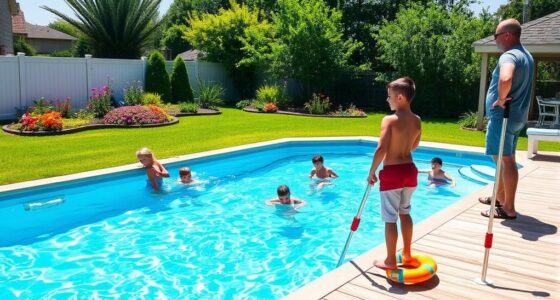
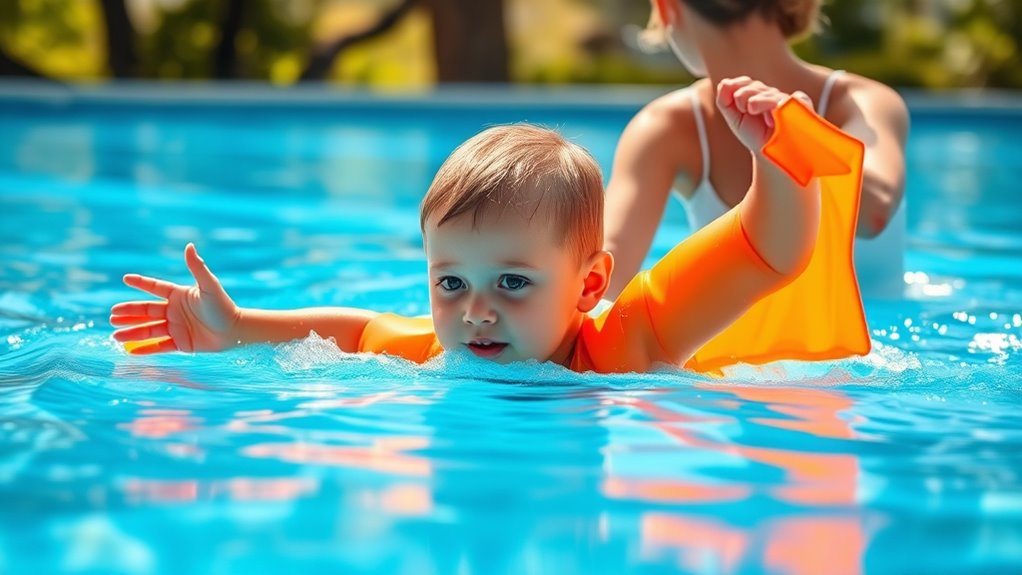

Teaching your kids to swim early is essential because it helps them develop crucial water safety skills, reducing the risk of drowning. It boosts their confidence, teaches them how to respond calmly in water emergencies, and promotes lifelong safety habits. Early swim lessons also familiarize children with water, making them less anxious and more comfortable. If you want to learn how these skills can save lives and support your child’s safety, keep exploring this important topic.
Key Takeaways
- Early swim lessons develop essential water safety skills that can prevent drowning accidents.
- Teaching kids to float and self-rescue increases their chances of survival in unexpected water situations.
- Familiarity with water reduces panic, helping children stay calm and respond effectively during emergencies.
- Water safety education teaches children to recognize dangerous situations and avoid unsafe water environments.
- Starting lessons early builds confidence and lifelong habits that promote safe water behavior and enjoyment.

Learning to swim can be a life-saving skill that everyone should acquire. When you teach your kids to swim early, you’re giving them more than just the ability to enjoy water; you’re equipping them with essential skills in water safety and drowning prevention. Knowing how to swim helps children respond confidently if they find themselves in or near water unexpectedly. This confidence is *crucial* because most water-related accidents happen quickly, often when a child is unsupervised or caught off guard. By starting swim lessons at an early age, you reduce the risk of drowning and teach your child how to navigate water environments safely.
Water safety is a fundamental part of swim lessons. It’s not just about strokes and floating; it’s about understanding how to behave around water. Kids learn to recognize dangerous situations, such as deep water, strong currents, or unsafe swimming areas. They also understand the importance of never running near pools or lakes to prevent slips and falls. These lessons instill a sense of caution and respect for water, helping your child develop good habits that last a lifetime. When children are aware of water safety principles from a young age, they’re better prepared to make smart decisions in water settings, reducing their chances of accidents.
Drowning prevention is a primary focus of early swim instruction. According to safety experts, most childhood drownings happen because children don’t know how to float or escape from a dangerous situation. Swim lessons teach children *crucial* skills like floating, treading water, and basic self-rescue techniques. These skills act as a safety net if they accidentally fall into water. Even if they’re not strong swimmers yet, knowing how to float or call for help can be the difference between a dangerous situation and a life saved. When kids learn to stay calm and use their skills, they’re more likely to survive and get out of trouble.
Starting swim lessons early also promotes comfort and familiarity with water. When children are comfortable, they’re less likely to panic if they find themselves in water unexpectedly. This calmness is essential for effective drowning prevention. As they grow, they can build on these skills, gaining strength and endurance, but the foundation is laid in those initial lessons. As a parent, your role is *crucial* — you can foster this safety mindset by enrolling your kids in swim lessons early and reinforcing water safety rules consistently. In doing so, you’re giving them a *vital* tool for safety, confidence, and enjoyment in water, potentially saving their lives one day.
Frequently Asked Questions
At What Age Should Children Start Swimming Lessons?
You should consider starting your child’s swimming lessons around age one, as early water exposure helps them develop comfort and safety skills. By the time they reach developmental milestones, such as walking or talking, they can better understand water safety rules. Early lessons build confidence and reduce drowning risks, setting a foundation for lifelong water safety. The sooner your child learns, the more natural and secure they’ll feel in aquatic environments.
How Do I Choose a Qualified Swim Instructor?
Choosing a qualified swim instructor is like picking a skilled captain for a safe voyage. You want someone with strong instructor credentials and a deep understanding of water safety. Look for certified instructors with experience teaching children, ask for references, and observe their teaching style. Trust your instincts and make certain they create a fun, safe environment. A good instructor helps your child build confidence and skills, making water safety second nature.
What Are Common Signs My Child Is Ready to Learn?
You’ll notice your child is ready to learn when they show water comfort, like confidently splashing or holding their breath underwater. Peer readiness also plays a role; if they’re enthusiastic to join friends in the pool, it’s a positive sign. These behaviors indicate they’re comfortable and motivated, making it easier for them to learn new skills. Trust these cues to decide when it’s the right time to start swimming lessons.
Are There Risks Associated With Early Swimming Lessons?
Every coin has two sides, and early swimming lessons aren’t without risks. While they’re crucial for drowning prevention and water safety, some concerns include potential choking or overexposure to cold water. However, with proper supervision, certified instruction, and age-appropriate lessons, these risks are minimized. You can’t afford to leave water safety to chance — early lessons help your child become confident and aware around water, saving lives.
How Can I Reinforce Water Safety Outside Lessons?
You can reinforce water safety tips by constantly supervising your kids whenever they’re near water, including outdoor pools. Teach them to follow pool rules diligently, like never swimming alone or running around the pool area. Set clear boundaries and remind them of safety practices regularly. By actively practicing outdoor pool rules and reinforcing water safety tips daily, you help your children develop responsible habits and reduce drowning risks.
Conclusion
By teaching your kids to swim early, you’re giving them more than just skills—you’re empowering them with confidence, safety, and independence. Remember, drowning is silent and swift, like a thief in the night. But with swim lessons, you’re arming your children with a superpower: the ability to save themselves and others. Don’t wait for a wake-up call; invest in their safety now. Because every splash could be a life saved—yours, theirs, or someone else’s.