
Pool test kits help you guarantee a safe and healthy swimming environment by measuring key water parameters like pH, chlorine levels, and total alkalinity. These measurements prevent issues like algae growth, cloudy water, and skin irritation, saving you time and money on repairs. Regular testing keeps your water balanced, safe, and visually appealing. If you want to understand how these tests work and improve your pool care skills, there’s more to explore ahead.

Get pool and patio gear delivered free with Prime
- Fast, free delivery on millions of items
- Prime Video, Amazon Music and more included
- Member-only deals all year
Key Takeaways
- Pool test kits measure critical water parameters like pH, chlorine, and alkalinity to ensure safe and clear swimming conditions.
- They use reagents and color charts to quickly analyze water samples and identify imbalances.
- Regular testing helps prevent algae growth, cloudy water, and skin irritation by maintaining proper chemical levels.
- Accurate testing guides homeowners in adjusting chemicals effectively, saving time and avoiding costly repairs.
- Proper use of test kits ensures long-term pool health, safety, and water quality.
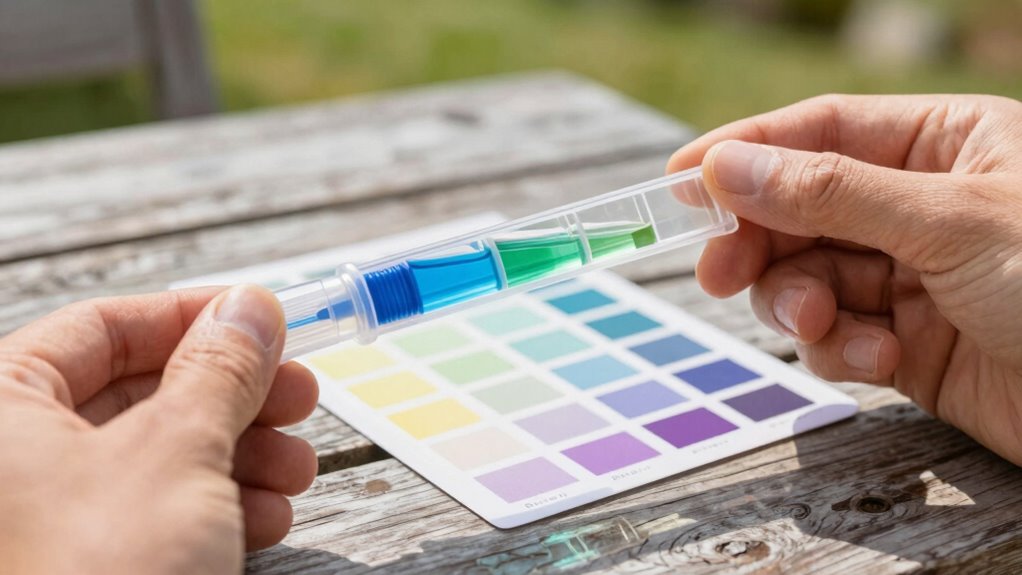
Maintaining a clean and safe swimming pool begins with accurate water testing, and pool test kits make this task straightforward. When you regularly test your pool water, you gain insight into its chemical balance, which is essential for both safety and water clarity. The right chemical balance prevents issues like algae growth, cloudy water, and skin irritation. Pool test kits provide a quick and reliable way to measure key water parameters, so you can adjust chemicals as needed to keep your pool in top condition.
Regular water testing with pool test kits ensures a safe, clear, and healthy swimming environment.
Most home pool owners focus on testing for pH, chlorine levels, and total alkalinity. These factors directly influence water clarity and comfort. If the pH is too low, your water can become corrosive, damaging pool equipment and causing eye irritation. If it’s too high, you risk cloudy water and scale buildup. Chlorine levels must stay within a safe range to effectively disinfect the water without causing skin or eye irritation. By regularly testing these parameters, you ensure your pool maintains a proper chemical balance, which directly impacts water clarity. Clear water isn’t just aesthetically pleasing; it’s also indicative of healthy, balanced water that’s safe to swim in.
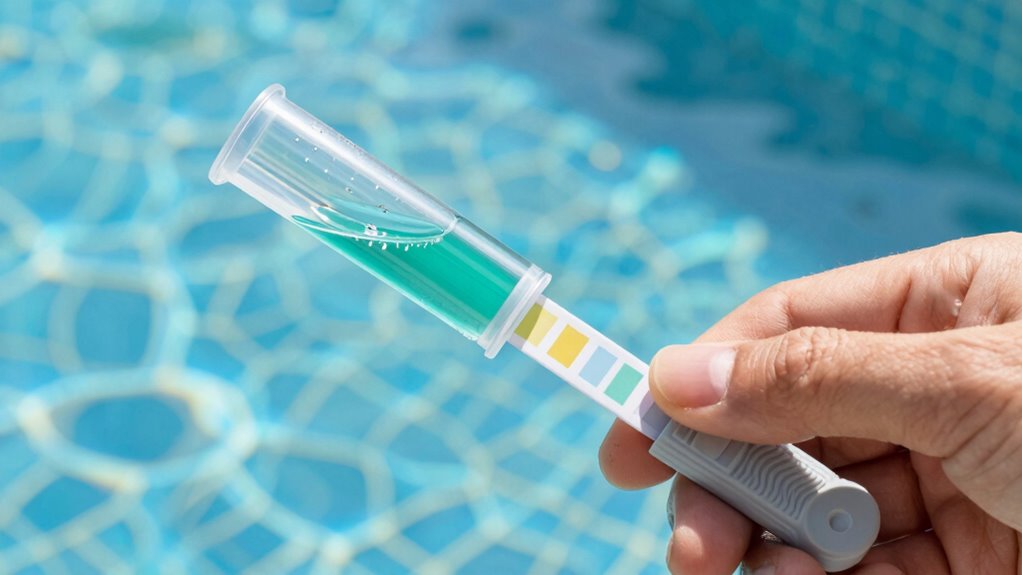
Using pool test kits is simple and quick. You take a water sample, apply the test reagents, and compare the results to color charts included in the kit. This process allows you to quickly identify if your chemical levels are within the recommended ranges. If they aren’t, you can add the appropriate chemicals—chlorine, pH adjusters, or alkalinity buffers—to restore balance. Regular testing helps prevent problems before they escalate, saving you time and money on extensive cleanings or repairs later on. Additionally, understanding water chemistry helps homeowners make informed decisions to maintain optimal pool conditions. Proper testing and chemical balance are crucial for preventing issues like chemical imbalances, which can lead to more serious water quality problems if left unaddressed. Staying informed about water testing techniques can further enhance your ability to keep your pool in pristine condition. Moreover, familiarizing yourself with testing procedures ensures accurate results, which is vital for effective pool maintenance.
As an affiliate, we earn on qualifying purchases.
Frequently Asked Questions
How Often Should I Test My Pool Water?
You should test your pool water at least twice a week during peak swimming season to maintain proper water chemistry. Regular testing helps you catch imbalances early, ensuring safe, clean water and reducing chemical costs. If the pool isn’t used often or after heavy rain, testing once a week is enough. Consistent pool maintenance keeps your water balanced, preventing issues like algae growth and cloudy water.
Can I Use Test Kits for Saltwater Pools?
Imagine your saltwater pool shimmering under the sun, inviting you for a swim. Yes, you can use test kits designed for saltwater pools to monitor water chemistry. These kits measure salinity, pH, and chlorine levels, ensuring your pool stays balanced. Proper pool maintenance depends on accurate readings, so choose test kits compatible with saltwater systems to keep your pool crystal clear and safe for swimming.
Are Digital Test Kits More Accurate Than Test Strips?
Digital test kits generally offer better digital accuracy than test strips, making them more reliable for precise measurements. Unlike test strips, which can vary with user handling and color interpretation, digital kits provide consistent results through electronic readings. When comparing test strip accuracy, digital kits minimize human error and give you clearer, more actionable data for maintaining ideal pool chemistry, ultimately making them a smarter choice for serious homeowners.
How Do I Interpret Test Kit Results Correctly?
Imagine your pool’s health hanging in the balance—correct interpretation is key. To interpret test kit results accurately, compare your readings to the ideal chemical balance ranges provided. Focus on pH, chlorine, and alkalinity levels, ensuring they’re within the recommended zones. Trust in your test accuracy by following instructions carefully. When you understand these numbers, you gain control, keeping your pool safe, sparkling, and inviting.
What Should I Do if My Tests Show High Chlorine Levels?
If your tests show high chlorine levels, you’re experiencing a chlorine overdose, which can cause skin and eye irritation. To restore balance, dilute the pool water by adding fresh water, and run the filter to help disperse the excess chlorine. Avoid adding more chlorine, as that worsens the pool water imbalance. Regular testing and proper chemical adjustments prevent future issues and keep your pool safe and comfortable.
Conclusion
Now that you understand what pool test kits measure and why they matter, you’re better equipped to care for your pool and keep it safe. Regular testing ensures clear, healthy water and extends the life of your investment. Isn’t it worth taking a few minutes to check your pool’s chemistry and enjoy worry-free swimming? With the right test kit, you can confidently maintain your oasis and create lasting memories with loved ones.
Columbus Day / Indigenous Peoples' Day Picks
long weekend sales
As an affiliate, we earn on qualifying purchases.