The real difference between recreational pools and fitness pools lies in their primary purposes. Recreational pools are all about fun and socializing, offering features like slides and shallow areas for families. On the other hand, fitness pools focus on structured workouts, providing lanes for lap swimming and space for activities like water aerobics. Both have unique benefits, catering to different needs. If you’re curious about how to choose the right pool for your goals, there’s more to explore.

Get pool and patio gear delivered free with Prime
- Fast, free delivery on millions of items
- Prime Video, Amazon Music and more included
- Member-only deals all year
Key Takeaways
- Recreational pools emphasize leisure and social interaction, featuring slides and shallow areas for family fun.
- Fitness pools are designed for structured workouts, with lap lanes for swimming and space for water aerobics.
- Recreational pools create a vibrant atmosphere, while fitness pools offer a quieter environment for focused exercise.
- Mixing both types can enhance the overall experience, catering to relaxation and fitness needs simultaneously.
- Each pool type offers unique benefits: recreational pools foster enjoyment, while fitness pools support health and endurance goals.
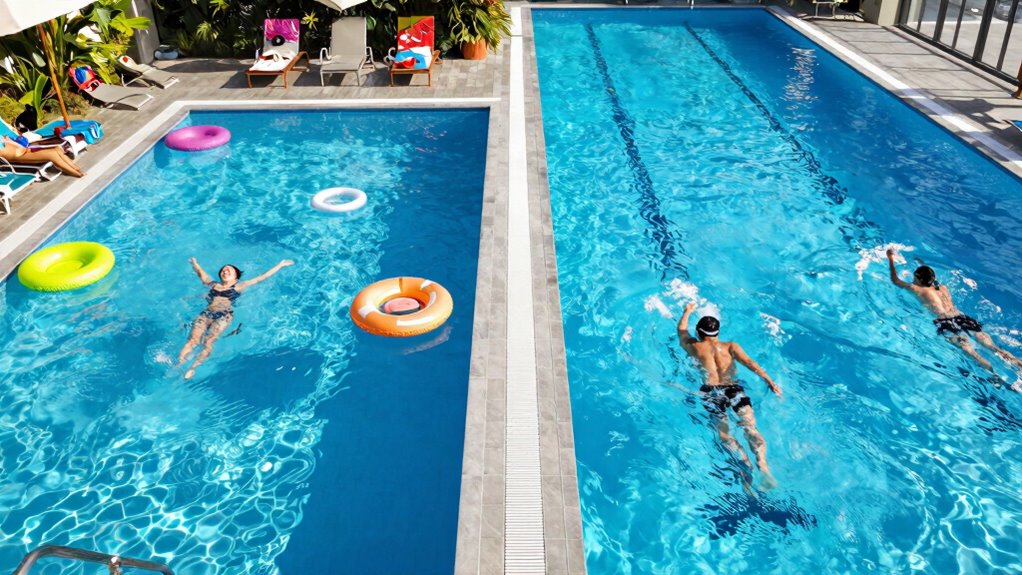
When you think about pools, do you envision splashing around with friends or getting in shape? It’s no surprise that pools can serve dual purposes. On one hand, recreational pools are designed for leisure activities, where you can unwind, socialize, and enjoy the sun. On the other hand, fitness pools target those focused on health, offering a space for aquatic exercises aimed at improving strength and endurance.
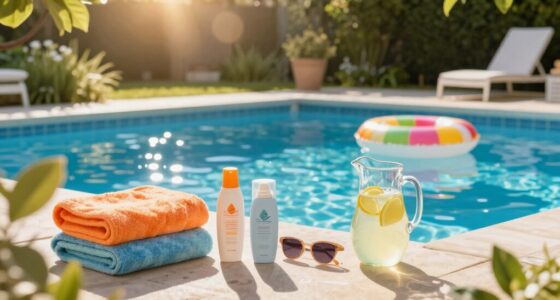
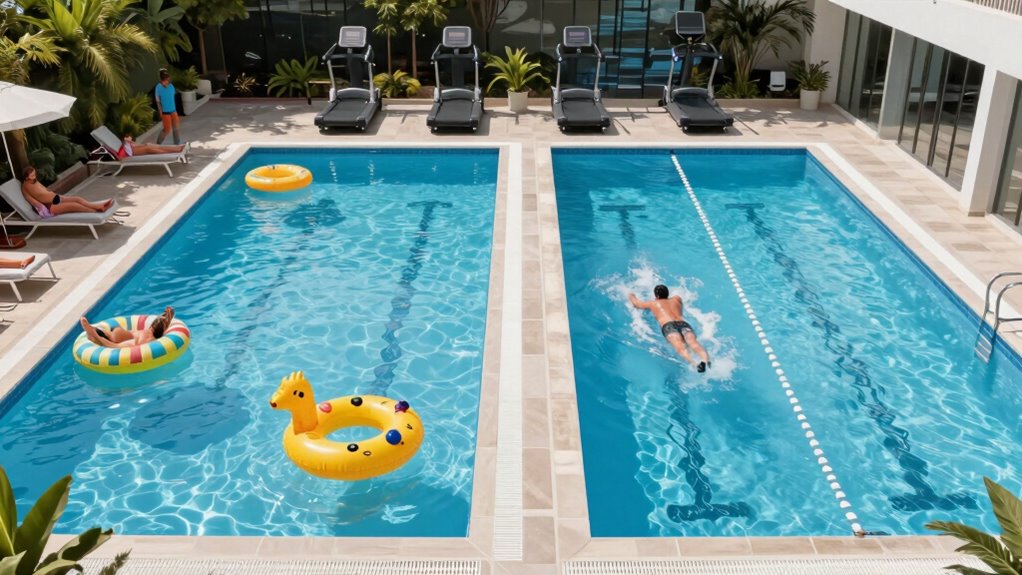
Recreational pools create a vibrant atmosphere, often featuring slides, diving boards, and shallow areas tailored for families. You can relax on a float, play volleyball, or even host a barbecue by the poolside. Their charm lies in the social interactions they foster, allowing friends and family to bond over fun activities. Swimming in a recreational pool isn’t just about cooling off; it’s about creating memories and enjoying the carefree moments of summer.
In contrast, fitness pools are designed with a different purpose in mind. These pools often have a lap configuration, with designated lanes for swimming laps or performing aquatic exercises. If you’re serious about your fitness routine, a fitness pool is where you can focus on your goals. You might find yourself engaging in water aerobics, resistance training, or even therapy exercises. The water’s buoyancy helps reduce the impact on your joints, making it an excellent option for anyone from beginners to seasoned athletes.
The environment in a fitness pool is typically quieter, allowing you to concentrate on your workout. You can track your progress, improve your swimming technique, or build endurance without the distractions that come with a recreational setting. If it’s your aim to boost cardiovascular health or tone your muscles, you’ll appreciate the structured atmosphere that fitness pools provide.
Ultimately, the choice between a recreational pool and a fitness pool boils down to your personal goals. If you’re looking to have fun and socialize, a recreational pool fits the bill. But if you want to challenge yourself and incorporate swimming into your fitness regime, the fitness pool is your best bet. Both options offer unique benefits, and you might find that mixing them up enhances your overall experience. So, whether you’re diving into a game of pool volleyball or swimming your laps, you’re sure to enjoy the invigorating embrace of the water.
recreational swimming pool with slides
As an affiliate, we earn on qualifying purchases.
As an affiliate, we earn on qualifying purchases.
Frequently Asked Questions
Can Fitness Pools Be Used for Recreational Swimming?
Yes, fitness pools can definitely be used for recreational swimming! While they’re designed for lap swimming and water aerobics, you can enjoy leisurely swims or play games too. Their size and depth make them versatile for both workouts and relaxation. So, if you want to combine fitness with fun, jump in and enjoy the best of both worlds! Just remember to share the space if others are looking to work out.
What Maintenance Differences Exist Between Recreational and Fitness Pools?
Maintenance differences between recreational and fitness pools often come down to chemical balancing and equipment upkeep. You’ll find fitness pools require more frequent chemical checks due to higher usage and the need for ideal water quality for exercise. Equipment upkeep can be more intensive in fitness pools, as the pumps and filtration systems work harder to handle increased swimmer activity. Staying diligent with these tasks guarantees both types of pools remain safe and enjoyable.
Are There Specific Temperature Requirements for Fitness Pools?
Yes, there are specific temperature preferences for fitness pools. Generally, keeping the water between 78°F and 82°F is ideal for workouts, as it promotes comfort and enhances performance. This range helps you enjoy the health benefits of swimming without overheating. If you’re focusing on rehabilitation or low-impact exercises, slightly warmer temperatures can be beneficial. Finding the right balance will maximize your fitness routine and make your sessions more enjoyable.
How Do Pool Depths Differ Between Recreational and Fitness Pools?
Pool depths differ considerably between recreational and fitness pools. Recreational pools usually have varying depths, catering to all ages and activities, while fitness pools often maintain a consistent depth, typically around 4 to 5 feet. This uniformity enhances safety standards for swimming laps and performing exercises. When you’re considering a pool for fitness, you’ll want to verify it meets those safety requirements, providing a reliable environment for your workouts.
What Are the Typical Costs Associated With Each Pool Type?
Typical costs for recreational pools range from $25,000 to $50,000, while fitness pools often start around $40,000 and can exceed $100,000 depending on features. You’ll want to contemplate installation costs, which can vary greatly. For financing, many options are available to help spread the expense over time. Make sure to factor in maintenance costs too, as they’ll affect your overall investment in either pool type.
Conclusion
In the end, it all boils down to your goals. Recreational pools invite fun and relaxation, perfect for splashing around with friends. Fitness pools, on the other hand, cater to your workout needs, offering lanes for serious swimming and exercise. Whether you’re diving into leisure or chasing fitness, each type serves a unique purpose. So, choose the one that fits your lifestyle, and you’ll find the joy that comes with every splash and stroke.
Fall Picks
fall essentials
As an affiliate, we earn on qualifying purchases.