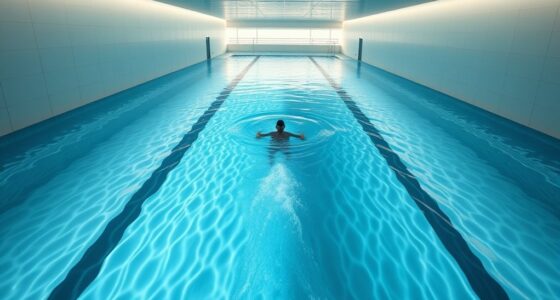
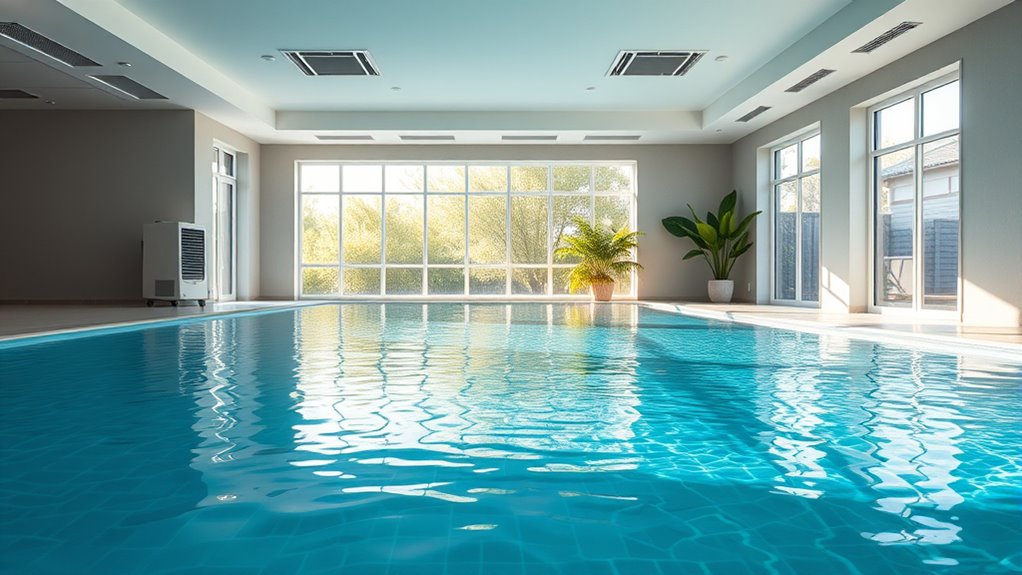

To keep your indoor endless pool dry and safe, monitor humidity levels with a hygrometer and aim to stay between 30-60%. Install a proper ventilation system like exhaust fans or energy recovery ventilators to control moisture and airflow. Use dehumidifiers and air purifiers correctly, placing them near moisture sources for maximum effect. Additionally, make certain your space is well-insulated and sealed to prevent mold and damage—continue with us to learn more essential tips.

Get pool and patio gear delivered free with Prime
- Fast, free delivery on millions of items
- Prime Video, Amazon Music and more included
- Member-only deals all year
Key Takeaways
- Monitor indoor humidity levels regularly, aiming to keep it below 60% to prevent mold and structural damage.
- Install and properly position ventilation systems like exhaust fans or ERVs to expel humid air and bring in dry, fresh air.
- Use appropriately rated dehumidifiers near moisture sources to maintain optimal humidity and inhibit mold growth.
- Seal gaps around windows, doors, and plumbing, and insulate walls and floors to reduce condensation and moisture intrusion.
- Place air purifiers with HEPA filters centrally and away from heat sources to improve air quality and eliminate airborne contaminants.
As an affiliate, we earn on qualifying purchases.
Understanding Humidity Levels and Their Impact

Since indoor pools generate a lot of moisture, understanding humidity levels is essential for maintaining a safe and comfortable environment. High humidity can lead to mold growth, musty odors, and damage to walls, ceilings, and furniture. When humidity exceeds 60%, you might notice condensation on windows and mirrors, which signals excess moisture in the air. Low humidity, below 30%, can cause discomfort, dry skin, and respiratory issues. Monitoring humidity levels regularly helps you identify when adjustments are needed. Proper humidity balance prevents structural damage and health problems. Using a hygrometer allows you to track these levels accurately. Maintaining appropriate indoor air quality is crucial for preventing issues related to excess moisture. Keeping humidity in an ideal range ensures your indoor pool remains a safe, enjoyable space without the risk of mold, corrosion, or other moisture-related issues.
Selecting the Right Ventilation System for Your Pool Area

Choosing the right ventilation system is vital for maintaining a healthy indoor pool environment, as it effectively controls humidity, removes odors, and reduces airborne contaminants. You need a system designed specifically for high moisture levels, such as an exhaust ventilation or energy recovery ventilator (ERV). These systems help expel humid air and bring in fresh, dry air, preventing mold growth and structural damage. Proper placement of vents and exhaust fans is key for excellent airflow. Make sure the system is energy-efficient and easy to operate. Investing in the right ventilation system ensures a safer, more comfortable space while protecting your investment in your indoor pool. Color accuracy in ventilation systems can also influence the overall air quality and moisture control effectiveness.
Effective Use of Dehumidifiers and Air Purifiers
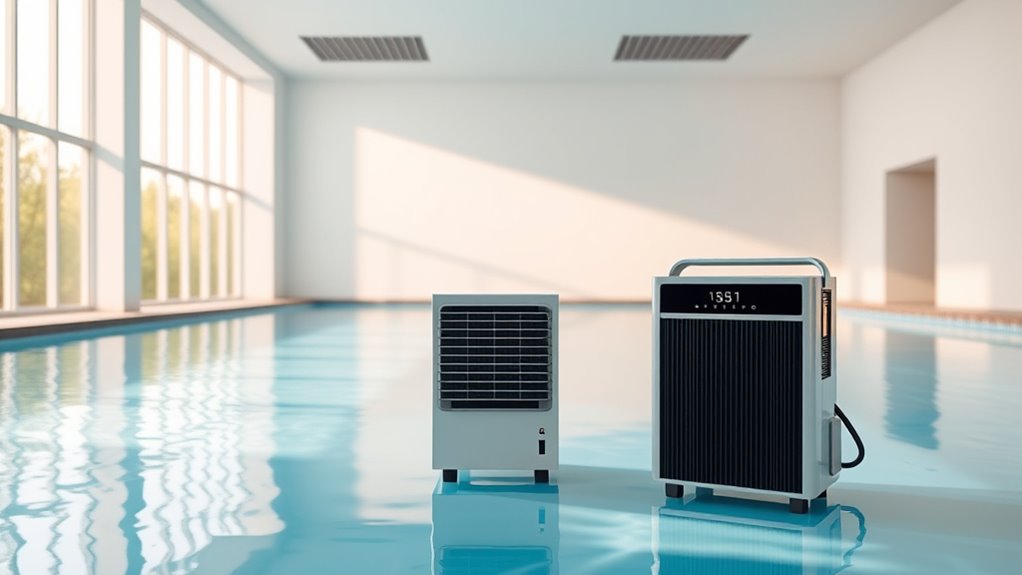
Choosing the right dehumidifiers and air purifiers is essential for maintaining a comfortable indoor pool environment. You need to select devices that match your space’s size and humidity levels to guarantee effectiveness. Proper placement of these units can greatly improve air quality and prevent issues like mold and odors. Additionally, selecting products that are vetting for safety and efficiency can ensure long-term reliability and peace of mind.
Choosing the Right Devices
Selecting the right dehumidifiers and air purifiers is essential for maintaining a comfortable and healthy indoor pool environment. You need devices that match your space’s size, humidity levels, and air quality needs. First, choose a dehumidifier with sufficient capacity—look for one rated for your room’s square footage and moisture load. Second, opt for an air purifier with a HEPA filter to effectively remove airborne contaminants and improve air quality. Third, consider energy efficiency and noise levels to ensure the devices run effectively without disrupting your space. Proper selection guarantees your pool stays dry, mold-free, and safe for everyone. Matching device specifications to your specific environment maximizes performance and minimizes maintenance issues. Additionally, selecting appropriate equipment can also help prevent mold growth and protect your indoor air quality over time.
Proper Placement Strategies
To guarantee your dehumidifiers and air purifiers operate effectively, proper placement is crucial. Position your dehumidifier near the source of moisture, such as the pool area, but avoid blocking airflow with furniture or walls. Elevate the device slightly off the ground for better air circulation and to prevent dust buildup. Air purifiers work best when placed centrally in the room, away from corners or obstructions, so they can circulate air evenly. Keep these devices away from heat sources and direct sunlight, which can impair their function. For maximum results, maintain some distance from vents or windows that might introduce additional humidity or pollutants. Regularly check and adjust their placement to ensure continuous, efficient operation. Incorporating AI safety measures can further optimize device performance and prevent potential malfunctions.
Proper Insulation and Sealing Techniques

Proper insulation and sealing are essential for maintaining stable humidity levels and preventing moisture intrusion in indoor pools. You need to guarantee that walls, floors, and ceilings are well-insulated to reduce heat loss and control temperature fluctuations. Sealing gaps and cracks around windows, doors, and plumbing prevents moisture from seeping in and causing mold or damage. To achieve this, consider these techniques:
- Use vapor barriers on walls and floors to block moisture transfer.
- Seal joints with high-quality, waterproof caulking or foam sealants.
- Insulate pipes to prevent condensation and reduce humidity buildup.
Implementing these methods helps keep humidity levels balanced, enhances energy efficiency, and protects your indoor pool environment from moisture-related issues. Proper insulation and sealing are key for a safe, dry, and comfortable indoor pool space.
Regular Maintenance and Monitoring Practices

Regular maintenance and monitoring are essential to keeping your indoor pool environment safe and comfortable. You should regularly check your ventilation system, ensuring filters and fans operate correctly. Keep an eye on humidity levels with a reliable hygrometer, aiming to stay between 50-60%. Clean your dehumidifiers and air filters frequently to prevent mold and bacteria buildup. Inspect seals, doors, and windows for leaks that could introduce moisture. Record temperature and humidity data to spot trends and address issues early. Regularly test water chemistry to prevent corrosion and microbial growth. Stay vigilant for signs of excess moisture, such as musty odors or condensation. Proper air purifier maintenance and timely filter replacement can significantly improve air quality and prevent issues. Consistent maintenance and monitoring help you catch problems early, preserving the integrity of your indoor pool and ensuring a safe, dry environment.
Tips for Creating a Comfortable and Safe Indoor Environment

Creating a comfortable and safe indoor environment starts with controlling humidity and ensuring good ventilation. To achieve this, focus on three key steps.
Maintaining a safe indoor space begins with proper humidity control and ventilation.
- Use dehumidifiers and humidistats to keep humidity levels between 50-60%, preventing mold and discomfort.
- Install proper ventilation systems, like exhaust fans or air exchangers, to remove excess moisture and circulate fresh air effectively.
- Maintain ideal temperature with reliable heating and cooling to prevent condensation and ensure comfort.
Implementing these measures helps reduce mold growth, minimizes musty odors, and creates a healthier space. Regularly check your systems and adjust settings as needed to maintain a balanced environment. By staying proactive, you ensure your indoor pool area remains both enjoyable and safe.
Frequently Asked Questions
How Often Should I Service My Ventilation System?
You should service your ventilation system at least once a year to guarantee it’s working efficiently and maintaining a safe environment. However, if you notice excessive humidity, mold, or musty odors, consider more frequent inspections, perhaps every six months. Regular maintenance includes cleaning filters, checking ducts, and ensuring fans operate correctly. Staying proactive helps prevent issues, keeps your indoor pool area dry, and extends the lifespan of your ventilation system.
Can Natural Ventilation Be Effective for Indoor Pools?
Natural ventilation can be effective for indoor pools if you implement proper measures. You need to open windows and doors regularly to allow fresh air in and moisture out, especially during good weather. Using exhaust fans alongside natural airflow enhances moisture removal. Keep an eye on humidity levels with a hygrometer, and make certain proper cross-ventilation. Combining natural methods with mechanical ventilation offers the best protection against excess humidity and mold.
What Are Signs of Excessive Humidity in My Pool Area?
Excessive humidity in your pool area is like a silent thief stealing comfort and safety. You might notice foggy windows, condensation on walls, or damp, musty odors. Mold or mildew growth signals trouble, and metal fixtures may start to rust. If you see peeling paint or warped surfaces, humidity is winning. Keep an eye out for these signs, and act swiftly to improve ventilation and control moisture, keeping your space safe and dry.
Are There Specific Materials Best for Pool Room Insulation?
You should choose insulation materials that resist moisture, like closed-cell foam or foil-backed insulation panels. These materials prevent water from seeping in and reduce mold growth. Avoid fibrous insulations like fiberglass, which can trap moisture and deteriorate over time. Properly installed, these materials help keep your pool room dry, maintain temperature, and improve energy efficiency. Always ensure good ventilation alongside insulation for maximum moisture control.
How Do I Prevent Mold Growth Around the Pool?
You can prevent mold growth around your pool by controlling humidity levels and ensuring proper ventilation. Use a dehumidifier to keep moisture in check, and run exhaust fans during and after use. Regularly clean surfaces with mold-inhibiting solutions, and fix leaks promptly. Keep the area dry with good airflow, and consider installing mold-resistant paints and materials to further reduce mold risk.
Conclusion
So, after all this talk about moisture control, you might think keeping your indoor pool perfectly dry is a breeze. Ironically, the more you try to tame humidity, the more you’ll realize it’s an ongoing dance that never truly ends. But don’t fret—by staying vigilant with your ventilation and maintenance, you’ll enjoy a safe, comfortable space. Just remember, in the world of indoor pools, a little humidity is inevitable, and perhaps, even charming.
Halloween Picks
halloween
As an affiliate, we earn on qualifying purchases.