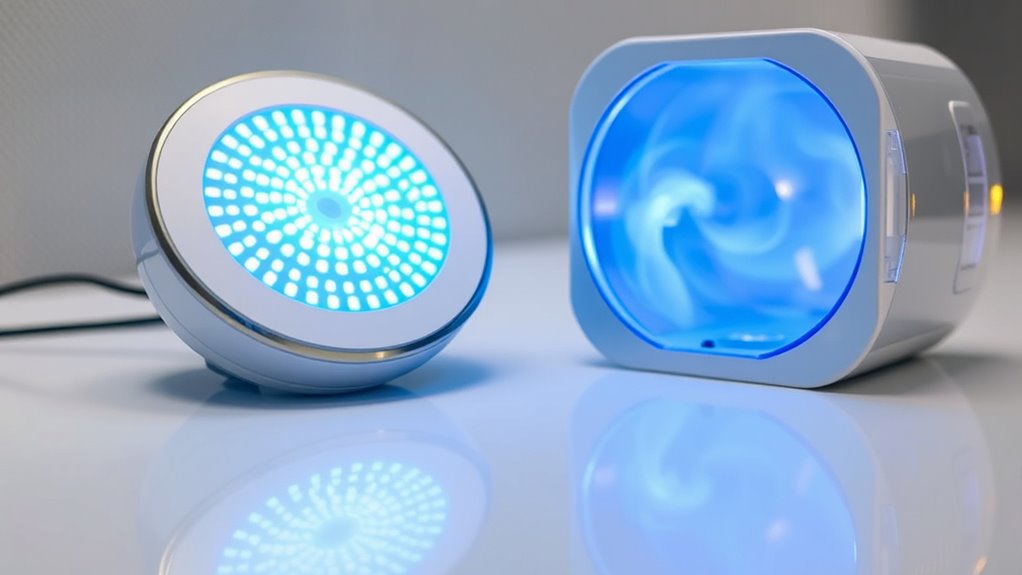

UV and ozone sanitizers each have their pros and cons. UV devices quickly disinfect smooth surfaces by damaging microbes’ DNA but are less effective on porous or hidden areas. Ozone penetrates hard-to-reach spots and air but requires proper handling and ventilation to avoid health risks. While UV methods are safer when used correctly, ozone offers broader coverage. To make the best choice and stay safe, explore more about their differences and proper use.

Get pool and patio gear delivered free — and shop member deals
- Fast, free delivery on millions of items
- Access to Prime Big Deal Days deals on October 6–7
- Prime Video, Amazon Music and more included
Key Takeaways
- UV sanitizers effectively disinfect smooth, exposed surfaces but are limited in reaching porous or hidden areas.
- Ozone sanitizers penetrate hard-to-reach spots and porous surfaces better than UV light.
- UV-C is quick but can cause skin and eye injuries if safety precautions are not followed.
- Ozone can cause respiratory irritation and requires proper ventilation after use for safety.
- Combining both methods maximizes disinfection coverage while ensuring safety and effective microbial inactivation.

UV and ozone sanitizers have become popular solutions for disinfecting surfaces and air, especially as people seek more effective and chemical-free methods. These devices are appealing because they promise to eliminate germs, viruses, and bacteria without relying on traditional cleaning chemicals. However, before you decide to use them, it’s important to understand how they compare in terms of effectiveness and safety considerations.
When it comes to effectiveness comparisons, UV and ozone sanitizers operate differently but can both be highly effective if used correctly. UV sanitizers use ultraviolet light, primarily UV-C, to damage the DNA or RNA of microorganisms, rendering them inactive. Their effectiveness depends on factors like exposure time, distance from the surface, and the intensity of the UV-C light. Ozone sanitizers, on the other hand, produce ozone gas that reacts with cell walls of microbes, destroying them. Ozone can penetrate hard-to-reach areas and porous surfaces better than UV light, making it useful for air and larger spaces. Still, the effectiveness of ozone depends on proper concentration levels and adequate contact time. In general, UV devices excel at disinfecting smooth surfaces directly exposed to light, while ozone can sanitize entire rooms more thoroughly, especially in hard-to-reach spots. Proper handling and understanding of disinfection methods are crucial for safe and effective use.
Safety considerations are essential when using either sanitizer. UV light, especially UV-C, can be hazardous to your skin and eyes if you’re exposed directly. Many UV sanitizers are designed to operate only when enclosed or when turned off during use, but accidental exposure can cause burns or eye injuries. It’s vital to follow manufacturer instructions carefully and avoid looking directly at UV-C lamps. Ozone, although effective at sanitizing air and surfaces, poses inhalation risks. High concentrations of ozone can irritate your respiratory system, cause coughing, or worsen asthma symptoms. Using ozone generators in unventilated spaces can be dangerous, so proper ventilation after treatment is necessary. Both types of sanitizers require proper handling and adherence to safety guidelines to prevent accidental harm.
As an affiliate, we earn on qualifying purchases.
Frequently Asked Questions
Are UV and Ozone Sanitizers Safe for Pets and Children?
UV and ozone sanitizers can be safe for pets and children if used properly, but you should always prioritize pet safety and follow manufacturer instructions. Keep devices out of reach to avoid device hazards like exposure to UV light or ozone fumes. Never leave them unattended during operation, and ensure the room is well-ventilated afterward. These precautions help protect your loved ones while effectively sanitizing your space.
How Long Does It Take for UV and Ozone Sanitizers to Disinfect?
Imagine you’re disinfecting your kitchen after dinner; UV and ozone sanitizers typically take about 10-30 minutes for effective disinfection. The disinfection time varies depending on the device’s strength and the area size. When comparing efficiency, ozone tends to work faster in air and surface sterilization, while UV requires direct exposure. Always follow manufacturer’s instructions for best results and safety.
Can UV and Ozone Sanitizers Be Used on Food Surfaces?
Yes, you can use UV and ozone sanitizers on food surfaces, but you must do so carefully. They help improve food safety by reducing surface contamination, but overuse or improper application might leave residues or affect food quality. Always follow manufacturer instructions, make certain of proper exposure time, and avoid direct UV contact with skin or eyes. Using these sanitizers properly can effectively lower surface contamination and enhance food safety.
Do UV and Ozone Sanitizers Leave Any Harmful Residues?
No, UV and ozone sanitizers don’t leave harmful chemical residues behind. They work by destroying bacteria and viruses through light and ozone exposure, not through chemicals. However, you might need to rinse surfaces afterward to guarantee residue removal of any ozone traces or debris. This way, you can ensure your food surfaces are safe and free from chemical residues, maintaining proper hygiene without compromising safety.
What Maintenance Is Required for UV and Ozone Sanitizing Devices?
You need to regularly maintain your UV and ozone sanitizing devices by replacing the lamps as recommended, usually every 9-12 months, to guarantee effective sterilization. Additionally, perform device calibration periodically to keep it functioning accurately. Keep the units clean and check for any signs of wear or damage. Proper maintenance ensures maximum performance, prolongs device lifespan, and guarantees your sanitized environment remains safe and effective.
Conclusion
So, which sanitizer suits your needs better—UV or ozone? Both have their strengths and weaknesses, but ultimately, it depends on what you’re sanitizing and your priorities. Do you want quick, chemical-free disinfection or a powerful solution for stubborn germs? By understanding their pros and cons, you can make an informed choice. Isn’t it worth investing in the right technology to keep your space safer? Choose wisely, and enjoy peace of mind.
Evergreen bestsellers Picks
bestsellers
As an affiliate, we earn on qualifying purchases.