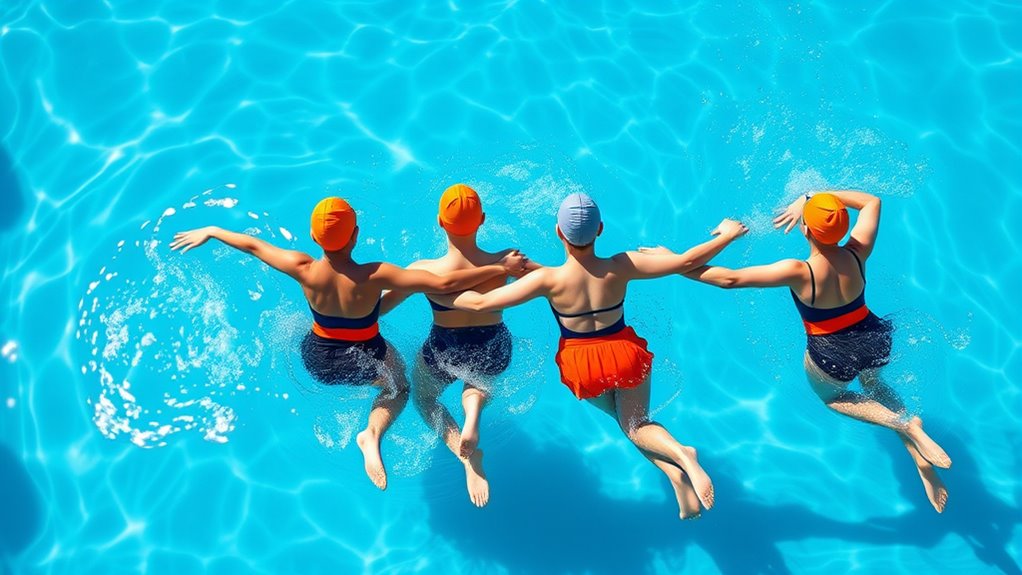

To try synchronized swim elements, start with simple movements like breaststroke, focusing on controlled arm and leg actions. Practice maintaining a steady kick and smooth progressions between strokes for better coordination. Pay attention to your breathing patterns to stay relaxed and keep rhythm, which is key for team harmony. Developing these foundational skills boosts your confidence and technique. Keep exploring, and you’ll uncover more tips to make your swim routines even more impressive.
Key Takeaways
- Practice basic synchronized breathing patterns to improve team cohesion and rhythm.
- Master simple breaststroke arm and leg movements for controlled, graceful routines.
- Focus on smooth transitions between strokes to enhance overall performance quality.
- Use music or timing tools to develop consistency and precision in movements.
- Incorporate drills in different water conditions to build confidence and adaptability.
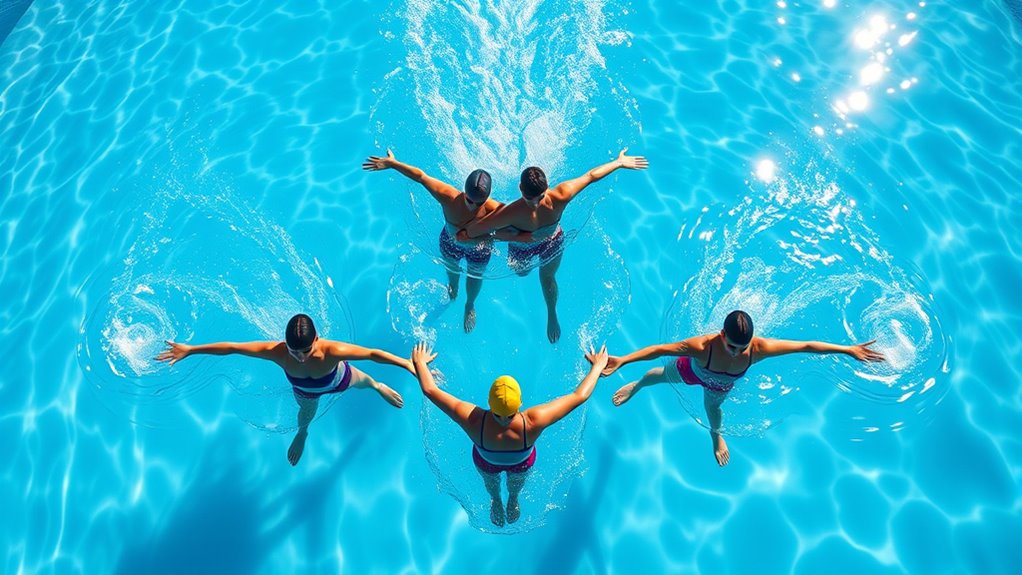
Synchronized swim elements are the building blocks that create stunning, coordinated performances in aquatic competitions. When you’re diving into the world of synchronized swimming, understanding how to execute fundamental elements is essential. One of the most recognizable and versatile movements is the breaststroke, which isn’t just for traditional swimming but also a key component in synchronized routines. Mastering breaststroke techniques helps you develop control over your body, improve your timing, and enhance your ability to stay in sync with your teammates. You’ll focus on streamlined arm movements, precise leg kicks, and smooth transitions between strokes. Proper technique involves keeping your head in a neutral position, maintaining a consistent kick rhythm, and ensuring your movements are fluid and controlled. These details might seem small, but they make a significant difference in creating a polished, harmonious performance. Practicing these skills consistently will also help prevent strain or injury during routines.
Equally important is synchronized breathing patterns, which are crucial for maintaining rhythm and team cohesion during routines. In synchronized swimming, breath control isn’t just about inhaling and exhaling; it’s about doing so in perfect harmony with your teammates. You’ll learn to time your breaths with specific movements, such as when your face is above the water during a stroke or a pose. Practicing synchronized breathing helps you avoid disruptions in your flow, reduces fatigue, and keeps your movements fluid. It’s a skill that requires practice and keen awareness of your body’s rhythm. You’ll often find yourself counting beats or cues from your teammates to stay perfectly in sync, which enhances the overall visual impact of the routine. Developing strong breath control is essential for long routines and maintaining performance quality.
As you develop these elements, focus on consistency and precision. For example, with breaststroke techniques, aim for smooth, controlled movements rather than speed. Speed can lead to sloppy form, while controlled execution looks more elegant and synchronized. Similarly, with breathing patterns, practice in different water conditions to become comfortable maintaining your rhythm under various circumstances. Use drills that emphasize timing and coordination, such as practicing with a stopwatch or with music, to reinforce your sense of rhythm.
Learning these fundamental elements takes patience, but as you improve, you’ll notice the incredible effect they have on your overall performance. When you combine well-executed breaststroke techniques with synchronized breathing patterns, your routines will look seamless and engaging. These skills are the foundation for more advanced elements, but they’re also accessible enough for beginners willing to practice consistently. By focusing on these basics, you set yourself up for success, creating performances that are both technically sound and visually stunning.

LaRandom 1 Set Swimming Pool Training Kit Swim Paddles Pull Buoy and A-Type Kickboard with Nose Clip Ear Plugs for Pool Training Aids for Swimmers & Beginners Stroke Technique(Black and Blue)
- Complete Swimming Training Kit: Includes paddles, kickboard, pull buoy, nose clip, and ear plugs
- Suitable for All Skill Levels: Ideal for beginners and experienced swimmers
- Ergonomic Swim Paddles: Arc-shaped design with water resistance holes
As an affiliate, we earn on qualifying purchases.
As an affiliate, we earn on qualifying purchases.
Frequently Asked Questions
What Safety Gear Is Recommended for Beginners?
For beginners, wearing water shoes is highly recommended to protect your feet from sharp objects and provide better grip. A snug swim cap helps keep your hair out of your face and reduces drag, making swimming easier and safer. Always guarantee your gear fits well and is comfortable. These items enhance safety, boost confidence, and allow you to focus on learning synchronized swimming elements without unnecessary worries.
How Do I Improve Breath Control Underwater?
You might think holding your breath longer is just about willing it, but it’s actually about mastering breath holding techniques and underwater exhalation exercises. To improve, practice slow, controlled breaths before submerging. Focus on relaxing your body and exhaling steadily underwater. Over time, these exercises increase lung capacity and comfort underwater. Remember, patience and consistent practice are key—don’t rush, or you’ll end up gasping, not swimming.
Can I Learn Synchronized Swimming Without a Pool?
You can start learning synchronized swimming without a pool by focusing on dry land training and breath hold exercises. Practice holding your breath and controlling your breathing during workouts, which helps build endurance and lung capacity. You can also work on coordination, flexibility, and timing on land. When you’re ready, gradually shift to water, applying your breath control skills, and practicing synchronized movements in the pool.
What Are Common Mistakes Beginners Make?
You might feel like you’re trying to juggle fire when starting synchronized swimming, but don’t worry—common mistakes include poor coordination and timing errors. You may struggle to sync your movements with teammates or misjudge your timing during routines. These issues often happen because of rushing or lack of focus. Practice patience, work on drills to improve coordination, and watch your timing carefully to become more synchronized and confident in your skills.
How Do I Find Local Synchronized Swim Classes?
To find local synchronized swim classes, start by searching online for swim centers or aquatic clubs in your area. Visit their websites or call them to inquire about training techniques and class schedules. You can also check community centers or local gyms offering water-based activities. When you join, choose appropriate swimwear options that suit synchronized swimming, ensuring comfort and flexibility for practicing routines and building confidence in the pool.
Conclusion
Now that you’ve tried some synchronized swim elements, remember, practice makes perfect. Don’t be discouraged if you don’t get it right away—every expert was once a beginner. Just keep in mind the saying, “Rome wasn’t built in a day.” With patience and dedication, you’ll improve and maybe even surprise yourself. So leap in, have fun, and enjoy the journey of learning these exciting swim moves.