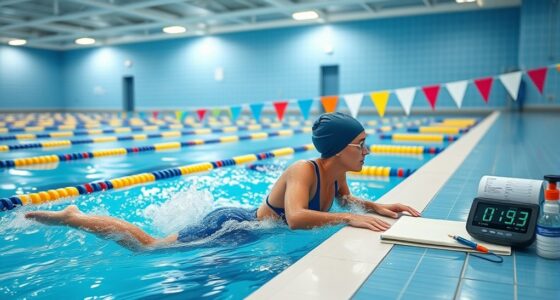
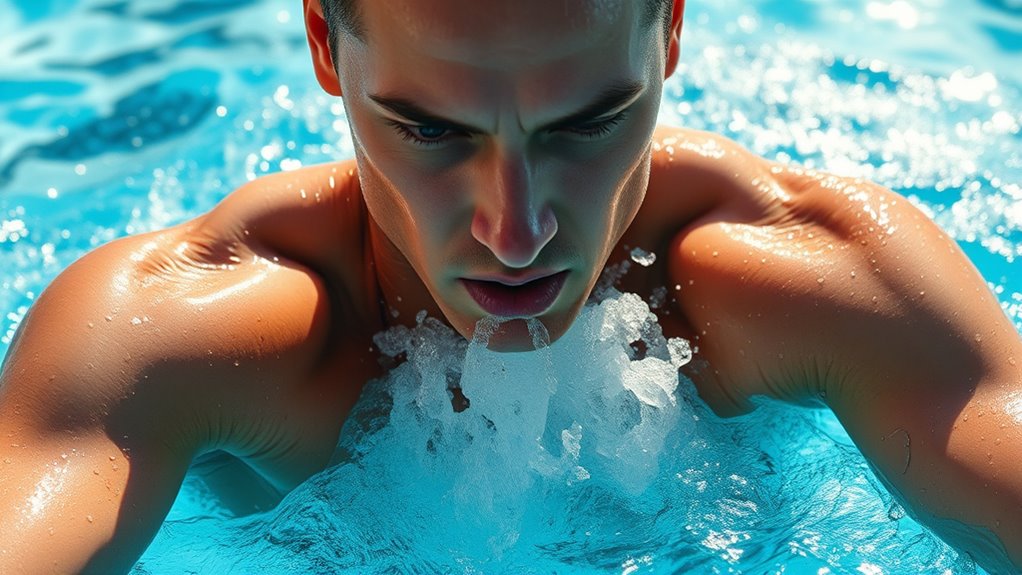

To swim longer, focus on proper breathing techniques like rhythmic breathing—inhale every three strokes and exhale steadily—to improve your lung efficiency. Practice diaphragmatic and pursed-lip breathing off the pool to strengthen your respiratory muscles and increase lung capacity. Maintaining slow, controlled breaths helps reduce fatigue and keeps your body well-oxygenated. Consistent practice and awareness of your breathing pattern will boost endurance over time—discover more methods to extend your swim stamina as you continue.
Key Takeaways
- Practice rhythmic breathing, such as inhaling every three strokes, to establish a steady and automatic breathing pattern.
- Incorporate diaphragmatic and pursed-lip breathing exercises off the pool to enhance lung capacity and respiratory strength.
- Focus on slow, controlled inhalations and exhalations to maximize oxygen intake and reduce fatigue during swimming.
- Increase lung capacity through consistent training, allowing for larger breaths and fewer interruptions during swims.
- Maintain awareness of breathing patterns and practice regularly to improve efficiency, endurance, and overall swimming time.
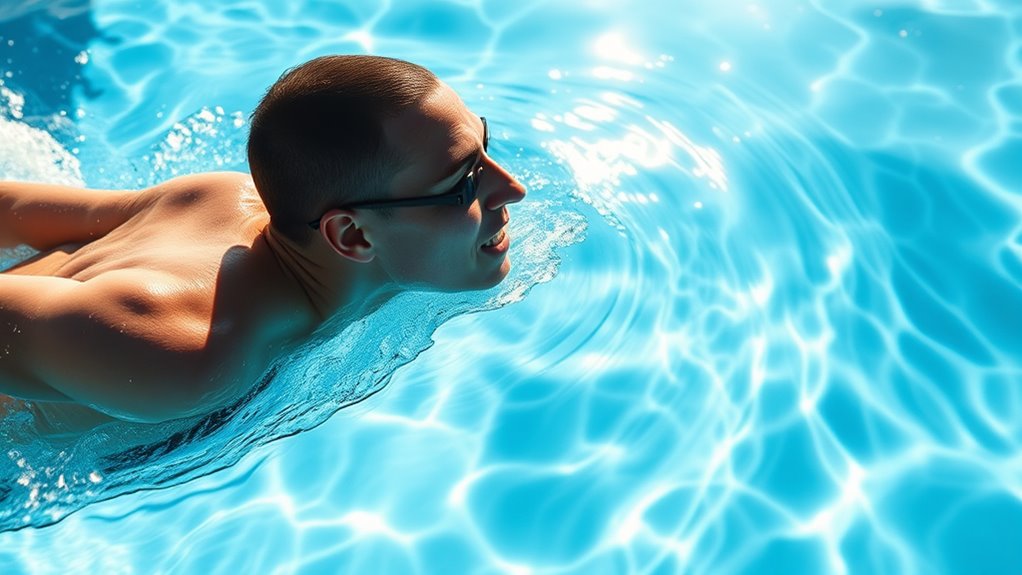
If you want to swim longer without getting tired, mastering proper breathing techniques is essential. Your ability to control your breath directly impacts your endurance in the water. Breath control isn’t just about inhaling and exhaling at the right moments; it’s about managing your breathing so that your lungs work efficiently, helping you conserve energy during your swim. When you develop good breath control, you prevent unnecessary fatigue and keep your body well-oxygenated, which is critical for sustained swimming. It’s also key to increasing your lung capacity over time, allowing you to take in more air with each breath and extend your stamina. Improving lung capacity isn’t about hyperventilating or forcing your lungs to hold more air; it’s about training your respiratory muscles to work effectively, so each breath delivers maximum oxygen with minimal effort.
Master proper breathing to boost endurance and swim longer with less fatigue.
To build better breath control, focus on rhythmic breathing. For example, during freestyle, practice inhaling every three strokes and exhaling steadily during the previous stroke. This pattern helps you establish a consistent rhythm, so your breathing becomes automatic rather than a source of panic or distraction. As you become more comfortable, you can experiment with longer inhales and exhales to maximize oxygen intake and improve your lung capacity. Remember, slow, controlled breaths are more effective than rapid, shallow ones. When you breathe deeply and steadily, you supply your muscles with the oxygen they need, which reduces the buildup of lactic acid and delays fatigue. Engaging in breathing exercises off the pool further enhances your respiratory efficiency.
Strengthening your respiratory muscles also plays a key role. Incorporate breathing exercises off the pool, such as diaphragmatic breathing or pursed-lip breathing, to enhance your lung capacity. These exercises train your diaphragm and intercostal muscles, making your breathing more efficient while swimming. As your lung capacity increases, you’ll notice that you don’t need to breathe as frequently, allowing you to focus more on your stroke and maintain a smooth, steady pace.
Finally, practice regularly and be mindful of your breathing during each session. Pay attention to how your body feels when you breathe deeply versus shallowly. Over time, this awareness will help you adjust your technique instinctively, making your breathing more efficient. With consistent effort, you’ll find yourself swimming longer distances with less fatigue, simply because you’ve optimized your breath control and expanded your lung capacity. This combination is the foundation for improved endurance and a more enjoyable, stress-free swimming experience.
Frequently Asked Questions
How Can I Improve My Lung Capacity for Swimming?
To improve your lung capacity for swimming, focus on lung expansion exercises like deep diaphragmatic breathing. Practice breath retention by gradually increasing the time you hold your breath during training. Incorporate these techniques into your routine to strengthen your lungs, enhance oxygen intake, and boost endurance. Consistent practice helps your body adapt, making it easier to take in more air and stay underwater longer, ultimately improving your swimming performance.
What Exercises Complement Breathing Techniques for Swimmers?
When it comes to boosting your swimming endurance, you need to hit two birds with one stone. Incorporate diaphragmatic exercises to strengthen your core breathing muscles and do breath hold drills to increase your lung capacity. These exercises work hand-in-hand, helping you stay calm under pressure and improve your overall stamina. Keep at it, and you’ll find yourself swimming longer without feeling out of breath.
How Does Breath Control Affect Swimming Speed?
When you control your breath, your swim speed improves because breath timing helps you stay relaxed and focused. Efficient lung use means you get more oxygen with each breath, reducing fatigue. By mastering breath control, you can maintain a steady rhythm, conserve energy, and swim faster. Enhanced lung efficiency and proper breath timing work together to give you better stamina and speed in the water.
Can Breathing Techniques Reduce Swimmer’s Fatigue?
Imagine your energy as a flickering flame; proper breathing techniques can keep it burning bright. Yes, breath hold training and diaphragmatic breathing help reduce swimmer’s fatigue by maximizing oxygen intake and efficiency. These methods slow your breathing, conserve energy, and delay exhaustion. As you practice, you’ll find yourself swimming longer with less effort, transforming fatigue from a foe into a manageable challenge, so you can glide through water with renewed stamina.
Are There Specific Breathing Patterns for Different Swim Strokes?
Yes, different swim strokes benefit from specific breathing patterns. For freestyle, rhythmic breathing with diaphragmatic breathing helps you stay relaxed and maintain endurance. Breaststroke and butterfly require more deliberate patterns, often with breath holds or bilateral breathing. Practicing diaphragmatic breathing during each stroke allows you to control your breath better, reducing fatigue and improving efficiency. Adjust your breathing pattern based on the stroke to optimize performance and conserve energy.
Conclusion
By practicing these breathing techniques, you’ll likely find yourself swimming longer and more comfortably. It’s a common belief that proper breathing can substantially boost endurance, and many swimmers swear by it. While individual results vary, consistent practice helps your body adapt and improves your overall stamina. So, give these methods a try—your lungs and your swim times will thank you. With patience and persistence, you’ll enjoy the water even more.