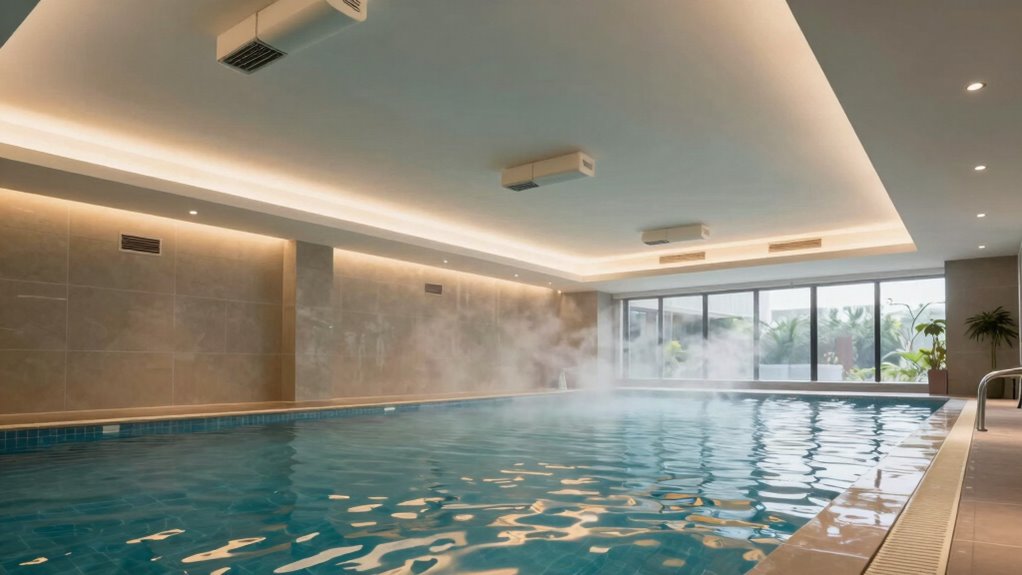
To keep your indoor exercise pool safe and comfortable, guarantee proper ventilation that controls humidity and removes airborne contaminants like chlorine fumes and bacteria. Use mechanical systems such as exhaust fans and HVAC units strategically placed near water surfaces for effective air exchange. Regularly monitor humidity and air quality, adjusting ventilation settings accordingly. Good airflow prevents mold, fogging, and respiratory issues, creating an inviting space for workouts. If you want to learn more about optimizing your pool environment, keep exploring these essential points.
Key Takeaways
- Proper ventilation removes airborne contaminants like chlorine fumes and bacteria, ensuring a safe breathing environment.
- Humidity control between 50-60% prevents mold growth and structural damage, enhancing comfort and safety.
- Mechanical systems like exhaust fans and HVAC units should be strategically placed for effective air exchange.
- Regular monitoring and sensor-based adjustments maintain optimal air quality and humidity levels.
- Good air circulation and filtration extend the lifespan of the facility and improve overall user comfort.

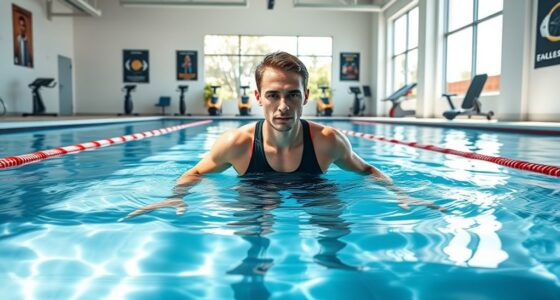
Proper indoor ventilation is essential for maintaining a safe and comfortable environment around exercise pools. When you’re working out in an indoor pool area, the quality of the air you breathe plays a crucial role in your overall well-being. Good ventilation helps to remove airborne contaminants, such as chlorine fumes, bacteria, and other pollutants that can accumulate from frequent use and humidity. Without proper airflow, these substances can linger in the air, potentially causing respiratory irritation or worsening asthma symptoms.
Humidity control is another vital aspect of effective indoor ventilation. Exercise pools naturally generate a lot of moisture, which can lead to high humidity levels. If the air becomes too moist, it creates an environment ripe for mold growth, structural damage, and unpleasant odors. Maintaining optimal humidity levels—generally between 50 and 60 percent—helps prevent these issues and keeps the space more comfortable. When you have good humidity control, your skin feels less sticky, and the air remains fresher, making your workouts more enjoyable.
To achieve these goals, you need a well-designed ventilation system that continuously exchanges indoor air with fresh outdoor air. Mechanical ventilation, such as exhaust fans and HVAC systems, plays a key role here. These systems should be capable of filtering out contaminants and controlling humidity levels effectively. Ventilation fans should be strategically placed to remove moist, stale air from the pool area, especially near the surface of the water where humidity is highest. An efficient system will also bring in fresh air from outside, diluting indoor pollutants and maintaining healthy air quality. Proper air exchange is critical in preventing the buildup of harmful vapors and maintaining a balanced environment. Incorporating ventilation technology that responds to real-time air quality data can further enhance system performance.
It’s important to monitor humidity levels regularly and adjust the ventilation settings as needed. Many modern systems include sensors that automatically respond to changes in humidity and air quality, ensuring ideal conditions at all times. Additionally, maintaining proper air circulation helps prevent the buildup of chlorine and other chemical vapors, which can be irritating or harmful over time. Good ventilation also reduces fogging of windows and mirrors, which can be a safety hazard and hinder visibility during your workouts. Incorporating humidity regulation technology can further optimize comfort and safety in the space. Proper HVAC system design considering heat pumps and refrigerants can also contribute to maintaining optimal indoor conditions efficiently.
In essence, understanding the importance of air quality and humidity control is fundamental when designing or managing an indoor exercise pool. It’s not just about comfort; it’s about safeguarding your health and extending the lifespan of the facility. By investing in a reliable ventilation system and staying vigilant about air quality and humidity levels, you create a safer, more inviting environment where you can focus on your fitness goals without worry.

VIVOSUN 4" Inline Fan &Speed Controll 130 CFM Exhaust Fan for Home Workshop
- High Airflow Capacity: Delivers up to 130 CFM airflow
- Energy-Efficient EC Motor: Low energy consumption and long lifespan
- Quiet Operation: Operates at just 26dB(A)
As an affiliate, we earn on qualifying purchases.
As an affiliate, we earn on qualifying purchases.
Frequently Asked Questions
How Often Should Indoor Ventilation Systems Be Inspected and Maintained?
You should inspect and maintain your indoor ventilation system at least every 3 to 6 months to guarantee peak air quality and odor control. Regular checks help prevent mold, excess humidity, and stale air, which can affect your workout environment. Keep filters clean and replace them as needed. Proper maintenance ensures your exercise pool space stays fresh, safe, and comfortable, encouraging better workouts and healthier air quality.
Can Poor Ventilation Cause Health Issues for Pool Users?
Yes, poor ventilation can harm your health by reducing air quality and increasing airborne contaminants. When ventilation is inadequate, you may breathe in higher levels of chlorine fumes, humidity, and other pollutants, which can irritate your respiratory system. Over time, this can lead to respiratory issues like asthma or allergies. Ensuring proper ventilation keeps the air fresh, supports respiratory health, and creates a safer, more comfortable environment for pool users.
What Are the Best Ventilation Options for Small Indoor Pools?
For small indoor pools, the best ventilation options include installing a dedicated dehumidification system combined with an exhaust fan. These improve air quality by removing humidity and odors effectively. You might also consider an energy-efficient heat recovery ventilator (HRV) to bring in fresh air while conserving energy. Proper ventilation guarantees odor control and maintains a comfortable environment, preventing mold growth and reducing health risks for pool users.
How Does Humidity Control Relate to Ventilation in Exercise Pools?
Humidity control acts like the silent guardian of air quality, ensuring your indoor exercise pool remains safe and comfortable. Proper ventilation with humidity regulation prevents excess moisture, which can foster mold and mildew. By maintaining balanced humidity levels, you promote healthier air, reduce corrosion, and improve overall air quality. This seamless connection keeps your space inviting, safe, and enjoyable, allowing you to focus on your workout without worries about moisture or air contamination.
Are There Eco-Friendly Ventilation Solutions for Indoor Pools?
Yes, there are eco-friendly solutions for indoor pool ventilation. You can opt for advanced ventilation technology that maximizes energy efficiency while maintaining air quality. Look for systems with heat recovery, variable speed fans, and low energy consumption. These eco-friendly solutions reduce your carbon footprint and energy bills, ensuring your exercise pool stays well-ventilated without harming the environment. Investing in such technology benefits both your health and the planet.
Conclusion
Proper indoor ventilation keeps your exercise pool safe and enjoyable. Did you know that poorly ventilated pools can increase humidity levels by up to 30%, leading to mold and bacteria growth? Ensuring good airflow reduces these risks and maintains air quality. By prioritizing effective ventilation, you create a healthier environment for your workouts and extend the lifespan of your pool equipment. Stay proactive about ventilation—your health and your pool will thank you!