TL;DR

Get pool and patio gear delivered free with Prime
- Fast, free delivery on millions of items
- Prime Video, Amazon Music and more included
- Member-only deals all year
Designer Rachel Platt reshaped a South Buckinghamshire garden into a year-round outdoor space with an unheated natural swimming pool, edible planting and wildlife habitat. The project retains existing ponds, terrace and valued plants while connecting the garden to the surrounding fields and hedgerows.
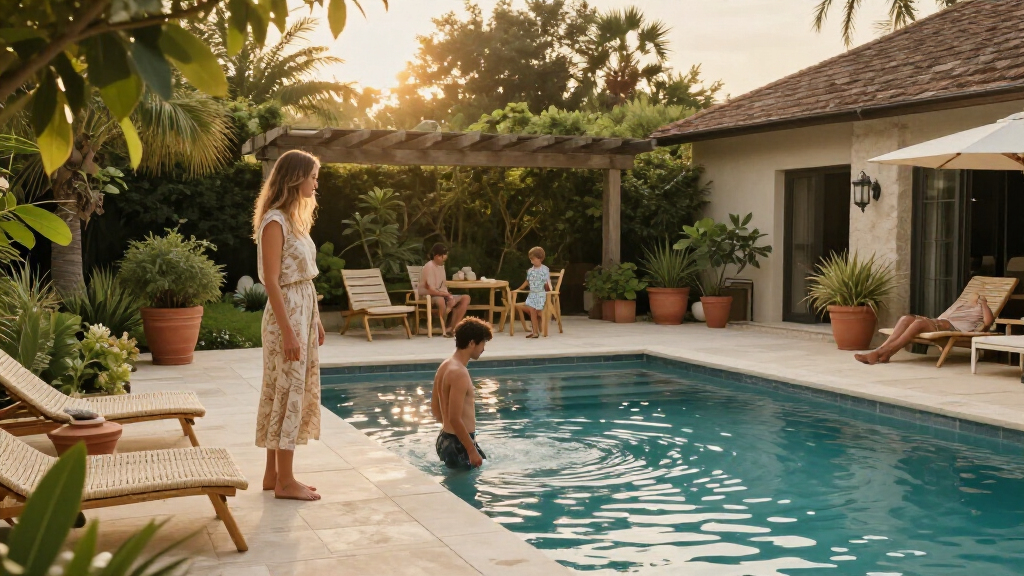
Rachel Platt Garden Design has reworked an underused garden in South Buckinghamshire into a landscape centered on an unheated natural swimming pool, wildlife habitat and space to grow food. The design responds to the owners’ brief for a garden that would connect with the surrounding countryside while making outdoor swimming and everyday use part of life at home, according to a report by Homes and Gardens.
The project’s layout shifts from stronger geometry near the house to softer forms farther out, including a sweeping chalk meadow and an experimental edible hedge towards the fields. The pool, designed with Ellicar Natural Pools, has a clear swimming area and a separate planted regeneration zone. Aquatic plants in that zone provide hydrobotanical filtration, the source report says.
The pool was not part of the design in its current form from the outset. Platt’s original proposal called for a formal, linear pond positioned to reflect a mature birch tree seen from the home. Existing drainage and a suspected utility service running across the garden prompted a redesign as a circular pool. The report does not specify the pool’s dimensions, cost or construction date.
Planting around the water includes species selected for seasonal interest and wildlife value, such as water mint, native flag irises, marsh marigolds and purple loosestrife. The clients reported seeing dragonflies and bats around the pool, as well as frogs, toads and newts reproducing in the garden’s ponds. Those wildlife observations are the owners’ account as relayed by the publication, not an independent ecological survey.
The design combines two uses that can be difficult to balance: a place for people to swim and a landscape intended to support wildlife. Its separate swim and regeneration zones are intended to keep the swimming area clear while aquatic planting filters the water in the adjoining habitat zone. The report does not provide water-quality testing or technical performance data, so the filtration description should be understood as a design feature rather than an independently verified result.
For the owners, the pool also changes how they use their property. They previously drove elsewhere to swim in rivers and spent relatively little time in their own garden. They told Homes and Gardens that the pool now offers an escape through the seasons. The project pairs that personal benefit with habitat, food production and outdoor gathering areas, making the garden serve several everyday functions rather than a single recreational one.
Products Worth Considering

Greenworks 48V Cordless Lawn Care Combo Kit with 20-Inch Mower, Trimmer, Blower, Batteries, and Charger

Orbit B-hyve Smart Indoor/Outdoor 12-Zone Sprinkler Controller

Garvee 6x8ft Walk-in Greenhouse with Aluminum Frame and Polycarbonate Panels
As an affiliate, we earn on qualifying purchases.
From Formal Pond to Meadow Edge
The clients, both employed in the veterinary sector, asked for a biodiverse garden that would support wildlife and provide places to swim, grow food, entertain and spend more time outdoors. They also wanted the landscape to relate to nearby rolling fields and hedgerows. Platt’s design uses a gradual change in form and planting to connect the house to that wider landscape.
Existing features were retained where possible. These include the terrace and two ponds, along with plants such as the clients’ fig tree, lily of the valley, raspberries and rhubarb. Beyond the pool, a mixed edible hedge combines hazel, hawthorn, blackberry, chokeberry, damson, pear and serviceberry. It supplies blossom and fruit while creating structure and habitat along the approach to the meadow.
The garden also contains a raised kitchen garden, a grapevine pergola, a firepit with boulder seating and an outdoor shower. The owners say they leave the meadow uncut through winter to provide seeds and cover for insects, birds and small mammals. Autumn interest was another stated preference, addressed with ornamental grasses, perennials and shrubs including burning bush, selected for its red fall color.
“The garden has become a haven, a place to find balance and feel miles away from everything… And our natural pond is a total escape all through the seasons.”
— The garden’s owners, quoted by Homes and Gardens
Project Data and Wildlife Evidence
Homes and Gardens describes the completed design but does not state when construction finished or provide a project budget, pool measurements or detailed maintenance requirements. It is also unclear how often the owners swim during winter or what water-temperature conditions they experience. The account of wildlife comes from the clients; no species survey, monitoring period or independent ecological assessment is included in the source material.
How the Garden Develops Over Time
The report presents the garden as an established project rather than announcing a future construction phase. Its next changes are likely to come through seasonal growth: the edible hedge and kitchen garden producing fruit and vegetables, and the meadow and perennial planting changing through the year. The owners say the meadow is left uncut in winter, while the planting around the pool is intended to flower from spring into early autumn.
No further work, monitoring plan or follow-up date is announced. Whether the pool’s wildlife use and natural filtration will be documented over time remains unconfirmed; the source offers no next milestone beyond the garden’s continued use and seasonal development.
Key Questions
Who designed the South Buckinghamshire garden?
Rachel Platt Garden Design led the redesign. Ellicar Natural Pools collaborated on the natural swimming pool.
What makes the swimming pool natural?
The pool has a clear swim zone and a planted regeneration zone. The report says aquatic planting in the regeneration area provides hydrobotanical filtration; it does not provide independent water-quality results.
What wildlife have the owners seen?
The owners told Homes and Gardens they had seen frogs, toads, newts, dragonflies, bats and a water snake. These are owner-reported observations, not findings from a published wildlife survey.
Why was the pool changed from a linear to a circular design?
Drainage constraints and a suspected utility service crossing the garden led the team to revise the original formal, linear pond concept as a circular pool.
What other features are in the garden?
The garden includes a raised kitchen garden, edible hedge, chalk meadow, grapevine pergola, firepit and outdoor shower, alongside the pool and retained ponds.
Source: rss