TL;DR

Get pool and patio gear delivered free with Prime
- Fast, free delivery on millions of items
- Prime Video, Amazon Music and more included
- Member-only deals all year
A Homes and Gardens report recommends adapting peace lily care in November as shorter days, cooler weather and indoor heating change growing conditions. Check soil before watering, provide bright indirect light, avoid drafts and direct heat, and pause fertilizer through winter.
Homes and Gardens has published November care guidance for peace lilies, advising owners to adjust light, watering and placement as days shorten and indoor heating begins. The report says keeping the tropical houseplants away from cold drafts and hot, dry air, while reducing fertilizer as growth slows, can help them remain healthy through winter.
The report recommends moving a peace lily out of a dim summer location if needed, placing it where it receives bright, indirect light. An east-facing window is suggested as one option; a position set back from a south- or west-facing window may also work. The article cautions against strong direct sun, which can scorch foliage. Where daylight is limited, it says a grow light is an option, rather than a requirement.
Watering should respond to the plant’s soil and slower winter growth, not a fixed calendar. Homes and Gardens advises allowing the top inch of soil to dry slightly before watering, then letting excess water drain. Peace lilies may droop when thirsty, but the report says to check soil rather than rely on drooping alone, since watering too frequently can leave the roots in waterlogged soil.
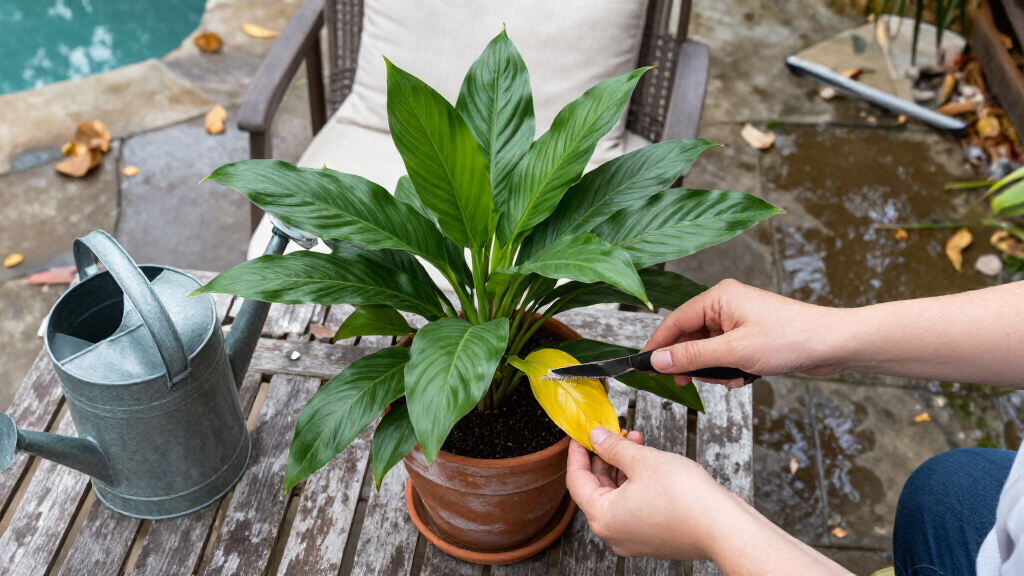
For indoor placement, the article gives an ideal temperature range of 65°F to 80°F and advises avoiding drafty windows and exterior doors, radiators, fireplaces and heating vents. Its other suggested jobs include wiping dust from leaves with a soft, damp cloth, removing dead or badly damaged foliage with clean scissors, and considering humidity if indoor air becomes dry. It advises holding off on fertilizer through winter and resuming in early spring when fresh growth appears.
Winter Care Changes for Peace Lilies
These steps matter because November changes the conditions indoors as well as outdoors: daylight decreases, plant growth may slow, and home heating can create dry air or uneven temperatures. A routine suited to spring and summer may not suit a plant using water more slowly in winter. Checking soil before watering and keeping the plant away from direct heat can help owners avoid common sources of stress.
The guidance is practical rather than a guarantee that a plant will flourish. Peace lilies can respond differently depending on the home, the plant’s condition and the amount of light and humidity available. The main takeaway is to adapt care to the plant’s environment, rather than make every change on a set date or follow a rigid watering schedule.
Products Worth Considering

Orbit B-hyve XR 16-Zone Indoor/Outdoor Smart Sprinkler Timer
Orbit B-hyve XR 8-Zone Indoor/Outdoor Smart Sprinkler Controller

Orbit B-hyve Smart Indoor/Outdoor 12-Zone Sprinkler Controller
As an affiliate, we earn on qualifying purchases.
Why November Changes Indoor Care
Peace lilies are tropical plants that naturally grow beneath larger trees, according to the report, which explains their preference for indirect light rather than intense direct sun. Shorter days can reduce the light reaching a plant indoors, making a brighter position useful, provided its leaves are not exposed to harsh sunlight.
The heating season also changes the air around houseplants. Warm air from a vent or radiator can dry leaves and soil, while cold drafts can cause sudden temperature shifts. The report says peace lilies appreciate higher humidity but can adapt to average household conditions; grouping plants or using a humidifier are options when the air is especially dry. It does not provide a specific humidity target.
““Rather than following a fixed schedule, check the soil first.””
— Homes and Gardens
Conditions Vary From Home to Home
The report gives general care guidance, not a forecast for how an individual plant will respond. It does not specify a humidity level, a precise watering interval, or how much supplemental light a plant needs; those factors depend on the home and the plant. The temperature range is presented as an ideal, but the source does not explain how a peace lily will respond to brief departures from it.
Brown leaf tips can have several possible causes, according to the article, including low humidity, inconsistent watering and mineral buildup from tap water. Their appearance alone does not establish which issue is responsible. The guidance also does not claim that any one adjustment guarantees winter survival or flowering in spring.
Monitor the Plant Through Winter
Owners can use the recommendations as a starting point: find a stable spot with indirect light, inspect soil before watering, and check the plant periodically for drying, yellowing leaves or pests. If the leaves develop brown tips or the plant droops, the report suggests considering several possible causes instead of automatically adding water.
Continue to limit fertilizer while growth is slow, then look for fresh growth in early spring as a cue to resume feeding. The article does not set a calendar date for that change, so the plant’s visible growth and conditions at home remain the relevant signals.
Key Questions
How often should I water a peace lily in winter?
The report does not set a weekly schedule. Check the soil and water when the top inch has dried slightly, allowing excess water to drain.
Where should I put a peace lily in November?
Choose a place with bright, indirect light and a relatively steady temperature. Keep it away from cold drafts, radiators and heating vents, and avoid strong direct sun.
Should I fertilize a peace lily during winter?
Homes and Gardens advises pausing fertilizer through winter as growth slows, then resuming in early spring when fresh growth appears.
What can cause brown tips on peace lily leaves?
The report lists low humidity, inconsistent watering and mineral buildup from tap water as possible causes. Brown tips alone do not identify which one is affecting the plant.
Does a peace lily need a humidifier in winter?
Not necessarily. The report says peace lilies can adapt to average household conditions, but a humidifier or grouping plants may help if indoor air is particularly dry.
Source: homesandgardens.com