
TL;DR

Get pool and patio gear delivered free with Prime
- Fast, free delivery on millions of items
- Prime Video, Amazon Music and more included
- Member-only deals all year
A Homes & Gardens report says gardeners in U.S. zones 5–8 should prioritize tender houseplants and tropical plants as autumn frost approaches. Experts cited advise moving many of these plants indoors when nighttime temperatures near 50°F and using breathable covers for vulnerable plants that cannot be moved.
A Homes & Gardens report advises gardeners to protect tender houseplants and tropical plants first as autumn frost approaches, recommending that many be moved indoors when nighttime temperatures begin nearing 50°F. The guidance is aimed at gardeners in U.S. hardiness zones 5–8, where first frosts commonly arrive in October or early November, though local timing varies.
The report puts houseplants that spent summer outdoors near the top of the list, along with tender plants that can be brought inside for winter. Examples include pelargoniums, coleus, begonias, bromeliads, succulents, Boston ferns and pothos. It says tropical houseplants can suffer cold damage below 50°F, while some succulents and cacti may tolerate brief dips below that mark. The report nevertheless recommends moving plants before temperatures fall further rather than relying on that tolerance.
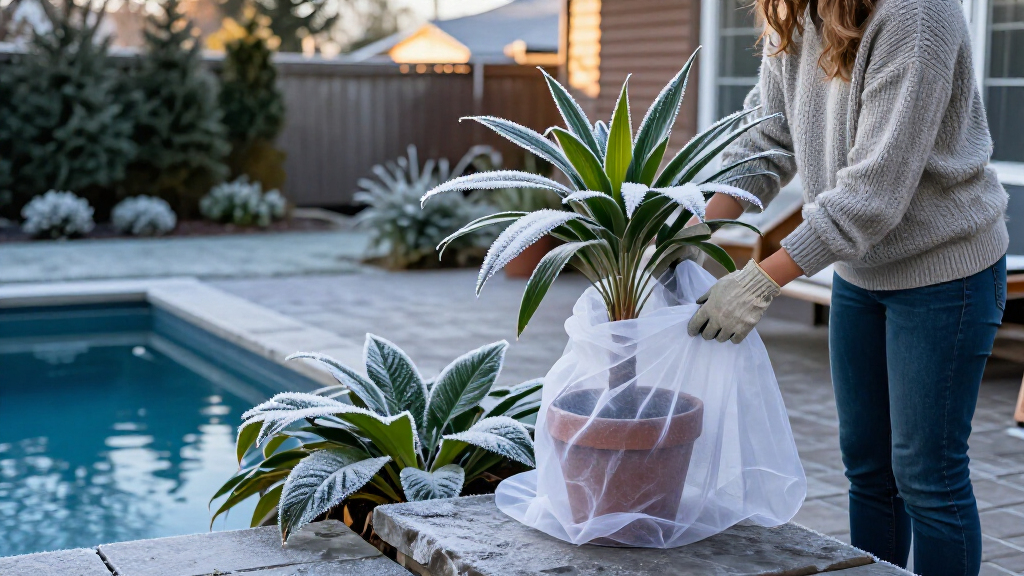
For garden plants that cannot be moved, the report identifies frost cloth, cloches and breathable fabric such as bedsheets as protective options. Tropical and subtropical outdoor plants—including banana trees, tree ferns, aeonium, plumeria and bird of paradise—are also named as candidates for winter protection or indoor storage. If a frost warning arrives unexpectedly, garden designer Mirela Bajic recommends moving what can be moved and covering plants that must remain outside.
Not every plant needs to be lifted before the first frost. The report says gardeners can wait until after that initial frost to dig up and store dahlias, cannas, gladioli, elephant’s ear and caladium. That advice is distinct from the earlier move indoors recommended for tender plants that need protection before cold weather arrives.
Why the 50°F Threshold Matters
The report’s practical distinction is between plants vulnerable to cool nights and plants that can wait until after the first frost for seasonal storage. Acting before temperatures reach freezing may reduce cold stress or damage to tender plants, while checking forecasts gives gardeners a chance to move containers before an abrupt temperature drop.
The advice also offers a fallback for plants that cannot be transported: cover them with breathable material. This is especially relevant during surprise cold snaps, when there may be little time to move every pot or protect every garden bed. The report does not provide controlled comparisons of cover types, so it presents them as practical options rather than ranking one as universally most effective.
As an affiliate, we earn on qualifying purchases.
Fall Frost Timing in Zones 5–8
Homes & Gardens says first frosty nights typically occur in October and early November for many gardens in U.S. zones 5–8. Those are broad seasonal patterns, not a forecast for a particular town: frost dates depend on local conditions and can shift from year to year. The report recommends preparing a few weeks ahead of an anticipated frost and monitoring local forecasts.
It also advises checking outdoor houseplants for insects before bringing them inside, with insecticidal soap or neem oil offered as possible treatments. Michael Jesiolowski, Plant Clinic manager at The Morton Arboretum, gives the temperature cue for moving summer houseplants indoors. His guidance is part of the source report; readers should consider the needs of individual plants and local weather rather than treating one temperature as a precise cutoff for every species.
“If I only had ten minutes before a frost, tender plants come first. Pelargoniums, tender salvias, young citrus, a light frost can wreck these outright, not just knock a few leaves off.”
— Mirela Bajic, senior garden designer at House Designer
Local Frost Dates and Plant Needs
The report does not give a location-specific frost forecast, and its October-to-early-November timing applies broadly to zones 5–8 rather than every garden within them. It also does not set out species-by-species temperature limits or quantify how much protection each cover provides. Gardeners should check local forecasts and account for the plant’s particular needs; the 50°F guidance is a precautionary cue in the source, not a guarantee that every plant will be harmed below it.
The material does not establish that one covering method is most effective in every situation. Frost cloth is recommended by a quoted contributor, while cloches and bedsheets are also listed. Their suitability can depend on the plant and conditions, details the report does not compare.
Prepare Before the Forecast Turns
Gardeners can start by identifying tender containers and tropical plants, checking them for insects, and making room indoors before nighttime temperatures approach 50°F. They can then monitor local forecasts and arrange breathable covers for vulnerable plants that must remain outside. Plants intended for lifting and winter storage, including dahlias and cannas, can be handled after the first frost, according to the report.
The next step depends on local weather: move plants ahead of a predicted cold snap, and revise plans if the forecast changes. The source report does not announce a formal schedule or new scientific findings; it provides seasonal guidance for gardeners preparing for fall frost.
Key Questions
Which plants should be moved indoors first?
The report prioritizes tender houseplants and tropical plants, including summer-outdoor houseplants such as pelargoniums, coleus, begonias, bromeliads, Boston ferns and pothos.
When should summer houseplants come inside?
Michael Jesiolowski advises bringing them in a few weeks before a potential frost, using nighttime temperatures near 50°F as a cue. Local forecasts and the needs of individual plants matter.
What can protect plants that cannot be moved?
The report lists frost cloth, cloches and breathable fabric, including bedsheets. It does not compare their performance across all plants and conditions.
Should dahlias be lifted before the first frost?
The report says to wait until after the first frost before lifting and storing dahlias. It gives similar timing for cannas, gladioli, elephant’s ear and caladium.
Source: rss
Halloween Picks
halloween
As an affiliate, we earn on qualifying purchases.