
TL;DR

Get pool and patio gear delivered free with Prime
- Fast, free delivery on millions of items
- Prime Video, Amazon Music and more included
- Member-only deals all year
Santiago has initiated a city-wide mural project to revitalize neighborhoods and strengthen community ties. The program involves painting public spaces with vibrant colors, aiming to recover neglected areas. The initiative is ongoing, with positive community feedback but some questions remain about long-term impact.
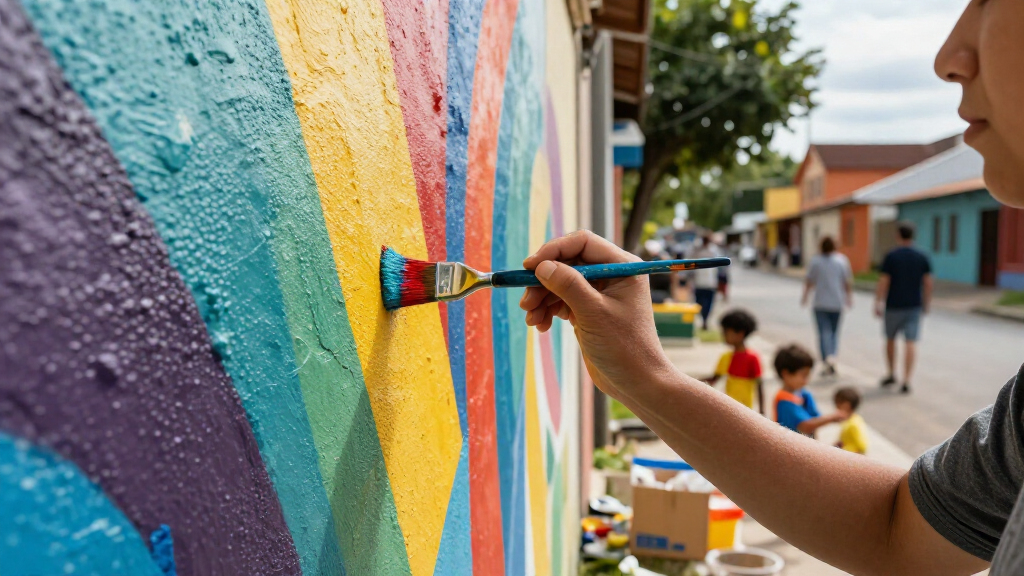
Santiago has begun a city-wide initiative to paint neighborhoods with vibrant murals, aiming to recover neglected spaces and foster community life. The project, led by local authorities and supported by Enel Chile, seeks to transform urban areas through public art, with the goal of strengthening neighborhood identity and social cohesion.
The initiative involves painting murals on walls in various districts across Santiago, focusing on areas that have experienced urban decay and social disconnection. According to Enel Chile, which supports the project, the effort aims to ‘bring color and life back to neighborhoods, making public spaces more welcoming and engaging.’ The program has already completed several murals, with plans to expand to more districts over the coming months.
Community involvement is a key aspect of the project. Local residents, artists, and volunteers have participated in the painting process, fostering a sense of ownership and pride. Santiago’s mayor emphasized that the murals are not only aesthetic improvements but also tools for social recovery, stating, ‘This project is about rebuilding community spirit and reclaiming our shared spaces.’
Initial reactions from residents have been positive, with many expressing enthusiasm about the visual transformation and increased community activity. However, some critics question whether murals alone can address deeper issues of urban neglect and social inequality, noting that infrastructure and social services are also essential for sustained recovery.
This initiative demonstrates how public art can serve as a catalyst for urban renewal and community engagement. By transforming neglected spaces with vibrant murals, Santiago aims to foster social cohesion, reduce urban decay, and promote local pride. The project reflects a broader trend of using art as a tool for social and urban revitalization, which could influence similar efforts in other cities. However, the long-term effectiveness of murals in addressing underlying social issues remains to be seen, making ongoing evaluation important.
As an affiliate, we earn on qualifying purchases.
Background of Santiago’s Urban Renewal Efforts
Santiago has faced challenges related to urban decay, social inequality, and disconnection in certain neighborhoods, particularly in historically neglected districts. Past efforts to improve infrastructure and social services have had mixed results, prompting the city to explore innovative approaches. The current mural project is part of a broader strategy to combine urban beautification with social engagement, inspired by successful programs in other Latin American cities. The initiative is also supported by public-private partnerships, including Enel Chile, which has invested in cultural and social projects aimed at revitalizing urban spaces.
Historically, Santiago has used murals and street art as expressions of cultural identity and social commentary, but recent efforts have focused more explicitly on neighborhood recovery. The current campaign launched in early 2024 builds on these precedents, emphasizing community participation and urban transformation as key objectives.
“This project is about rebuilding community spirit and reclaiming our shared spaces through art and participation.”
— Santiago Mayor
Long-Term Impact and Sustainability of Murals
While initial reactions are positive, it is not yet clear whether the murals will have lasting effects on neighborhood recovery or social cohesion. Questions remain about maintenance, funding, and whether murals can address deeper structural issues like poverty and infrastructure neglect. Experts caution that murals should be part of a broader, sustained effort to improve urban living conditions, and ongoing evaluation will be necessary to measure success.
Expansion Plans and Community Feedback
The city plans to continue expanding the mural project to additional neighborhoods over the next year. Authorities also intend to involve more local residents and artists in future phases, aiming to deepen community engagement. Monitoring and evaluation of the project’s social and urban impact are expected to inform potential scaling and integration with other urban renewal strategies. Further funding and partnerships are also under discussion to ensure the sustainability of the initiative.
Key Questions
How are neighborhoods selected for murals?
Neighborhoods are chosen based on criteria such as urban decay levels, community interest, and strategic urban renewal priorities, with local input guiding the selection process.
Who creates the murals in Santiago?
Local artists, community members, and volunteers collaborate on designing and painting the murals, fostering community ownership and cultural expression.
Will the murals be maintained over time?
The city and supporting organizations plan to establish maintenance programs, but long-term sustainability will depend on ongoing funding and community involvement.
Are there plans to measure the project’s success?
Yes, authorities intend to evaluate social and urban impacts through surveys, community feedback, and urban development metrics over the coming year.
Can murals alone solve urban neglect issues?
No, murals are part of a broader strategy that includes infrastructure improvements and social programs; they are meant to complement these efforts.
Source: local
Columbus Day / Indigenous Peoples' Day Picks
long weekend sales
As an affiliate, we earn on qualifying purchases.