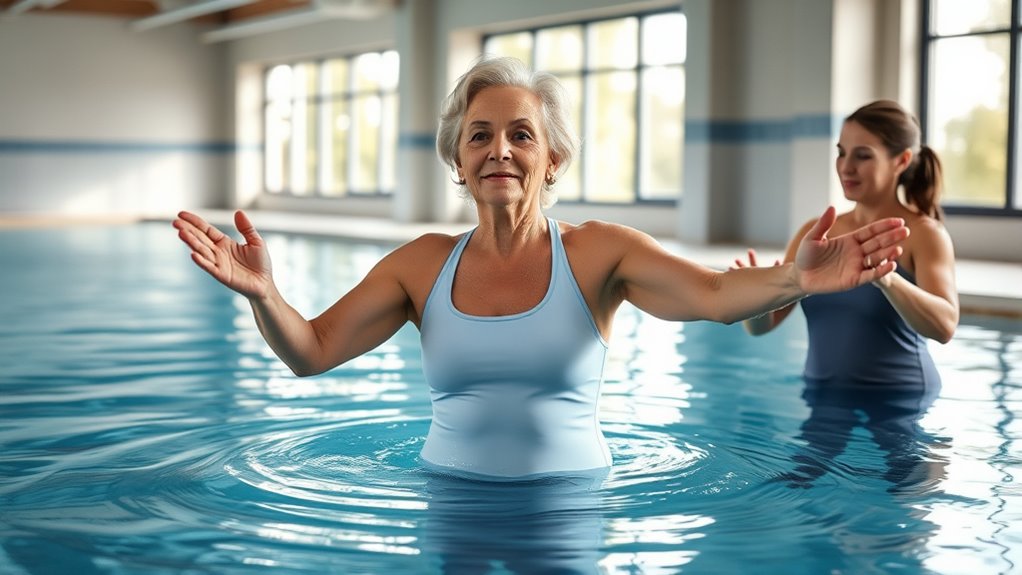

To improve joint health with low-impact water exercises, focus on gentle movements that use water’s resistance and buoyancy. Exercises like water walking, leg lifts, and stretching help strengthen muscles, increase flexibility, and reduce joint strain. Warm water soothes soreness and eases movement, making it ideal for arthritis or recovery. You’ll find that this supportive environment encourages consistent activity without pain. Keep exploring to learn more ways to make your aquatic workouts both safe and effective.
Key Takeaways
- Water’s buoyancy reduces joint stress, enabling gentle movements that improve flexibility and mobility without pain.
- Aquatic resistance enhances muscle strength around joints safely, supporting joint stability and function.
- Warm water soothes sore joints, decreases inflammation, and facilitates comfortable stretching and movement.
- Low-impact water exercises promote consistent activity, aiding in injury recovery and long-term joint health.
- Gentle stretching in water increases joint range of motion while minimizing risk of overstretching or injury.
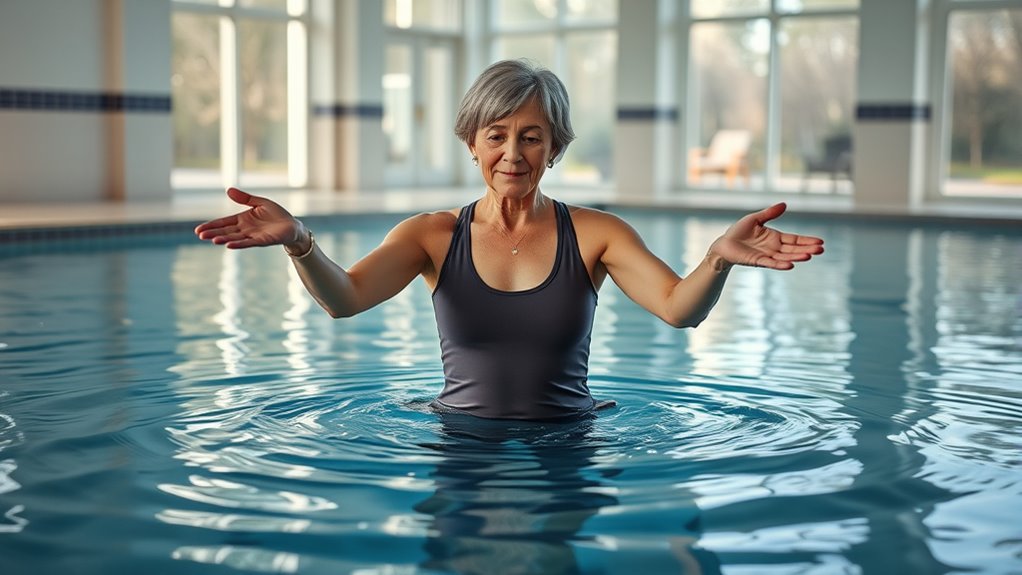
Are water exercises an effective way to improve joint health? Absolutely. When you perform exercises in water, you harness the power of aquatic resistance, which provides a gentle yet effective way to strengthen muscles around your joints without putting undue stress on them. Water’s natural resistance means every movement you make is met with a supportive force that challenges your muscles in a controlled manner. This resistance is unlike traditional weightlifting, where heavy loads can strain your joints. Instead, aquatic resistance offers a safe, low-impact alternative that allows you to move more freely and comfortably. As you engage in water exercises, you’ll notice how each motion becomes easier to control, giving you the opportunity to focus on proper form and gradual strength building.
Gentle stretching is another key benefit of water exercises. The buoyancy of water supports your body, making stretches more accessible and less painful, especially if you have joint issues or arthritis. When you stretch in water, you can gently elongate your muscles and improve flexibility without the risk of overstretching or injury. This is particularly important for those with limited joint mobility, as water reduces the impact of gravity and provides a cushioning effect. You can hold stretches longer and more comfortably than you might on land, which helps increase your range of motion over time. As you incorporate gentle stretching into your water workout, you’ll gradually notice improvements in joint flexibility and a reduction in stiffness.
The warmth of the water also plays a role in enhancing joint health. Warm water can soothe sore joints and muscles, reducing inflammation and easing discomfort. When you combine warm water with aquatic resistance and gentle stretching, you create an environment that encourages movement and recovery. This makes water exercises ideal for people with arthritis, joint pain, or those recovering from injury. The water’s buoyancy reduces the load on your joints, allowing you to perform movements that might be painful on land. Plus, the resistance provided by water naturally increases muscle tone and joint stability without the need for heavy weights or strenuous activity. Additionally, the tax benefits associated with water exercises can motivate some individuals to stay consistent, as the low-impact nature makes it easier to exercise regularly without joint strain.

Resistance Bands with Handles for Women, 5 Level Exercise Bands Workout Bands for Physical Therapy, Yoga, Pilates, Door Anchor, Storage Pouch(Colour)
💖Resistance Bands for Women: Our exercise bands are based on market conditions to upgrade women's resistance bands, to…
As an affiliate, we earn on qualifying purchases.
As an affiliate, we earn on qualifying purchases.
Frequently Asked Questions
Can Water Exercises Help With Specific Joint Conditions Like Arthritis?
Yes, water exercises can help with joint conditions like arthritis. The water resistance provides gentle support, reducing strain on your joints while still building strength. These exercises promote joint flexibility, making movements easier and less painful. By engaging in water workouts, you can improve mobility and reduce stiffness, all while avoiding high-impact activities that might worsen your condition. It’s a safe, effective way to stay active and manage arthritis symptoms.
How Often Should I Do Water Exercises for Optimal Joint Health?
Think of your joints as delicate blooms needing gentle watering. Aim for water exercises 3 to 5 times a week, like tending to a garden. Keep each session around 30 to 45 minutes, allowing your joints to soak in the benefits without overexertion. Consistency is key, so listen to your body and adjust your exercise frequency and session duration to nurture your joints back to health and vigor.
Are There Age Restrictions for Low-Impact Water Exercises?
There are generally no strict age restrictions for low-impact water exercises, but safety considerations are key. You should consult your healthcare provider before starting, especially if you have health concerns or mobility issues. Water exercises are suitable for most ages because they reduce joint strain and improve strength. Always listen to your body, start slowly, and avoid overexertion to make certain of safe, effective workouts tailored to your age and fitness level.
What Equipment Is Needed for Water Exercises Targeting Joints?
For water exercises targeting your joints, you’ll need basic swimming gear like goggles and a swim cap for comfort. Water weights are excellent for adding resistance and building strength, while kickboards or noodles can help with balance and support. These tools make your workout more effective and enjoyable, allowing you to focus on gentle movements that protect your joints. Always choose equipment suited to your skill level and comfort.
Can Water Exercises Replace Land-Based Physical Therapy?
Water exercises can be a great supplement, but they don’t always replace land-based physical therapy. Aquatic therapy offers low-impact benefits that can ease joint pain, but Water vs. land therapy depends on your specific needs. You might find that combining both gives you the best results, especially since water provides resistance without strain. It’s a case of don’t put all your eggs in one basket—consult your therapist for personalized guidance.

Foam Swim Aquatic Cuffs, Water Aerobics Float Ring Fitness Exercise Set, Ankles Arms Belts with Quick Release Buckle for Swim Fitness Training Set, Set of 2, Blue
MULTI FUNCTION: These aquatic cuffs that perfect for swimmers with limited finger control and strength are a solution…
As an affiliate, we earn on qualifying purchases.
As an affiliate, we earn on qualifying purchases.
Conclusion
Incorporating low-impact water exercises into your routine can substantially improve joint health without added stress. Many experts believe that water’s buoyancy reduces joint pressure, helping to prevent injuries and enhance mobility. While some might think land exercises are superior, studies show that water workouts are just as effective for maintaining joint function. So, don’t overlook the power of water—it’s a safe, gentle way to support your joints and keep moving comfortably.

Hollowfly 2 Pairs Ankle Wrist Weights for Land or Aquatic Exercise Aqua Cuffs Aqua Aerobics Fitness Bands for Ankle and Wrist Adjustable Weights for Swimming Pool Workout Equipment(Blue,1lb)
Quality Materials: our exercise aqua cuffs set includes 2 pairs of exercise aqua cuffs; Composed of soft, breathable,…
As an affiliate, we earn on qualifying purchases.
As an affiliate, we earn on qualifying purchases.
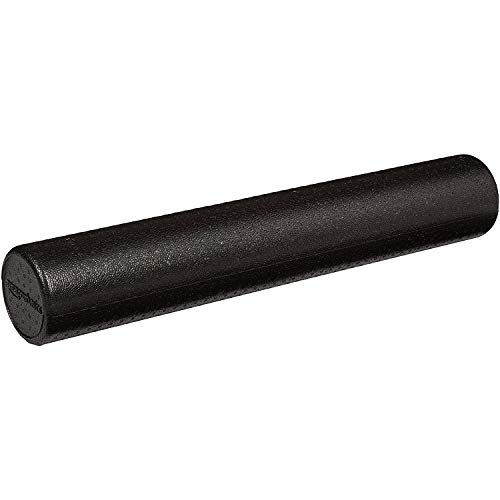
Amazon Basics High-Density Foam Roller for Exercise, Stretching and Muscle Recovery, 36 Inches, Black
High-density foam roller in Black
As an affiliate, we earn on qualifying purchases.
As an affiliate, we earn on qualifying purchases.