


Backwashing is when you reverse the water flow through your pool filter to remove dirt, debris, and algae buildup. It’s important because it keeps your water clear, maintains filter efficiency, and prolongs your equipment’s life. How often depends on your filter type—sand filters usually every 3-4 weeks, while cartridge and DE filters need more frequent attention. Keep an eye on pressure gauges to know when to backwash, and if you want to master the process, there’s more to learn.
Key Takeaways
- Backwashing reverses water flow through the filter to remove dirt, debris, and algae buildup, restoring filter efficiency.
- It is essential for maintaining water clarity, balanced chemistry, and preventing debris accumulation in the filter media.
- Frequency varies: every 3-4 weeks for sand filters, when pressure rises for cartridge filters, and periodically for DE filters.
- Proper procedure involves turning off the pump, setting the valve to backwash, running until clear, then rinsing for 1-2 minutes.
- Regular backwashing prolongs filter life, improves water quality, and reduces chemical treatments, ensuring a safe, clean pool.
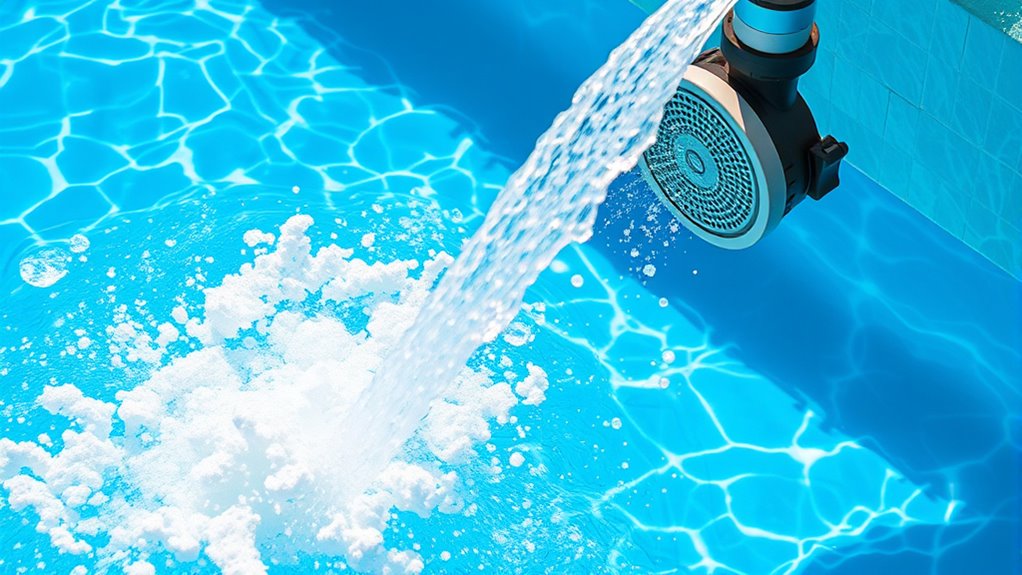
Have you ever wondered how your pool stays clean and clear? The secret lies in proper maintenance of your filtration system, especially through backwashing. When your pool’s filter media becomes clogged with dirt, debris, or algae, water flow slows down. This reduces the filter’s effectiveness, making it harder to keep your water sparkling. Backwashing is a process that reverses the flow of water through the filter to flush out accumulated contaminants. It’s essential for maintaining ideal water chemistry, because a clean filter helps keep your water balanced and safe for swimming. If the filter isn’t cleaned regularly, debris can build up, leading to cloudy water, algae growth, and potentially more chemicals needed to correct water chemistry imbalances.
Understanding how often to backwash depends on several factors, including the type of filter you have and how much use your pool gets. Sand filters typically need backwashing every 3 to 4 weeks, but if you notice a drop in water flow or pressure gauge readings rise considerably, it’s time sooner. Cartridge filters require cleaning when the pressure increases by about 8 to 10 psi over the normal operating level. Diatomaceous earth (DE) filters might need backwashing every few weeks, but they also require a deep cleaning or recharging with fresh DE powder periodically. Regularly checking your filter’s pressure gauge is the best way to monitor when backwashing is necessary. Proper filter maintenance can extend the life of your equipment and ensure optimal performance.
Performing a backwash is straightforward, but it’s vital to follow the proper steps to protect your filter media and maintain water chemistry. First, turn off the pump and set the valve to the backwash setting. Then, turn the pump back on and let it run for about 2 to 3 minutes, or until the water in the sight glass (if your filter has one) runs clear. This process flushes out dirt and debris from the filter media, restoring its ability to trap particles effectively. After backwashing, it’s important to rinse the filter by switching to the rinse cycle and running the pump for a minute or two. This step helps clear out any loose debris that might have been dislodged during backwashing but not fully rinsed away.
Frequently Asked Questions
Can Backwashing Damage My Pool Filter?
Backwashing your pool filter can potentially damage it if you do it too often or improperly. Excessive backwashing wears out the filter media faster, shortening its lifespan, and might cause cracks or leaks. To avoid this, follow the recommended backwash frequency based on your filter type and water clarity. Proper backwashing techniques help maintain filter efficiency without risking damage, ensuring your filter lasts longer and keeps your pool clean.
Is There a Safe Way to Backwash Without Chemicals?
Think of your pool filter as a garden needing gentle weeding. You can safely backwash without chemicals by using natural cleaning methods like water alone, or eco-friendly filter cleaners. These chemical alternatives help clear out debris without harsh substances, ensuring your pool stays pristine. Remember, regular backwashing with clean water maintains efficiency and prolongs your filter’s life, all while keeping your swim environment safe and chemical-free.
How Do I Know if My Backwash Is Effective?
You can tell your backwash is effective by checking your filter’s performance and water clarity. If the water looks clearer and the filter runs smoothly without pressure drops, your backwashing worked well. Regularly monitor the pressure gauge; a drop indicates it’s time to backwash. Consistently clear water and stable filter pressure mean your backwashing is doing its job, maintaining ideal filter performance for clean, healthy water.
Can Backwashing Be Done During the Day?
Yes, you can backwash your pool during the day, but consider pool safety and time. Doing it in daylight guarantees better visibility and fewer risks, especially if others are using the pool. Just make sure to schedule it during a time when it won’t disrupt your swimming plans. Keep safety in mind, and avoid backwashing during peak hours or when the pool is heavily used to maintain a safe environment.
What Are Signs That My Filter Needs Replacing Instead of Backwashing?
Pointers for pinpointing filter problems include persistent particles, cloudy water, or pressure drops. If your filter’s lifespan has nearly expired or replacement indicators like inefficiency or inconsistent flow appear, it’s time to contemplate swapping instead of backwashing. Don’t delay—delayed replacement can damage your system. Watch for these warning signs to guarantee your filter functions flawlessly, providing fresh, clean water and maintaining ideal system performance.
Conclusion
Understanding backwashing is like giving your pool a gentle gust of fresh air, keeping it clear and inviting. By knowing what it is, why it’s necessary, and how often to do it, you’re ensuring your pool stays sparkling and healthy. Regular backwashing is the heartbeat that keeps your oasis alive and vibrant. So, don’t let dirt build up like a stubborn weed—breathe new life into your pool with routine care!