To spot early signs of pool equipment trouble, pay attention to unusual noises from the pump, like grinding or rattling. Check for puddles around equipment, as they may indicate leaks. If the water’s cloudy or murky, it suggests chemical imbalances or filtration issues. Keep an eye on algae growth and discoloration, which can deter use. Regularly assess the age of your pump and filter for potential replacements. There’s more to explore to keep your pool in top shape.

Get pool and patio gear delivered free with Prime
- Fast, free delivery on millions of items
- Prime Video, Amazon Music and more included
- Member-only deals all year
Key Takeaways
- Listen for unusual noises like grinding or rattling from the pump, indicating potential mechanical issues.
- Look for puddles around equipment or a drop in water levels, which may signal leaks.
- Check for cloudy or murky water, as these can indicate chemical imbalances or filtration problems.
- Monitor for increased algae growth or discoloration, suggesting inefficient equipment or water balance issues.
- Regularly assess the age of your pump and filter to determine if replacement or repairs are needed.
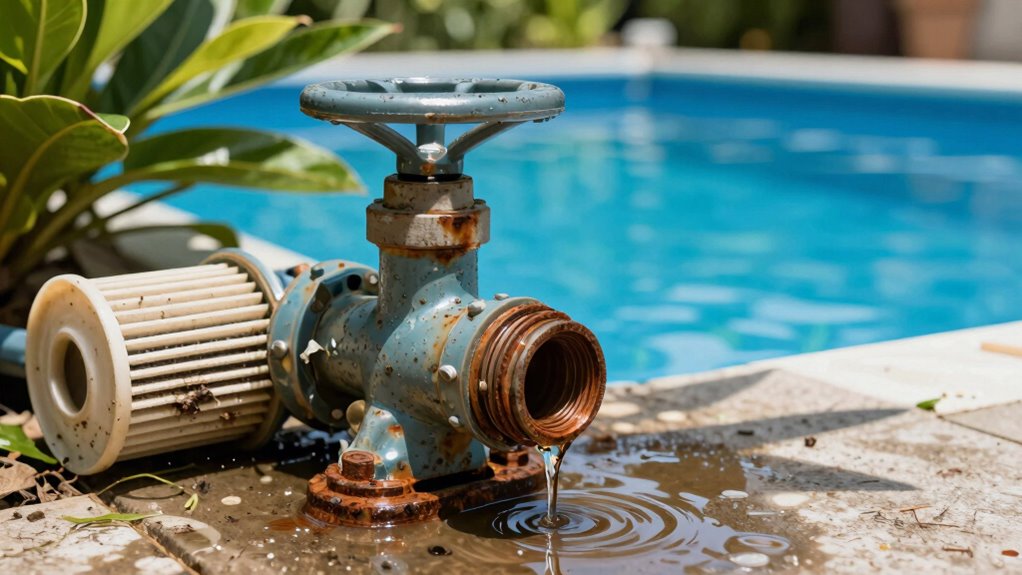
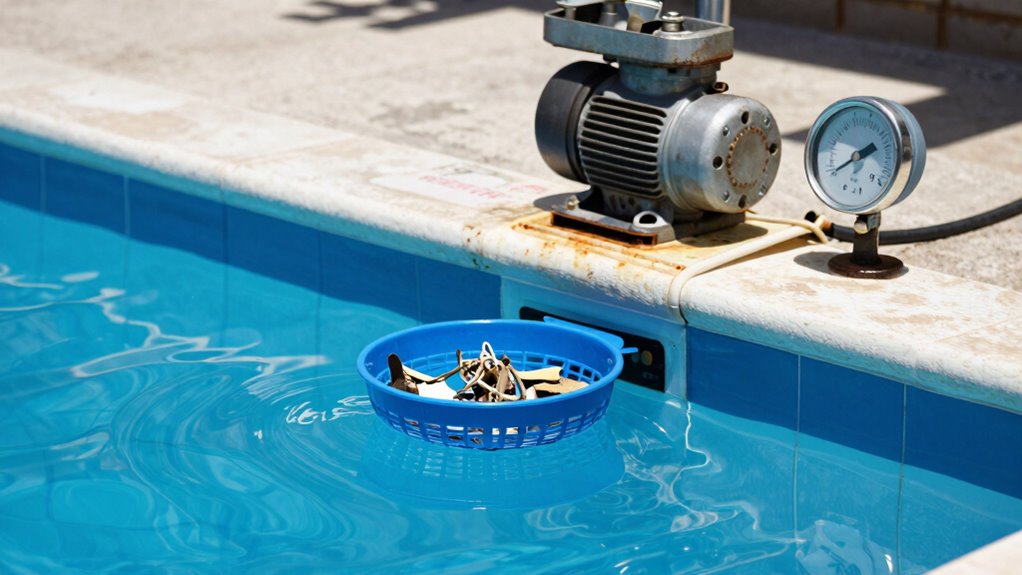
When you notice something off about your pool equipment, it’s essential to act quickly. Ignoring minor issues can lead to major problems down the line, affecting not just your pool’s performance but also its overall safety. Start by paying attention to your pool pump. If it’s making unusual noises, like grinding or rattling, you might be looking at a mechanical issue that could escalate if not addressed. Regular filter maintenance is vital, as a clogged filter can strain your pump and reduce its energy efficiency.
Next, check for leak detection. Puddles around your equipment or a drop in water levels can signal a leak, which can waste water and chemicals, compromising your pool’s chemical balance. If you find yourself constantly adding water, it’s time to investigate further. A leak not only impacts water clarity but can also lead to significant damage over time.
Check for leaks if you notice puddles or declining water levels; timely detection prevents chemical imbalance and potential damage.
Speaking of water clarity, cloudy water often points to underlying problems with your chemical balance. If your water looks murky despite recent cleaning, your pool’s filtration system might not be functioning correctly. This can indicate an issue with your pump or filter, and quick action is necessary to restore clarity and safety.
Keep an eye on your pool’s overall appearance, too. If you’ve recently noticed an increase in algae growth or discoloration, it may signal that your equipment isn’t working efficiently. Poor water clarity can irritate skin and eyes, deterring you and your guests from enjoying the pool. You want to maintain not just a beautiful pool but a safe one as well.
Lastly, consider the lifespan of your equipment. If your pump or filter is nearing the end of its typical lifespan, it’s a good idea to assess whether repairs or replacements are necessary. Investing in new equipment can save you money in the long run by improving energy efficiency and reducing your utility bills.
As an affiliate, we earn on qualifying purchases.
Frequently Asked Questions
How Often Should I Service My Pool Equipment?
You should service your pool equipment at least once a season, but more frequent maintenance can extend its lifespan. Pay attention to equipment lifespan indicators like unusual noises or reduced performance; these signs might suggest it needs more frequent checks. Regular pool maintenance frequency not only guarantees a clean swimming environment but also helps you catch potential issues before they escalate. Staying proactive saves you time and money in the long run!
What Are Common Causes of Pool Equipment Failures?
Common causes of pool equipment failures include motor issues, which often lead to inefficient circulation. You might find yourself dealing with leaks, so don’t overlook leak detection. Filter problems can also arise, affecting water clarity. If your pump starts acting up, it might need a replacement. Electrical failures can disrupt everything, while valve malfunctions can cause flow issues. Staying proactive with these potential problems can save you time and money in the long run.
Can I Repair Pool Equipment Myself?
Yes, you can repair pool equipment yourself with some DIY repair skills. Start by familiarizing yourself with your equipment and its common issues. Regular equipment maintenance can help you identify problems early, making repairs easier. You’ll need basic tools and possibly replacement parts, so be prepared. Just make sure you follow safety protocols and consult manuals or online tutorials if you’re unsure. With patience, you can save money and keep your pool running smoothly.
How Long Does Pool Equipment Typically Last?
Pool equipment typically lasts around 5 to 15 years, but don’t let that number fool you. The pool pump lifespan can vary greatly based on usage and maintenance. Meanwhile, heater longevity usually falls within a similar range, depending on factors like water chemistry and environmental conditions. Keep an eye on your equipment; you never know when those vital signs of wear might emerge, signaling it’s time for a replacement or repair.
What Is the Best Way to Winterize My Pool Equipment?
To winterize your pool equipment, start by removing any debris and cleaning your pool cover. Next, drain all water from the plumbing to prevent freezing damage. Use a shop vacuum to clear out the lines, and add antifreeze specifically designed for pool plumbing maintenance. Finally, confirm that your pool cover is secure to protect against snow and ice. This way, you’ll keep your pool equipment safe and ready for spring!
Conclusion
By keeping a watchful eye on your pool equipment, you can catch trouble before it spirals out of control. Think of your equipment as a well-tuned orchestra; if one instrument starts to falter, the whole performance can suffer. Regular checks and maintenance guarantee your pool remains a shimmering oasis rather than a murky swamp. So, stay vigilant, listen for those subtle cues, and your pool will sing all summer long, inviting you to plunge in and enjoy!
Halloween Picks
halloween
As an affiliate, we earn on qualifying purchases.